
The night in orbit just leaves truce. In low orbit, the Tiangong Space Station becomes the scene of constant activity that requires millimeter precision. In the last extravehicular exit, Chinese astronauts had to face challenges that do not arise from technical failures or scientific experiments but from a silent enemy that multiplies the risks of each mission: the increasing amounts of spatial debris that threaten to hit the station’s structure.
The schedule set by China’s manned flight agency indicated that extravehicular activity would commence on September 25 at 19:45 (Beijing time), with Wang Jie as the first astronaut to exit the Wentian module. Following him was Chen Zhongrui, who was tasked with overseeing the installation of specialized equipment. Meanwhile, Chen Dong remained inside Tiangong, managing communications with the control center and supporting his teammates throughout the maneuver. The extravehicular activity was concluded at dawn, at 1:35 on September 26, when the duo successfully closed the hatch after completing their agenda. The operation was aided by the station’s robotic arm and the ground support team.
Strategies Against Fragments: Tiangong’s Approach to Resilience in Space
During this extravehicular activity, the primary goal was to install a protective device against orbital fragments, specifically engineered to bolster the most vulnerable sections of the station. Additionally, the team conducted a thorough assessment of external equipment and structures, paying special attention to systems that experience heightened wear due to relentless exposure to the harsh conditions of space. According to program leaders, this combination of installation and maintenance is aimed at ensuring that Tiangong retains its operational capacity in an increasingly cluttered orbital environment.
The escalating concern over space debris is a significant issue that many agencies have grappled with in recent years. Each launch adds more fragments to the orbit, which, although they may be small, travel at incredibly high speeds, considerably increasing the potential for damage. For China, the decision to reinforce Tiangong does not respond to a single event but is proactive, preparing for a complex future.
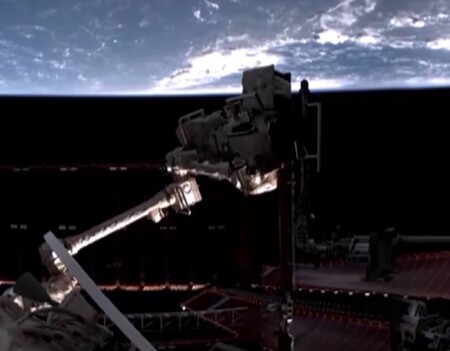
China is not the only nation enhancing its space station in response to orbital debris. The International Space Station (ISS) has employed specific armor systems, known as anti-micrometeoroid and orbital debris (MMOD) shields, to protect its habitable modules against impacts from both micrometeoroids and space trash. However, there is a significant difference in context: the ISS has been operational for over two decades and has undergone numerous adaptations to suit an environment that has become increasingly congested. This older infrastructure utilizes a layered shield system, such as Whipple and Stupfed Whipple shields, strategically distributed across critical areas.
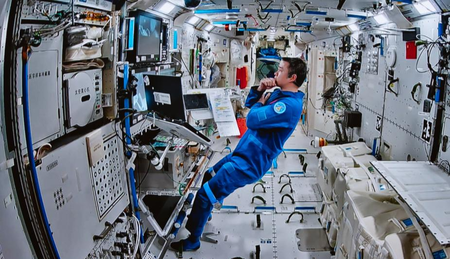
The comparison between Tiangong and the International Space Station elucidates the scope of their protective systems. Tiangong was completed in 2022, featuring a T-configuration formed by the Tianhe, Wentian, and Mengtian modules. In contrast, the ISS began assembly in 1998 and completed its main segment in 2011, leading to a more expansive and intricate structure. The differences in dimensions and design philosophy reflect their respective approaches: ISS barriers include protections integrated from its initial design complemented with upgrades over time, while Tiangong’s systems were developed with an awareness of a more congested orbital environment.
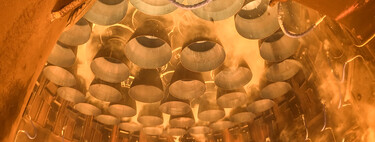
The conclusion of this recent extravehicular activity does not signify a pause but rather the start of a new chapter for the Shenzhou-20 mission. The three astronauts will continue numerous scientific experiments and technological tests while also partaking in onboard celebrations related to the Chinese calendar. The installation of additional protective shields is a clear signal of the commitment to maintain crew safety and ensure the integrity of Tiangong, which aspires to become a stable foundation for space research amid an increasingly challenging orbital landscape.
Images | Xinhua
In Xataka | 24 years ago, the Earth was symmetrical. Now the northern hemisphere is “unequivocally” darker than the southern hemisphere.