
The Transformation of China’s Manufacturing Landscape
For years, the label “Made in China” has symbolized the country’s dominance as the world’s factory. From smartphones to small appliance components, China’s manufacturing prowess has shined globally. However, this situation is evolving. China’s industrial leadership, once reliant on low labor costs, is transitioning to a model that integrates automation and artificial intelligence (AI).
Shifting Workforce Dynamics
This transformation isn’t purely economic; it also reflects changing societal attitudes. Fewer young Chinese are interested in factory work, mirroring trends in the United States where physical jobs often come with long hours and limited growth opportunities. As younger generations seek better prospects, both nations recognize the strategic importance of manufacturing, pushing towards automation and AI-driven solutions instead of reverting to previous models.
China’s Industrial Robot Revolution
Chinese officials, including Vice Minister of Industry Zhang Yunming, have emphasized the importance of AI in safeguarding the country’s manufacturing industry, which constitutes approximately 25% of its economy. China’s competitive edge depends on producing more with fewer workers through advanced technologies.
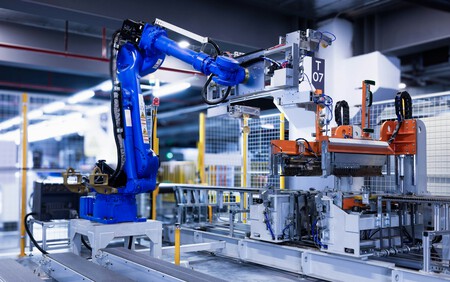
China’s commitment to automation is evident in its staggering deployment of robotics. In 2021 alone, China installed 295,000 industrial robots—nearly nine times more than the United States and more than all other nations combined, according to the International Federation of Robotics. Some facilities have adopted “dark factories,” where human intervention is minimal, as seen in Baosteel, a major steel production site where workers only engage every thirty minutes compared to every three minutes previously.
AI-Enhanced Automation
Automation today transcends simple mechanical tasks. Facilities have become interconnected entities capable of decision-making. Midea, for instance, employs an AI system to coordinate robots and find operational efficiencies without human interference. In textiles, Bosideng collaborates with Zhejiang University to utilize AI in design processes, significantly reducing time and costs—giving them a formidable edge over slower Western counterparts.
Innovations in Logistics
China’s ambition is also evident in its logistics systems. At Tianjin Port, autonomous trucks operate without human intervention, while AI systems optimize logistics, cutting planning times from 24 hours down to about ten minutes. Tools like PortGPT enhance security and operational efficiency.
Comparative Approaches Between China and the U.S.
While China embraces automation as a national strategy, the U.S. approach focuses on sovereignty and job protection. The Trump administration advocated for tariffs on products from China and Vietnam to revitalize domestic manufacturing. Commerce Secretary Howard Lutnick has voiced the need for modernization, asserting that automation can coexist with quality job creation.
This contrast is evident in the ports: China has implemented advanced automation with little union resistance, whereas U.S. labor unions have negotiated limits on automation’s expansion, focusing instead on job preservation.
The Future of Manufacturing
China is not merely seeking to maintain its manufacturing dominance; it aspires to redefine it. The future will not just be about the label “Made in China,” but rather a new paradigm where robots play a central role in the production process. With the intertwining of AI and automation, both countries are pursuing paths that might ultimately reshape global manufacturing.
Images | Homa Appliances | Xataka with Gemini 3