
China’s Ballistic Missile Launch from a Nuclear Submarine: An Escalation in the Pacific
Recent Launch Overview
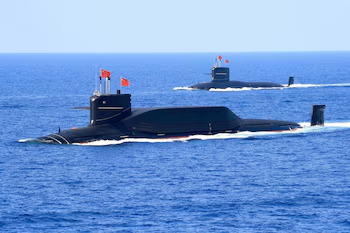
On Monday, the People’s Liberation Army Navy (PLAN) of China conducted a significant military exercise, launching a long-range ballistic missile from a nuclear submarine into the Pacific Ocean. This maneuver occurs amidst rising tensions with Japan and increased military activities near Taiwan. The missile test reportedly involved a simulated warhead that successfully hit its target in designated Pacific waters, as announced by the state agency Xinhua.
Strategic Context of the Launch
The missile launch took place at precisely 12:01 local time (04:01 GMT) and was described as part of China’s routine military training, having been communicated in advance to other nations involved in the region. Notably, Chinese officials emphasized that this exercise was “not directed against any country or specific target.” Though details about the missile model and submarine class were not disclosed, experts suggest this incident marks the first known submarine missile launch by China since 1982, showcasing advancements in China’s naval capabilities.
Implications for Regional Security
The launch occurs during a period of intensified Chinese naval operations in the Western Pacific, heightening security concerns, particularly for Japan and Taiwan. Taiwanese officials reported that the Chinese Navy currently has four naval groups deployed around the area, reflecting what they describe as an “upward trend” in military mobilizations. This strategic positioning emphasizes China’s commitment to projecting power in the region, especially amid ongoing disputes over territorial waters.
Responses from Neighboring Countries
Australia was among the countries notified prior to the missile test, according to regional media outlets. The Australian press hinted that this event aligns with increased Chinese military activity, particularly involving intercontinental ballistic missiles. Moreover, relations between Beijing and Tokyo have notably deteriorated following recent comments by Japanese Prime Minister Sanae Takaichi, who suggested that a Chinese attack on Taiwan could provoke a military response from Japan.
Broader Military Maneuvers and Alliances
Adding to the complexity, the missile launch coincides with upcoming joint naval exercises between China and Russia. Ships from the Russian Pacific Fleet have been reported heading to China for collaborative exercises, signifying strengthening ties between the two nations amidst broader global tensions. The joint patrols underscore a concerted approach to securing maritime interests and responding to perceived threats in the Pacific theater.
Conclusion
As China continues to conduct provocative military displays, its actions not only challenge regional stability but also prompt neighboring countries to reassess their defense strategies. This recent missile launch from a nuclear submarine underscores China’s evolving military capabilities and reinforces the geopolitical complexities that define the Pacific region. The international community, particularly nations like Japan and Taiwan, remains vigilant, wary of the implications such military activities could hold for regional peace and security.