
Global Tourism: A Roaring Comeback
Despite challenges like the war in Iran, international tourism is experiencing a robust resurgence reminiscent of the “Roaring Twenties.” The COVID-19 pandemic may have curtailed travel temporarily, but families are eager to explore new destinations, a trend evidenced by a 4% increase in international travel registration by the UN tourism observatory. By 2025, the World Travel and Tourism Council (WTTC) noted that tourism contributes nearly 10% to global GDP.
Uneven Growth Among Major Players
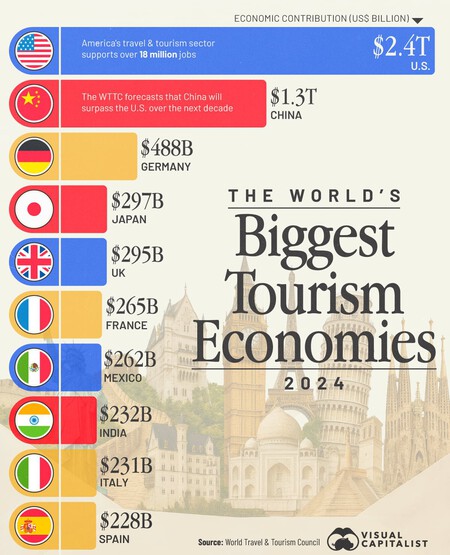
Despite the sector’s overall growth, the recovery is not uniform worldwide. Crucial disparities exist between two tourism giants: the US and China. According to WTTC, the US remains the largest travel market, yet it is losing market share amidst significant shifts in international travel patterns.
Declining US Market Share
Recent analysis suggests that while global tourism grew 4.1%, North America only saw a growth of 1%, rendering it the slowest-growing region. The US specifically experienced a mere 0.9% growth, accompanied by a 5.5% decline in American tourists traveling abroad. Spending from international visitors also plummeted, indicating a concerning trend for the American tourism industry.
The Importance of Visitor Insights
Given these trends, it’s vital to understand the implications for American tourism. WTTC emphasized that while the US generates $2.63 trillion from tourism, it faces stiff competition from China, which is gaining ground at an accelerated rate.
Shifts in Visitor Dynamics
In 2025, a notable trend emerged: while overall international travel increased, American visits declined by 5.5%, with spending from international visitors falling to $176 billion. Factors contributing to this decline include a 20.9% drop in visitors from Canada, highlighting a genuine concern over the US’s diminishing attraction as a travel destination.
Entrance Challenges for Foreign Visitors
Increased restrictions and procedures for entering the US have exacerbated the situation. Stringent requirements and heightened scrutiny at border points have deterred many potential foreign visitors. These factors led the WTTC to warn of a possible 34% drop in visitor numbers if proposed measures concerning entry approvals materialize.
China’s Tourism Ascent
In contrast, China’s market share is expanding rapidly. Not only is the domestic tourism market growing by 10.7%, but the international sector also shows significant growth, marking a 10.5% increase. Experts like Gloria Guevara, the CEO of WTTC, have suggested that if this trend continues, China may very well surpass the US as the leading global tourism economy within the next few years.
The Potential of Chinese Tourism
Currently, there is a substantial gap between the US and China’s tourism revenues. Despite contributing $1.75 trillion, China’s tourism sector is growing at a rate of 9.9%, positioning it as an increasingly significant player in the global arena.
Future Uncertainties and Opportunities
The future landscape of tourism remains clouded by uncertainties. Geopolitical tensions, such as the ongoing war in Iran, have impacted travel routes and fuel supplies, resulting in the cancellation of numerous flights.
Major Events and Expected Influxes
2025 also marks a pivotal year for North America as it gears up to host the FIFA World Cup. Anticipated to attract over 1.24 million visitors, this event could provide a much-needed boost for tourism in the region.
Conclusion
As the global tourism landscape transforms, the ability of nations such as the US to adapt to evolving visitor preferences and demographic shifts will determine their standing in the competitive tourism market. With China’s rising presence, the dynamics of international tourism may witness unprecedented changes in the years to come.