
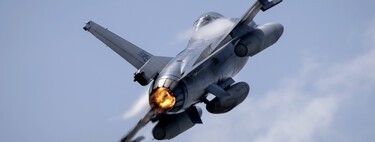
During the recent conflict between Israel and Iran , discussions about the powerful Israeli antimissile defense system, known as the ‘Iron Dome’ , have surged. Europe is considering creating its own system, while the United States proposes a ‘golden dome’, designed to utilize a satellite network capable of intercepting hypersonic missiles . But what about China ? Despite its existing antimissile systems, China lacks a comprehensive shield akin to that which the U.S. aims to establish. Instead, China focuses on advanced detection technology that could surpass others in identifying missile threats.
A beetle’s prowess has recently inspired innovative research in China. This unique beetle can detect fire up to 80 kilometers away, thanks to its highly sensitive exoskeleton, which rivals the best infrared sensors available today. Researchers in China have taken cues from this beetle, creating a detection system that mimics its sensitivity, enabling rapid and accurate identification of heat sources.
The detection technology was detailed in a study published in Nature . The research team conducted various tests to validate the system’s efficacy. Initially, they developed a ‘heterostructure’ using divel-divelur , a material known for its exceptional mid-infrared absorption properties, combined with pentacene , an organic semiconductor. This setup achieved detection sensitivity at an intensity of only 0.5 milliwatts per square centimeter, closely paralleling the beetle’s sensitivity. In a subsequent test, they employed black phosphorus alongside indium selenide , resulting in a photonic memory of 0.5 microseconds , significantly outpacing traditional optical storage technologies by 20,000 times .
Capabilities of the new system extend beyond just missile detection. Researchers assert that this technology can effectively “detect and identify objects in challenging environments,” with the ability to penetrate barriers like smoke, fog, and dust, delivering clear images and precise target identification. Moreover, it operates at room temperature, negating the need for refrigeration. Potential applications for this technology span various fields, including fire detection, autonomous vehicles , night vision systems, and military use.
The potential for antimissile applications is noteworthy. While China may not currently possess a ‘dome’ antimissile system, this advanced technology could pave the way for the development of one that, according to the South China Morning Post , may outperform the proposed U.S. ‘Golden Dome’. The main advantage lies in the comprehensive nature of the system—integrating detection, memory, and processing functions into a cohesive whole. Traditional antimissile systems rely on conventional silicon semiconductors, whereby the separation of sensors and processors limits their response times. This new design promises much quicker reactions.
The future remains uncertain. The ‘golden dome’ proposed by Donald Trump is still merely a concept and has not yet materialized. Similarly, China’s planned systems are also hypothetical. Recent commentary from China indicates a critical stance towards the U.S. initiative, stating that such projects could escalate tensions by transforming space into a battlefield and igniting a arms race in space weaponry. Currently, China persists in bolstering its multilayered missile defense capabilities with systems like the Dong Neng-3 , an exoatmospheric missile interception system, the HQ-19 , which is designed for medium-range interception, and the HQ-29 , equipped with anti-satellite capabilities.
Images | Flickr (1, 2)
In summary, while the development of missile defense systems continues to be a focal point of international military strategy, advancements in detection technologies inspired by nature—like the remarkable capabilities of the fire-detecting beetle—offer promising avenues for increasing the effectiveness of such systems. The intersection of biology and technology could redefine the landscape of defense capabilities in ways previously unimaginable.