
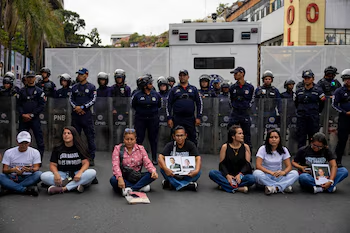
Chavista Deputy’s Remarks on El Helicoide Generate Outrage
Background of El Helicoide
El Helicoide, a notorious facility in Caracas, has long been regarded as a torture center by various international human rights organizations. This symbol of oppression has been at the center of debates around human rights violations in Venezuela. Former U.S. President Donald Trump once highlighted its infamous reputation, stating, “They had a torture chamber in the center of Caracas that they are now closing,” during a military operation aimed at capturing Nicolás Maduro.
Shift in Purpose
The current Venezuelan administration, led by Delcy Rodriguez, announced plans to repurpose El Helicoide from a detention center to a community hub focused on social, cultural, and sporting activities. Rodriguez claimed this change would benefit local communities, signaling an attempt to rehabilitate the center’s tarnished image.
Controversial Comments by Jorge Arreaza
Parliament deputy Jorge Arreaza, who previously served as vice president, stirred significant backlash with his comments on social media regarding the closure of El Helicoide. He described the campaign against the facility as exaggerated, branding it “the worst ‘torture center’ since the stone age.” Such remarks were met with heated criticism, particularly from human rights activists who aptly pointed out Arreaza’s highly controversial history as the head of Sebin, the Bolivarian National Intelligence Service that operates within El Helicoide.
Accountability and Human Rights Violations
Human rights activist Tamara Suju and others have condemned Arreaza, recalling his role during a time of systematic repression within the agency. “You were the second highest person responsible for systematic repression and crimes against humanity,” Suju remarked, emphasizing the ongoing legacy of pain and suffering tied to the facility. The cruel irony of Arreaza’s jokes about El Helicoide has not gone unnoticed; many feel they belittled the suffering endured by political prisoners.
Survivor Testimonies
Survivor accounts further underscore the facility’s sinister reputation. Sairam Rivas, a former political prisoner, echoed sentiments of betrayal. “In El Helicoide, torture has been documented by various international human rights mechanisms since 2014. I can attest to this from my own experience,” Rivas said, bringing a personal perspective to the conversation. Alongside her testimony, she mentioned the tragic death of Alfredo Díaz, a political prisoner whose fate has become a symbol of the horrors enacted within these walls.
Calls for Justice
The Realidad Helicoide project, which aims to document and expose the atrocities committed at El Helicoide, criticized Arreaza for his flippant attitude. “Your cynicism exposes you for what you are: one more accomplice and perpetrator of the criminal regime,” the organization stated, reinforcing the call for accountability rather than mere repurposing of the site.
Final Considerations
The Committee for the Freedom of Political Prisoners in Venezuela (Clippve) also emphasized that without transparent dismantling of El Helicoide, its closure remains a facade. The lack of clear communication concerning its future, coupled with the ongoing plight of victims, casts doubt on the sincerity of the government’s purported reforms. It remains critical for the international community and local advocates to demand justice and truth for those who have suffered at the hands of the state, ensuring that the legacy of El Helicoide continues to be a reminder of the atrocities committed in Venezuela.