
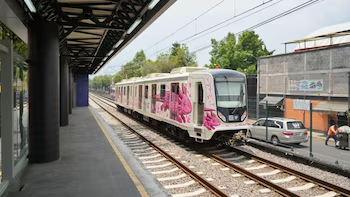
Revolutionizing Mobility in CDMX
One of the key initiatives by the Government of Mexico City is the enhancement of transportation systems, particularly in the southern regions. The recently remodeled Light Rail, now introduced under the name “El Ajolote,” aims to streamline the movement of citizens, especially during significant events like the World Cup 2026 at the iconic Azteca Stadium.
Record Passenger Turnout
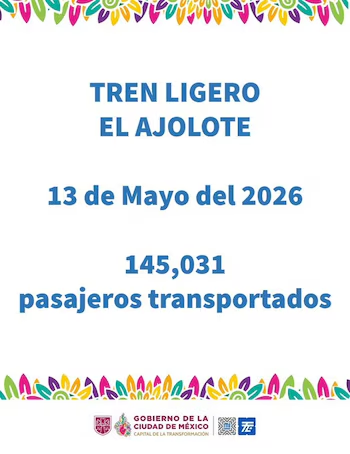
The Electric Transport Service (STE) of CDMX announced a successful achievement post-remodeling. An impressive number of 145,031 passengers were reported on May 13, 2026, showcasing the optimistic expectations the authorities had for increasing user traffic. The newly inaugurated facilities not only meet these anticipations but have also seen the Tasqueña terminal improved and expanded, further enhancing accessibility.
Enhancing Capacity and Connectivity
The opening of El Ajolote symbolizes a significant step by the Government of Mexico City to improve urban mobility in anticipation of the World Cup 2026. The revamped infrastructure allows the system to expand its capacity from 130,000 to 250,000 passengers daily, directly connecting vital areas like Tasqueña and Xochimilco. This expansion is critical for the expected influx of fans during the world-famous event.
Strategic Importance Ahead of the World Cup
On the same day of the record-setting passenger haul, authorities also conducted a rehearsal for transporting soccer fans as part of the preparations for the 2026 World Cup, highlighted by a match between Cruz Azul and Chivas in the Liga MX semi-finals.
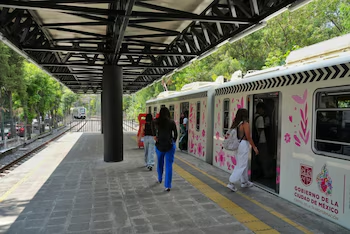
The El Ajolote Light Train now features 17 new electric trains and stretches over 13 kilometers, passing through regions like Coyoacán, Tlalpan, and Xochimilco, positioning it as a central element in the public transport strategy for the upcoming World Cup.
Investment in Public Transportation
According to Clara Brugada’s administration, a significant portion of the over 5 billion pesos invested for the modernization of public transportation in the city was directed toward the rehabilitation of the Light Rail. This initiative is set to play a pivotal role in efficiently transferring fans from the inaugural match to the newly designated Banorte Stadium, previously known as Azteca Stadium.
The remodeled Light Rail is not just an improvement in infrastructure; it represents a commitment to enhancing day-to-day mobility for the citizens of Mexico City and ensuring a successful world event in 2026.