
Every Minute Counts: Understanding Stroke and Its Impact in Spain
A stroke can strike without warning. In Spain, a stroke occurs every six or seven minutes, according to Pablo Irimia, a consultant at the Department of Neurology of the University of Navarra Clinic (CUN). Approximately 110,000 to 120,000 people suffer from stroke annually. For every minute that passes without medical intervention, almost 1.9 million neurons perish. Hence, the motto for this year’s World Stroke Day, observed on October 29, is “Every minute counts.” Recognizing the symptoms promptly and receiving appropriate treatment can mean the difference between complete recovery and irreversible brain damage or even death.
Types of Stroke: Understanding the Differences
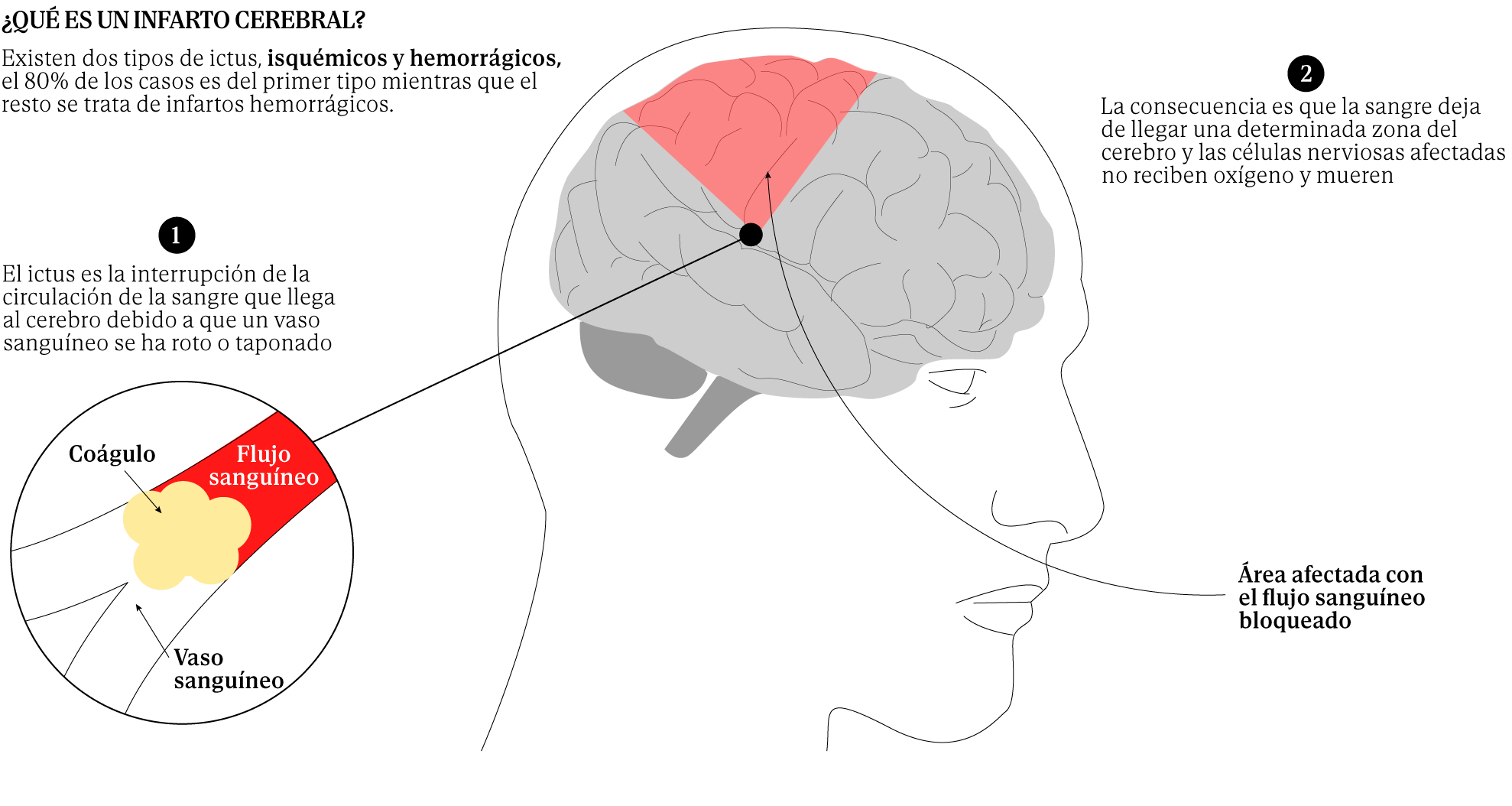
The term “ictus,” derived from the English word “stroke,” signifies a sudden and serious event that results in brain damage due to a sudden lack of oxygen and nutrients. There are primarily two types of stroke:
Ischemic Stroke: This is the most common type, occurring when a clot blocks an artery that supplies blood to the brain.
Hemorrhagic Stroke: Less common but more severe, this occurs when a cerebral artery ruptures, leading to bleeding in or around the brain.
Moreover, there’s a temporary condition known as a Transient Ischemic Attack (TIA), where blood flow to the brain is briefly interrupted without causing lasting damage. Despite its temporary nature, a TIA is a crucial warning sign that should prompt medical consultation.
The Urgency of Quick Intervention
Time is critical not only during the acute phase of a stroke but also beforehand and afterward. Danilo Toni, the director of the Neurovascular Treatment Unit at the Umberto I Polyclinic in Rome, emphasizes that rapid intervention principles should be applied to all stroke phases. Identifying and managing risk factors promptly provide critical protection, while post-acute treatment and rehabilitation should not be delayed either.
Risk Factors: Who is Most at Risk?
Several groups are at a greater risk for stroke. According to Professor Toni, any individual who has previously experienced a stroke is significantly more likely to have another one—2 to 3 times more likely, in fact. Family history can also play a role; while hereditary cases are rare, shared lifestyle habits—like dietary patterns—often contribute to risk.
Key modifiable risk factors include:
- Hypertension
- Diabetes
- Heart diseases
- Smoking
- Unhealthy diet
- Excessive alcohol consumption
- Obesity
- Sedentary lifestyle
Preventive Measures: Simple Steps to Protect Yourself
Recent studies suggest that tweaking the main modifiable risk factors could potentially prevent up to 80% of stroke cases. Here are some preventive tips:
- Quit smoking
- Engage in regular physical activity
- Eat a balanced diet rich in fruits, vegetables, whole grains, and fish, while limiting fats, sugars, and salt
- Maintain a healthy weight
- Moderate alcohol consumption
- Avoid illicit drugs
Regular monitoring of blood pressure, cholesterol levels, and blood glucose can also help mitigate risks associated with stroke.
Recognizing the Symptoms: The FAST Rule
Understanding the symptoms is crucial for prompt treatment. The FAST mnemonic can help individuals remember the symptoms of stroke:
- F (Face): Look for a droopy or asymmetrical face.
- A (Arms): Check for an inability to raise or hold an arm.
- S (Speech): Listen for difficulty in speaking or understanding speech.
- T (Time): If you see any of these signs, call emergency services immediately!
Some common symptoms include sudden paralysis on one side of the body, facial drooping, difficulty speaking or understanding, blurred vision, and balance issues. Immediate action can be life-saving.
Treatment: What Are the Options?
The two main treatments for stroke include:
Thrombolysis: This procedure dissolves the clot blocking the artery.
Mechanical Thrombectomy: This involves removal of the clot using specialized instruments.
For hemorrhagic strokes, surgical intervention to remove the hematoma may be required. Advanced diagnostic techniques like MRI or perfusion tomography have enabled treatment options even for patients whose strokes occurred several hours prior, expanding the therapeutic windows.
New therapies, such as tenecteplase, a thrombolytic drug for ischemic strokes, have revolutionized treatment in Spain. Administered in a single intravenous injection, it has shown effectiveness even 24 hours after symptom onset.
Rehabilitation: The Road to Recovery
Post-stroke, rehabilitation plays a vital role in recovery. Many individuals can return to their former lifestyles with appropriate rehabilitation interventions. Treatment may include:
- Motor rehabilitation: to regain mobility in limbs.
- Speech therapy: to improve communication abilities.
- Occupational therapy: to regain independence in daily activities.
The advances in stroke care and the structure of rehabilitation networks have significantly improved acute care; however, ongoing rehabilitation remains critical.
Returning home often requires further outpatient rehabilitation, though public services may be limited. This limitation raises concerns about follow-up care, as many patients risk being left without ongoing support. Establishing local reference points for periodic check-ups and guidance can help ensure that patients and their families navigate post-stroke life effectively.