
Behind the scenes of the electricity grid lies a lesser-known but crucial aspect: the intentional disconnection for maintenance. Regularly, entire teams must carry out these tasks to ensure the integrity and stability of the system. This essential work in California falls to the California Independent System Operator (Caiso), which now welcomes an artificial intelligence (AI) to assist them in their mission.
Caiso has recently embarked on a pilot project with the company Oati. The objective of this collaboration is to explore how language models, akin to those powering systems like ChatGPT, can play a decisive role in managing daily maintenance requests that require planned grid outages.
Artificial Intelligence for Crucial Operations
Many of these maintenance requests involve temporarily disconnecting vital assets. If the information provided is incomplete or erroneous, the impact can be felt almost immediately: network instability and even disruptions in the electricity market may occur. Hence, while some of the request processes have been automated, the final evaluations still require manual oversight to ensure accuracy and reliability.
Data trends from 2020 to 2025 indicate significant peaks in maintenance requests, particularly during spring and autumn. This seasonal pattern, combined with the sheer volume of requests, positions maintenance management as one of the most demanding operational challenges faced by the system.
The tool introduced in this endeavor is known as Oati Genie , envisioned as a co-pilot powered by AI . This tool is designed to detect anomalies, extract essential operational information, and recommend steps based on historical data. By utilizing a combination of retrieval-augmented generation (RAG) and a multi-agent system, operators can pose queries in natural language and receive contextual answers, enriched with links to supporting documents and records.
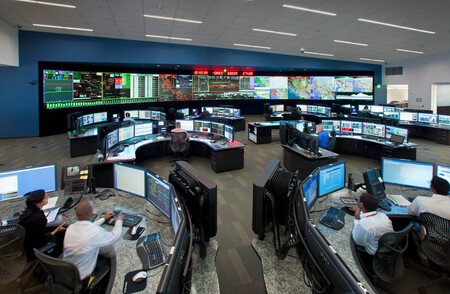
</div>For instance, operators can ask what maintenance might impact a particular electrical route and immediately receive historical data, procedures, and real-time information from resources like OASIS (Open Access Same-Time Information System). This consultation process, previously characterized by tedious manual searches, is now streamlined, enabling faster decision-making. The AI does not autonomously make decisions; rather, it serves to enhance and accelerate human judgments .
<img alt="Welcome to the silent collapse of energy: In the US, AI is beginning to drain the country's electricity" width="375" height="142" src="https://i.blogs.es/85acf9/ps---plantilla-portadas-xtk/375_142.png"/>If all progresses as anticipated, internal testing of the tool will commence before the year concludes. Operators utilizing Oati Genie will be able to share feedback on any shortcomings, limitations, or potential enhancements, thereby contributing to its evolution. This initiative is not an isolated case; it is part of a comprehensive strategy to apply AI solutions across other sectors of the electrical system .
While the project is advancing, the true test is yet to come. Will Oati Genie deliver on its promise of becoming an indispensable support tool for operators? Or is it merely a stepping stone towards developing a more intelligent energy network? One thing is certain: the electricity sector is already venturing into this promising new frontier.
Images | Caiso | Javad Esmaeili
In a world increasingly reliant on technology, the intersection of AI and the electricity sector heralds a new era of efficiency and innovation. By integrating AI systems into maintenance operations, utilities can not only enhance their services but also pave the way for a more resilient and adaptive electricity grid. As the pilot project unfolds, stakeholders will watch closely, eager to learn from its outcomes and potentially replicate its success across the industry.