
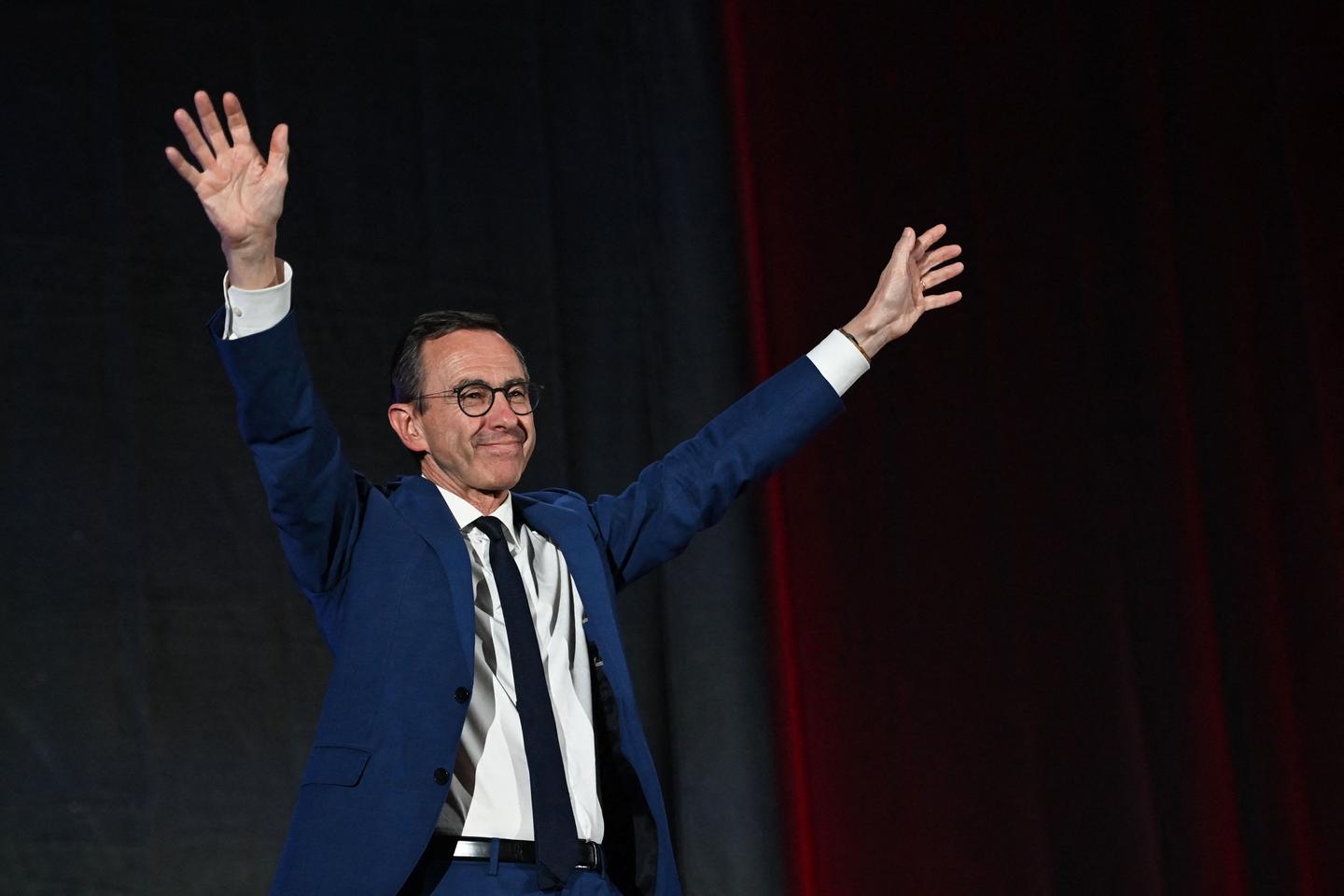
The Rise of Bruno Retailleau: A New Era for Les Républicains

On May 18, 2025, **Bruno Retailleau** achieved a significant milestone by being elected as the president of the **Les Républicains (LR)** party. This election came after a vigorous campaign where he faced off against his only opponent, **Laurent Wauquiez**, securing a decisive victory with **74.3%** of the votes. This success was particularly noteworthy given Retailleau’s simultaneous role as the **Minister of the Interior**, a dual responsibility that he managed while emphasizing the needs of both his party and his ministerial duties.
Retailleau’s journey to leadership has not been without its challenges. His earlier attempt to lead the party in **December 2022**, ended in defeat against **Éric Ciotti**—a candidate strongly backed by **Wauquiez**. Since joining the political scene with the **UMP**—the predecessor of LR—in **2010**, Retailleau has been seen as a staunch conservative voice within the party. His statements on immigration, particularly asserting that **“immigration is not a chance for the country,”** illustrate a perspective that resonates with many in the party, yet it also highlights the ideological divisions within.
Retailleau’s election signifies a shift back towards traditional conservative values, something he has consistently advocated throughout his career. As a long-time ally of figures like **Philippe de Villiers** and **François Fillon**, he carries the banner of a conservative identity that seeks to redefine itself amidst changing political landscapes. His recent campaign strategies, particularly in engaging with voters digitally, demonstrate a keen awareness of contemporary political dynamics.
Historical Context and Party Dynamics
To understand the implications of Retailleau’s presidency, it’s essential to delve into the history of **Les Républicains**. Following the party’s establishment, it has undergone various ideological shifts, often reflective of the political climate in France. The rise of figures like **Laurent Wauquiez**, who actively embraced far-right perspectives, marked a trend towards populism that left some traditional conservatives uncomfortable. Wauquiez’s proposals, such as **limiting active solidarity income to two years**, exemplify a hardline stance that Retailleau countered with calls for measured conservatism.
In the final days before the election, Wauquiez pointed to **Giorgia Meloni**, the president of the Italian council, as a model for the right—this move aimed to solidify his base by aligning with European populism. In contrast, Retailleau’s platform centered on uniting traditional values with modern governance strategies, portraying himself as a candidate who understands both contemporary challenges and historical party values.
The Implications of Retailleau’s Leadership
With **Bruno Retailleau** at the helm, **Les Républicains** must now face a pivotal moment in their history. The party’s direction will be influenced significantly by how well Retailleau navigates the complexities of modern French politics while staying true to the foundational ideals that have shaped the party since its inception. His leadership style, characterized by careful rhetoric and strategic positioning, will be crucial in rallying support and expanding the party’s appeal beyond its traditional base.
Retailleau’s history of camaraderie with established politicians lends him credibility, yet the question remains whether he can build a broader coalition that includes younger voters and moderates who may feel alienated by the more extreme elements within the party. Effective communication of his policies will be vital, especially in addressing issues such as immigration, economic policy, and social welfare.
As retail politics continue to evolve, the key to success for Retailleau and **Les Républicains** lies in their ability to adapt while maintaining a coherent ideological stance. This balance will not only determine their success in upcoming elections but also impact the political dynamics across France for years to come.