
Argentina’s World Cup Qualification: A Controversial Celebration
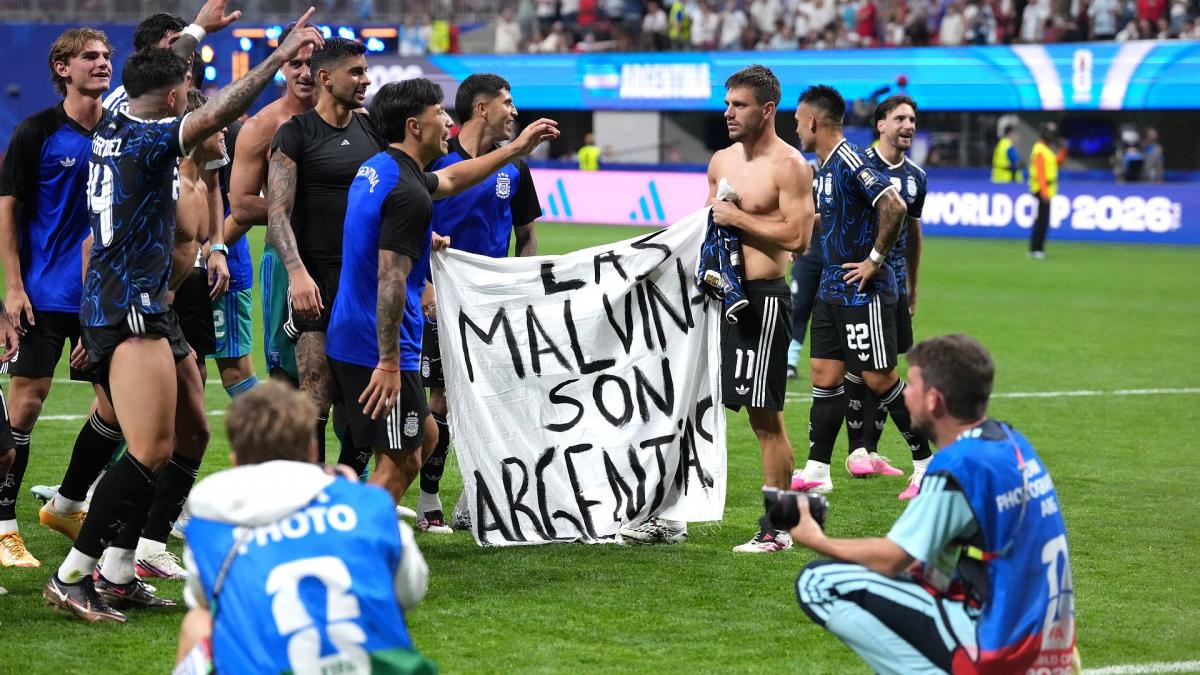
Argentina’s thrilling qualification for the 2026 World Cup final came after a hard-fought match against England. The team, led by Lionel Scaloni, initially found themselves trailing due to Anthony Gordon’s first goal. However, a powerful response from Enzo Fernandez and a decisive finish by Lautaro Martinez secured their place in the final. While the on-pitch performance drew acclaim, the post-match celebrations took a controversial twist that could have significant repercussions.
The Controversial Banner
During the celebrations, several Argentine players unfurled a banner reading “The Falklands are Argentinian.” This statement refers to the long-standing territorial dispute between Argentina and the United Kingdom over the Falkland Islands, a subject that remains highly sensitive and politically charged since the 1982 conflict. Displaying such a banner during an official match adds a layer of complication, given the history and diplomatic tensions associated with the issue.
FIFA Regulations on Political Messages
FIFA’s regulations, aligned with the International Football Association Board (IFAB) Laws of the Game, explicitly prohibit the display of messages of a political, religious, or personal nature in official matches and celebrations. According to Law 4, a team or player may face sanctions for displaying such messages through jerseys, clothing, or other objects. By showcasing a politically charged banner, Argentina’s players might face disciplinary action from FIFA.
Possible Consequences for Argentina
The potential repercussions for Argentina depend heavily on the interpretation of the FIFA Disciplinary Committee. Their ruling will consider the political nature of the message displayed and the context in which it was shown. While past incidents of political displays in football have elicited varying responses from governing bodies, this situation is further complicated by the emotional weight attached to the Falklands issue.
The football community is watching closely as this incident unfolds. Many are questioning whether FIFA will take a strong stance against Argentina, especially given the heightened scrutiny of political messages in this North American World Cup. The outcome of this situation may set a significant precedent for how similar issues are handled in the future.
Conclusion
Argentina’s celebration, marked by a politically charged banner, raises serious questions about the intersection of sports and politics. Given FIFA’s strict regulations against political messages, the consequences for the team could be significant. As Argentina prepares for the World Cup final, the overarching concern remains: will they face sanctions from FIFA for their controversial display? The football world awaits the evaluation from the FIFA Disciplinary Committee with bated breath.