
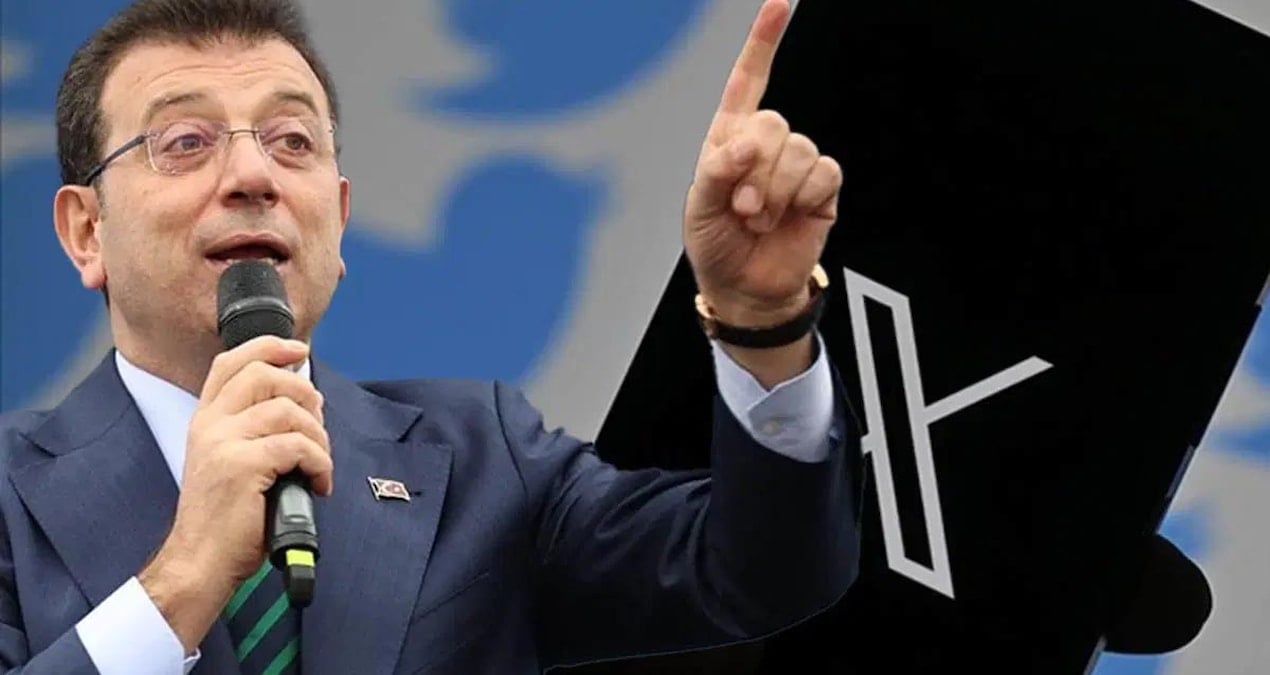
The Legal Battle Surrounding Ekrem İmamoğlu’s Social Media Access
In a significant legal development, the access to Ekrem İmamoğlu’s official account on the social media platform X has been blocked through a court ruling. This decision comes at a time of mounting tensions within Turkish politics, especially concerning freedom of expression and access to information.
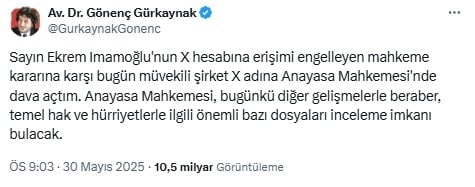
Gönenç Gürkaynak, the attorney representing İmamoğlu, announced the filing of a case with the Constitutional Court against this ruling. In his statement on social media, he emphasized the constitutional implications of the court’s decision. Gürkaynak remarked, “Today, on behalf of my client, I have filed a lawsuit with the Constitutional Court against the ruling that blocks Mr. Ekrem İmamoğlu’s access to his X account. Along with today’s other developments, the Constitutional Court will have the opportunity to examine important cases related to fundamental rights and freedoms.”
This situation points to a broader trend affecting political figures in Turkey, where social media serves as a crucial platform for communication and engagement with the public. The blocking of İmamoğlu’s account is not just a legal issue; it also raises questions about the limitations imposed on political discourse in the country.
Implications for Political Communication
Twitter, now known as X, has been a central hub for political communication, especially during election campaign seasons. For İmamoğlu, the former mayor of Istanbul, and a presidential candidate , his social media presence is essential for reaching voters and articulating his party’s stance.
The court’s decision to block his account is seen as a strategic move to suppress dissent and limit his ability to connect with supporters. With an increasing number of politicians facing similar challenges , the impact of such actions on democracy and political transparency is becoming a point of contention among Turkish citizens and human rights advocates.
Context of the Ruling
Ekrem İmamoğlu, a prominent figure from the Republican People’s Party (CHP), has faced legal challenges that some argue are politically motivated. The recent legal maneuvers against him have raised eyebrows domestically and internationally. While the Turkish government maintains that these actions are in accordance with the law, critics argue that they are part of broader efforts to curtail the freedoms of political opponents and activists.
Sitting in Silivri Prison, İmamoğlu’s circumstances present a dire reflection of the state of political freedoms in Turkey. The fact that legal actions are now targeting social media accounts exemplifies a growing trend of censorship that many believe undermines democratic values.
Establishing a New Identity Online
In response to the blockage of his main account, İmamoğlu’s team quickly adapted by creating a new profile called “Presidential Candidate Office.” This move, aimed at ensuring continuity in communication, demonstrates his determination to remain engaged with his supporters despite the setbacks. The transition to a new account reflects the resilience of political figures in environments where traditional platforms are stifled.
The advent of new accounts and platforms also raises a tactical question for political communication: how effective can these alternatives be in conveying messages to a broad audience? While the followers of İmamoğlu will likely migrate to his new account, the issue remains whether such rapid changes can successfully counteract the effects of censorship.
The Role of the Constitutional Court
The involvement of the Constitutional Court in this matter will be pivotal. As the case unfolds, it could set a precedent for future cases involving social media and political figures. The court’s ruling will not only impact İmamoğlu but could also influence how other political personalities navigate the turbulent waters of digital communication within the Turkish political landscape.
Historically, the Constitutional Court has been seen as a guardian of rights and freedoms. However, public trust in its role is waning amid perceptions of political pressure influencing its decisions. The outcome of İmamoğlu’s case could either bolster that trust or deepen existing skepticism.
In closing, the ongoing developments surrounding Ekrem İmamoğlu’s blocked social media access highlight the complex interplay between law, politics, and freedom of expression in Turkey. As the case progresses through the Constitutional Court, observers both within Turkey and abroad will be keenly watching to see how it shapes the future landscape of political communication in the region. The stakes are high not just for İmamoğlu but for all individuals advocating for democratic rights and freedoms.