
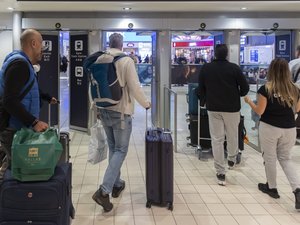
The European Union announced on Wednesday, July 30, 2025, that starting from October 12, 2025, an automated external border control system will be implemented. This new system is designed to replace the traditional manual passport stamping and aims to efficiently record the biometric data of third-party nationals traveling within the Schengen area. The primary goal is to enhance security and effectively monitor the entries and exits of travelers across EU borders.
This automated system will store critical information in a unified database, including names , passport numbers , fingerprints , and photographs of all third-country nationals intending to visit Europe for short stays. According to Magnus Brunner , the European Commissioner charged with migration affairs, “It will help us know who enters the EU and who comes out.” This initiative has been a topic of discussion and planning for almost a decade and marks a significant transition in border management within the EU.
Addressing Concerns about Queue Lengths
<pDespite the anticipated benefits, the implementation of this automated control system has garnered concerns from various stakeholders, including transport companies. Many express fears that the introduction of this system could lead to increased wait times at airports and train stations. Sadiq Khan, the Mayor of London, voiced his apprehensions, questioning whether this system would result in “chaos” at critical transit hubs like St Pancras station, which serves Eurostar trains between the UK and mainland Europe.
<pThe European Commission is aware of these concerns and has been emphasizing that the rollout of this system will be conducted in phases, allowing member states, travelers, and businesses ample time to adjust to the new protocols. A spokesperson for the Commission stated, “Member States, travelers, and businesses will have time to adapt to the new system.” The gradual approach is designed to facilitate a smooth transition while instilling confidence among concerned parties.
Information Campaigns to Support Smooth Implementation
<pIn anticipation of the launch, British authorities have already cautioned their citizens that a few additional minutes might be added to the border crossing process for each passenger. However, the European executive assures that proactive information campaigns will be deployed to streamline the adoption of this system. These campaigns are anticipated to help alleviate some of the stress associated with adjusting to the new procedures and will emphasize the importance of the system for curbing irregular migration and enhancing the overall security of European citizens.
<pParticipating in this automated border control initiative will be a total of twenty-nine countries, including all EU member states except Cyprus and Ireland, alongside Iceland, Liechtenstein, Norway, and Switzerland. This broad participation reflects the EU’s commitment to cohesive and coordinated border management among nations within the Schengen area.
<pThe effectiveness and efficiency of the automated border control system hinge not only on the technology but also on the collaboration between member states and the successful communication of changes to travelers. With an emphasis on monitoring and security, the system aspires to be an innovative solution in addressing contemporary challenges faced at borders.
<pWhile the road to automation is not without its bumps, stakeholders recognize the need for such steps in an increasingly interconnected world. The blending of technology with border management signifies a modernization of processes that have historically relied on manual verification, which can be time-consuming and less secure. This initiative represents a pivotal moment for European border policy.
Ultimately, the automated external border control system marks a significant evolution in how the European Union manages its borders. While there are valid concerns regarding queues and the potential for increased waiting times, the long-term benefits of enhanced security and streamlined entry processes are expected to outweigh these challenges. The EU remains committed to ensuring that the transition is as seamless as possible, reassuring both travelers and member states of their dedication to maintaining efficient and secure borders.