
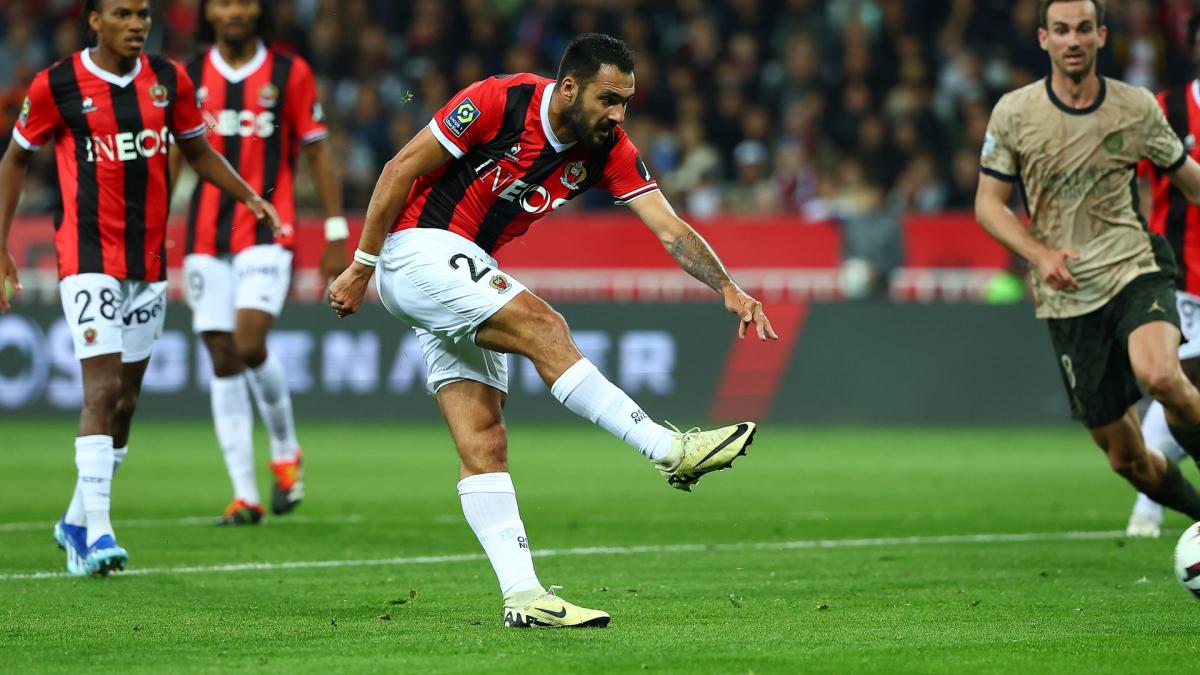
Gaëtan Laborde’s Transfer to Saudi Arabia: A Win-Win Situation
In the world of football, transfer windows often bring about unexpected developments, and the most recent transfer involving French striker Gaëtan Laborde is no exception. This Monday, OGC Nice made headlines by announcing that Laborde will be leaving for Al-Diraiyah Club in Saudi Arabia. This transfer is not just a pivotal moment for Laborde, who now ventures into a new chapter of his career, but it also opens discussions about the financial implications for both clubs involved.
Laborde’s move is set to generate a transfer fee of approximately 4 million euros for OGC Nice. While this figure seems straightforward, it’s essential to consider the broader context, particularly for Girondins de Bordeaux, the club where Laborde began his professional journey. Under FIFA’s solidarity mechanism, Bordeaux is entitled to a portion of the transfer fee, which is expected to amount to over 140,000 euros. This financial boost is a significant development for the club, currently competing in National 2, the fourth tier of French football.
The solidarity mechanism serves a crucial purpose in football by ensuring that clubs that nurture young talent receive financial rewards when these players transfer to new teams. By investing in youth development, Bordeaux not only hopes to foster future stars but also sees proven dividends when these players make moves to more prestigious clubs. With this incoming money, Bordeaux can stabilize its financial standing and possibly enhance its infrastructure, helping to bolster their academy system for the future.
Bordeaux’s president, Gérard Lopez, likely welcomes the news of Laborde’s transfer. The additional funds will undoubtedly ease some financial pressures on the club, allowing for essential operational improvements and potentially even investment back into player acquisitions. The financial landscape of club football has seen dramatic shifts, and with many clubs facing budget constraints, such unexpected revenues can be a game-changer.
Meanwhile, Laborde moves on to a new and exciting chapter of his career in Saudi Arabia. Yet, this transfer raises questions about the increasing allure of the Saudi Pro League. In recent years, this league has captured the attention of players from Europe, who, seeing the financial incentives, view it as a valid alternative to top European leagues. For Laborde, the switch represents not just a financial opportunity, but also the challenge of adapting to a different culture and playing style.
This move comes at a time when several other notable players have made similar transitions, further solidifying the idea that the Saudi league is becoming a viable option for even known talents from Europe. It will be interesting to see how Laborde’s skills translate to his new environment and how he thrives with the Al-Diraiyah Club. Over the years, Laborde has built a reputation for his goal-scoring ability and versatility on the pitch, traits that are highly sought after in any league.
Moreover, the transfer sparks interest in how clubs like OGC Nice and Al-Diraiyah will navigate these kinds of financial and player-related deals in the future. With football evolving year by year, clubs are increasingly utilizing analytics and scouting strategies to find talent that can fit their systems while balancing budgetary concerns. Nice, by securing a solid transfer fee, positions itself to reinvest in new talent, scouting initiatives, or infrastructure upgrades, which could ultimately lead to future on-pitch success.
As the football landscape continues to shift, it is essential for clubs to stay ahead of the curve. The repercussions of Laborde’s move will be felt not just by OGC Nice and Bordeaux but by other clubs that are closely watching the progress of players who transition between leagues. The financial ramifications of such transfers will ultimately influence how clubs manage their operations and player development strategies moving forward.
In conclusion, Gaëtan Laborde’s transfer to the Al-Diraiyah Club underscores the multi-faceted impact that such moves can have on various stakeholders within the footballing ecosystem. From immediate financial benefits to long-term strategic decisions regarding player development, the implications of this transfer extend far beyond the pitch. As clubs across Europe and beyond look to fine-tune their strategies for recruitment and talent management, Laborde’s transfer serves as a poignant reminder of the ever-evolving nature of football in a globalized world.