
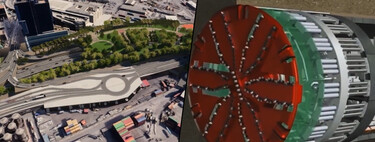
Bilbao’s Long-Awaited Subfluvial Tunnel Project Set to Begin
Bilbao has been promising for a long time a subfluvial tunnel under the Nervión River, aimed at connecting both banks and significantly reducing travel time. This ambitious project is expected to alleviate one of Euskadi’s most significant traffic bottlenecks. The exciting news is that construction is set to commence this summer.
A Problem that Has Persisted for Decades
The Rontegi bridge, supporting nearly 175,000 vehicles daily, stands as the main road congestion point in Bizkaia. To cross the Nervión estuary without using the bridge requires a detour exceeding 13 kilometers. This not only results in chronic traffic jams but also translates into significant time loss and increased emissions.
After decades of planning, the proposed solution is a subfluvial tunnel that will penetrate the riverbed and directly link the Right Bank with the Left Bank.
Key Features of the New Tunnel
The upcoming subfluvial tunnel will span 3.2 kilometers, consisting of two independent tubes—one for each direction of travel—each equipped with two lanes and safety shoulders. This new infrastructure will connect the Artaza roundabout, situated between Leioa and Getxo, with Ballonti, located between Portugalete and Sestao.
According to El Correo, the project will also include critical connections with La Avanzada, the Uribe Kosta corridor, and the Zugazarte neighborhood in Getxo. Current rush hour travel times that exceed fifteen minutes could be reduced to just four.
Engineering Challenges Ahead
Drilling up to 45 meters beneath the riverbed presents a considerable engineering challenge, especially given the geologically sensitive materials involved. Lamiako’s sandy terrain is particularly delicate, necessitating the cut and cover technique for construction. This method involves excavating from the surface, erecting retaining walls, and then covering the infrastructure to create a subterranean tunnel.
The tunneling operations will initiate in Artaza, an area characterized by high residential density and the proximity of schools. To minimize disruption, open-air work will be restricted to daytime hours, while drilling inside the galleries will proceed around the clock.
Project Scale and Economic Impact
The subfluvial tunnel excavation is a massive undertaking. It is estimated that approximately 1.8 million cubic meters of earth will be removed, requiring over 21,000 tons of steel. Over 170 trucks will operate daily to transport the excavated material to the Port of Bilbao for dike filling.
Two of the four major contracts for the project have already been awarded, totalling approximately 277 million euros (excluding VAT) with a completion timeline set for 60 months. The total investment for the entire project is expected to reach around 540 million euros, aiming for completion by 2032.
Environmental Considerations and Community Concerns
While the Provincial Council maintains that the new tunnel will significantly reduce emissions—projecting a decrease of 6,000 tons of CO₂ and savings of two million liters of fuel annually—community concerns have arisen. Several neighborhood and environmental groups criticize the project as prioritizing road traffic during a crucial climate transition.
Initial plans included a rail connection to Bilbao Metro stations, which has since been removed, raising sustainability concerns. Local residents are worried about noise and vibrations from construction, as well as increased truck traffic over several years. The Provincial Council has committed to implementing controls and providing a citizen service office throughout the project’s duration.
In summary, Bilbao’s subfluvial tunnel project represents a significant leap towards resolving long-standing traffic issues while also sparking critical discussions about urban planning and environmental impact.