
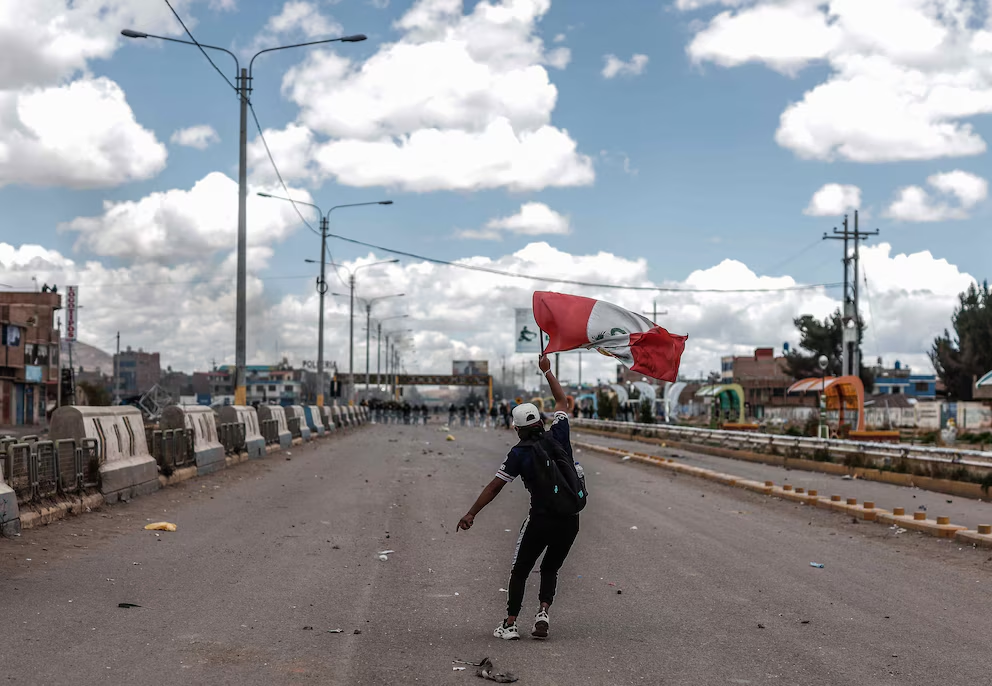
When the Legitimate Right to Protest Compromises Tourism Safety and Competitiveness
The Lingering Impact of Protests
When a protest concludes, it’s easy to believe that normalcy returns. Yet, the repercussions often linger long after roads reopen and blockades are lifted. These silent effects accumulate over time, severely affecting a country’s most valuable asset: its reputation. For tourism, this reputation is intrinsically tied to perceptions of safety, which directly influence competitiveness.
Recent alerts regarding social mobilizations in various regions of Peru highlight the need to look beyond mere political landscapes. In tourism, the impact extends beyond street demonstrations; it affects how the world perceives the country. The issue is not only about the protests themselves but also about their locations, reach, and the broader message they communicate internationally.
Key Tourist Areas Under Threat
Reports indicate potential protest concentrations in Lima, particularly around crucial sites such as the Historic Center or Plaza San Martín, as well as in vital tourist regions like Cajamarca, Cusco, and Puno. These areas are not peripheral; they are central to Peru’s tourism experience, where visitors encounter services and economic activities.
When these vital nodes are disrupted, the repercussions extend beyond the protest participants, touching the entire tourist infrastructure. Tourism, unlike many other sectors, cannot be easily relocated without incurring costs. Its viability relies on accessibility, continuity, and predictability. Therefore, security—both real and perceived—is foundational to the tourism industry.
The Perception of Risk
Inside Peru, there may be attempts to categorize specific protests as isolated incidents rather than a widespread crisis. However, from an international perspective, such distinctions rarely exist. A traveler from Europe, the USA, or Asia is unlikely to delve deeply into the Peruvian political context. Instead, they find images and news reports of conflicts, leading to a straightforward conclusion: it’s safer to choose a different destination.
In tourism, perceived risks hold equal weight to actual risks. A traveler does not need to experience a prolonged crisis to be deterred; the mere possibility of disruptions is sufficient to influence travel plans.
Systemic Risks
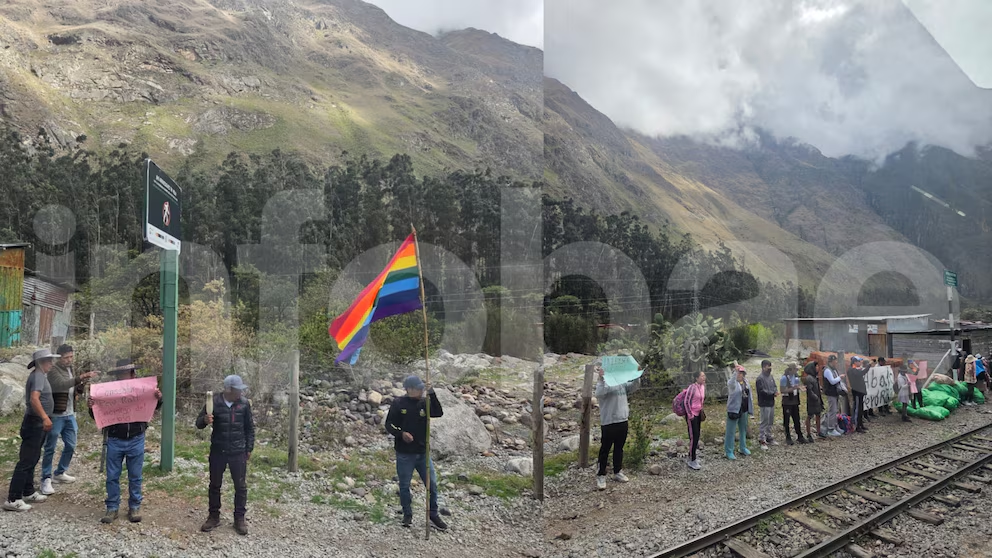
What makes these protests particularly concerning is their potential to unite various regions under a common cause. This could lead to widespread disruptions, particularly targeting essential transportation routes to and from Lima. In such a highly interconnected tourism system, disturbing one node can jeopardize the entire visitor experience.
When uncertainty clouds the travel experience, a destination loses its allure.
Economic Ramifications
The effects of tourism disruptions extend beyond large corporations. They also devastate local stakeholders: guides awaiting customers, drivers reliant on each transfer, family-run eateries, and communities that depend on visitor flows for their livelihoods. The tourism sector thus bears an unequal burden, impacting those with the least resilience.
Despite showcasing rich attractions and cultural diversity, Peru has struggled with stability management. In the realm of global tourism, it’s insufficient just to have unique offerings; ensuring a smooth, uninterrupted experience is crucial. Security and risk management are not ancillary considerations—they represent essential components of destination governance.
Conclusion: The Need for Awareness
Protest is an integral aspect of democratic society, but the consequences are not neutral. Each mobilization at critical locations reverberates beyond its immediate context, translating into shifts in perception, choices, and ultimately, economic flows.
Peru does not grapple with a scarcity of tourism resources; it faces the more complex task of managing trust. As a nation, are we prepared to recognize that security transcends internal order and is central to the future viability and competitiveness of the tourism sector?
Only by addressing these challenges can Peru hope to maintain its status as a sought-after destination in the global tourism landscape.