
Podemos’ Ione Belarra Speaks Out Against Catalonia’s Immigration Powers Shift
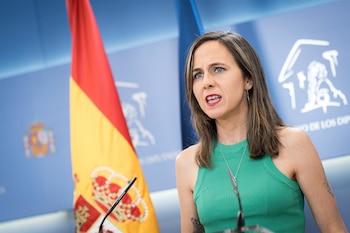
The Secretary General of Podemos , Ione Belarra , has publicly condemned the proposal to transfer immigration powers to the Generalitat of Catalonia . Speaking in an interview with *Ara*, which was covered by Europa Press , Belarra characterized this move as deeply concerning, suggesting that it would lead to enhanced scrutiny and potential discrimination against migrants in the region.
Belarra voiced her strong opposition to the initiative put forth by Junts , stating emphatically that “it would imply a huge recriminalization of migrants.” The implications of such a transfer, according to her, would mean that the Mossos d’Esquadra , the police force of Catalonia, would be engaged in practices akin to those currently employed by the National Police , particularly regarding ethnic profiling.
In her remarks, Belarra highlighted the injustices that could potentially arise. She explained that discriminatory policing based on skin color would become more pronounced, with individuals being stopped “for your skin color at the exit of the subway, when you are going by bus, in the workplace.” This, she argues, would lead to practices reflective of systemic racism , where individuals are unfairly targeted based solely on their appearance.
When asked about possible dialogues with Junts on this subject, Belarra confirmed, “there is no contact.” This lack of engagement suggests a growing divide between political factions regarding immigration policy and indicates the complexities surrounding the integration of various police forces and their operational jurisdictions within Catalonia.
Racism and Rising Tensions
In the context of growing tensions in Spain , Belarra referenced the violent incidents in Torre Pacheco , Murcia , labeling them as a display of “racist terrorism of the extreme right.” This framing of the violence underscores her concerns that rising extremism is manifesting in violent outbursts, not merely as sporadic skirmishes between rival groups but as organized actions by neo-Nazi factions within the state. According to Belarra, these groups are mobilizing to instill a culture of fear among communities, particularly targeting migrant populations.
Her comments illuminate a larger discourse on immigration , national identity , and societal integration in Spain. Amidst ongoing debates about the role of police and their treatment of minority communities, the proposal to allow regional powers to assume control over immigration could exacerbate existing issues of racial prejudice and inequality in law enforcement.
The Broader Implications for Immigration Policy
Belarra’s stance represents a critical perspective within the broader conversation around immigration policy in Spain—a topic that is becoming increasingly polarizing. The social implications of transferring immigration powers are profound, as public sentiment around migration remains contentious. Many advocate for a principled approach that prioritizes human rights and the humane treatment of migrants, while others focus on perceived threats to national security and sovereignty.
As these discussions continue, the role of political leaders becomes vital. Responsible dialogue must prioritize the dignity and rights of migrants, integrating social justice frameworks into policy-making. Recognizing the contributions of immigrants to society is essential in fostering inclusive communities and combating the narrative that portrays migrants as liabilities rather than assets.
Ultimately, how leaders handle these issues will shape the future of immigration in Spain. As society grapples with the impact of globalization and migration, it is crucial to advocate for policies that reflect values of equity, understanding, and compassion.