
The Pistachio Crisis: Impacts of the Iran War
Since the United States and Israel struck Iran on February 28, 2026, triggering a prolonged conflict, the global focus has predominantly been on oil price fluctuations and other key commodities like urea and helium. While such goods are crucial, one less-publicized but equally affected commodity is the humble pistachio.
The Changing Landscape of the Pistachio Market
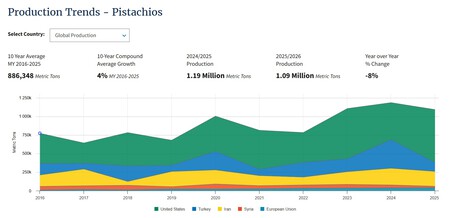
Historically dubbed “green gold,” the pistachio market has undergone significant transformation over the last half-century. In the 1960s and 70s, Iran was the overwhelming leader in global pistachio production, far exceeding competitors like the United States and Türkiye. Fast forward to today, and the landscape has drastically shifted, with the U.S. projected to dominate with 712,700 tons—65% of the world’s total pistachio production by the 2025/2026 season. Iran is expected to hold only 18%.
U.S. Dominance and Global Implications
The U.S. has firmly established itself as a leader in global pistachio production, consistently outpacing Iran and Türkiye over the past decade. This shift is not a mere coincidence; it has deep-rooted connections to political decisions and market dynamics shaped in Washington. The California pistachio industry began expanding in the mid-20th century, significantly after Washington imposed trade embargoes on Iran, thus clearing the market for American farmers. In 1984, a 241% tariff was levied on raw Iranian pistachios, providing further impetus to U.S. production.
The Role of Politics in the Pistachio Boom
Pistachio farming in California heavily benefited from both favorable domestic policies and the ongoing geopolitical tensions with Iran. As global hostility towards Iran grew, Californian producers capitalized on their ability to offer an alternative source for customers. Interestingly, analyst Justin Fox noted that this relationship is so complex that even a documentary titled Pistachio Wars suggests that pistachio interests may have influenced U.S.-Iran relations.
Impact of the Iran Conflict on Global Markets
The ongoing war has raised pressing questions about the future of the pistachio market. Industry experts believe that U.S. farmers may benefit significantly due to limitations on Iranian exports caused by logistical disruptions and sanctions. Experts warn that the shipping blockade around the Strait of Hormuz is undermining Iran’s ability to export its pistachios. This situation, combined with anticipated good harvests in California, is poised to elevate the prices and availability of U.S. pistachios.
Challenges Ahead for U.S. Producers
Despite the potential advantages, U.S. producers are not immune to challenges. The conflict has escalated shipping costs and complicated logistics, with reports of millions of dollars’ worth of Californian pistachios stranded in transit. Moreover, the war has also harmed California growers by increasing the prices of essential inputs like fertilizers, thereby affecting their overall profitability.
A “Tense” Market Moving Forward
As the situation unfolds, the pistachio market remains fraught with uncertainty. Experts warn of potential upheavals in pricing and supply capabilities as the war continues, particularly with reports of damage to Iranian processing facilities. The increasingly tense market underscores the interconnectedness of geopolitical events and agricultural commodities, illustrating that the impacts of war extend far beyond immediate violence.
Conclusion
In summary, while oil continues to dominate headlines, the implications of the ongoing conflict in Iran extend to the pistachio market—an essential sector that intertwines economics with geopolitics. The escalating tensions and current supply challenges may well reshape the future landscape of pistachio production, transitioning the U.S. further into the forefront of this lucrative market.