
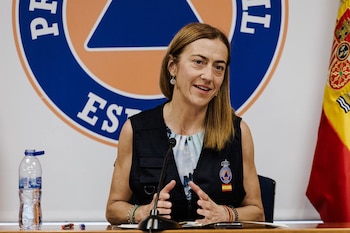
Virginia Barcones Addresses National Response to Rising Fires
The recent wildfires sweeping across several regions have prompted increased scrutiny of the response measures employed by the authorities. Virginia Barcones, the General Director of Civil Protection, recently held a press conference where she emphasized the current state of affairs regarding these devastating fires affecting numerous communities.
During her address, Barcones firmly stated that the National Center for Alerts and Emergencies has not received any requests from autonomous communities to escalate any fires to operational situation 3—the highest level of emergency. This claim takes central importance, highlighting that no region has deemed the situation severe enough for a national emergency declaration.
Focus on Operational Readiness
Barcones underscored her commitment to remaining focused on her role as the fires rage on. “If I had to respond to all the things that have called me throughout these days, I would not dedicate myself to do anything else in many days. I am focused on my work,” she stated, stressing the importance of prioritizing effective management over engaging with criticisms.
The press conference revealed the complexity of managing multiple active fires, as Barcones notified the public about the ongoing threats. “We continue to have 13 active forest fires of level two across three autonomous communities,” she stated. This admission points to the urgency of the situation and the challenges faced by emergency services.
The Question of Responsibility
Barcones faced questions about her leadership amid criticisms from opposition parties, particularly from the Popular Party. She refrained from directly addressing these accusations but instead chose to emphasize the dedication and expertise of her team. “The only thing I will continue to say is that I will not consent to the questioning of the work of those magnificent professionals,” she affirmed. This defense showcases her belief in the competency of civil protection officers, asserting their crucial role in contemporary emergency management.
While political accountability may loom large in public debates following such disasters, Barcones maintains a stance of professionalism amidst adversarial narratives. Her aim appears to be prioritizing operational readiness rather than engaging in political discourse.
Monitoring and Recovery Operations
The ongoing monitoring strategy is another critical point raised by Barcones. With a commitment to “24 hours a day” oversight of the fires, the oversight aims to ensure an effective response when necessary. This vigilance represents a significant commitment from Civil Protection to address the evolving situations in real-time.
As communities confront the reality of these wildfires, Barcones expressed concern regarding the increasing frequency and intensity of natural disasters, which have, in recent years, become alarmingly common. “We will continue with this permanent monitoring of the evolution of each of them,” she stated, emphasizing the ongoing reformations needed in disaster management protocols to better tackle these escalations.
Conclusion
In navigating the challenges posed by natural disasters, the focus remains on swift action and maintaining the credibility of the response teams. Virginia Barcones’ commitment to an operational approach rather than a politicized one could be essential in transforming how authorities handle emergencies moving forward. As wildfires continue to rage, the public remains vigilant, expecting a combination of leadership, responsiveness, and a well-coordinated effort to protect communities and restore stability.