
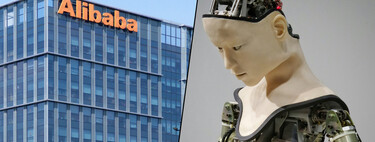
Alibaba’s Transformation: From E-commerce Giant to AI Powerhouse
In just two years, Alibaba has dramatically shifted its trajectory, transforming from a beleaguered e-commerce giant facing regulatory scrutiny to a formidable player in the open source AI landscape. The company’s family of Qwen models has amassed an impressive 400 million downloads and 140,000 derived models, outstripping all Western competitors, with the exception of Meta’s Llama . This remarkable surge marks a pivotal moment for Alibaba, indicating its ambition to shape the future of artificial intelligence.
Significance of Qwen’s Success
Alibaba’s CEO, Eddie Wu , has boldly declared that Qwen aims to be “the Android of the AI era.” This statement underscores Alibaba’s commitment to fostering an open AI ecosystem. In less than two years, the company has unveiled 357 AI models , maintaining a pace of innovation that rivals giants like OpenAI and Google —but without the limitations set on their public versions.
The strategy mirrors Google’s approach with Android , which involved freely distributing the operating system to dominate the infrastructure supporting it. In this instance, however, the dominant player isn’t Spring Valley; it’s Hangzhou.
The Context of Alibaba’s AI Venture
- Investment Moves : Alibaba injected over $800 million into top Chinese AI startups, including Moonshot , Baichuan , and Zhipu , before realizing that developing its own technology could position it at the forefront of the market.
- Shift in Focus : Those external investments have now ceased as Alibaba has shifted its focus inward.
The path to revival has not been easy. Between 2020 and 2022, Alibaba lost half of its stock market value due to a sweeping regulatory offensive from the Chinese government. The company’s research arm, DAMO Academy , was forced to lay off 30% of its workforce.
Notable scientists, including Yang Hongxia , the creator of M6 , and Zhou Chang , the technical leader of Qwen, either departed for companies like ByteDance or faced job losses. This brain drain posed a significant challenge, yet Alibaba managed to regain its footing and push forward in the AI arena.
Turning Point Amidst Competition
Alibaba faced an unexpected challenge in January 2025 when DeepSeek launched R1 , an open source reasoning model that rivaled OpenAI’s offerings. Its rapid adoption raised alarms within Alibaba, prompting Joe Tsai , Alibaba’s president, to question their competitive edge. He remarked, “How is it possible that they got ahead of us?”
In response, Alibaba’s AI team made a drastic move. On the first day of the Chinese New Year—a time typically reserved for celebration—the team canceled their vacation to launch Qwen 2.5 Max , quickly surpassing DeepSeek’s V3 model and signaling that the battle for AI supremacy was far from over.
Investment in AI and Cloud Infrastructure
To further cement its position, Alibaba has committed to investing a staggering 380 billion yuan (approximately $53 billion ) over three years into AI and its cloud infrastructure. This investment eclipses what the company has spent in the previous decade combined.
In the second quarter of 2025, Alibaba’s AI-related revenues surged by triple digits for the seventh consecutive quarter. Alibaba Cloud reported a 26% year-on-year increase in sales, and the company’s stock has risen by more than 90% this year alone—indicating robust market confidence.
Strategic Monetization of AI Models
The strategic approach to open models is paying off. By generating demand for GPUs and training , Alibaba monetizes this growth through its cloud services. This model closely resembles the relationship between Microsoft and OpenAI concerning Azure , but Alibaba stands apart as both an investor and a recipient of these profits.
With no direct competition offering open source models like Alibaba’s, the company has positioned itself uniquely within the industry compared to Amazon , which lacks competitive models, Google with its closed models, and Meta , which doesn’t have its own cloud infrastructure. Alibaba has seamlessly integrated an open model approach with cloud services and a developer ecosystem, positioning itself as the fourth largest cloud provider globally, following the dominant trio of Amazon, Microsoft, and Google.
Learning from Past Mistakes
However, Alibaba’s journey has not been without missteps. Initially, the company opted for a less effective architecture compared to OpenAI , which capitalized on the breakthrough of GPT technology. When ChatGPT became a sensational hit in December 2022, Alibaba was forced to reassess its strategy.
- In August 2023 , Alibaba promptly opened the Qwen code as Llama 2 stumbled in the Chinese market, swiftly filling the void.
- In February 2025 , Apple selected Alibaba as its partner for Apple Intelligence in China, marking a significant validation of Alibaba’s capabilities.
By understanding its missteps and recalibrating its focus, Alibaba is aiming to boost the context of its AI endeavors significantly. The roadmap outlined by Eddie Wu details plans to expand the model parameters extensively from one billion to ten billion and scale context from 1 million to 100 million tokens.
The Challenge Ahead
Despite these promising developments, a significant hurdle remains: penetrating the Western market . While Qwen has successfully rooted itself in Asia, it still lags behind Llama in Europe and North America.
The overarching question looms large: Can a Chinese company, having navigated regulatory challenges and a talent exodus, truly establish itself as the global standard for open source AI? The efficacy of this endeavor will ultimately depend on whether Western markets are ready to embrace an AI operating system conceived in Hangzhou .