
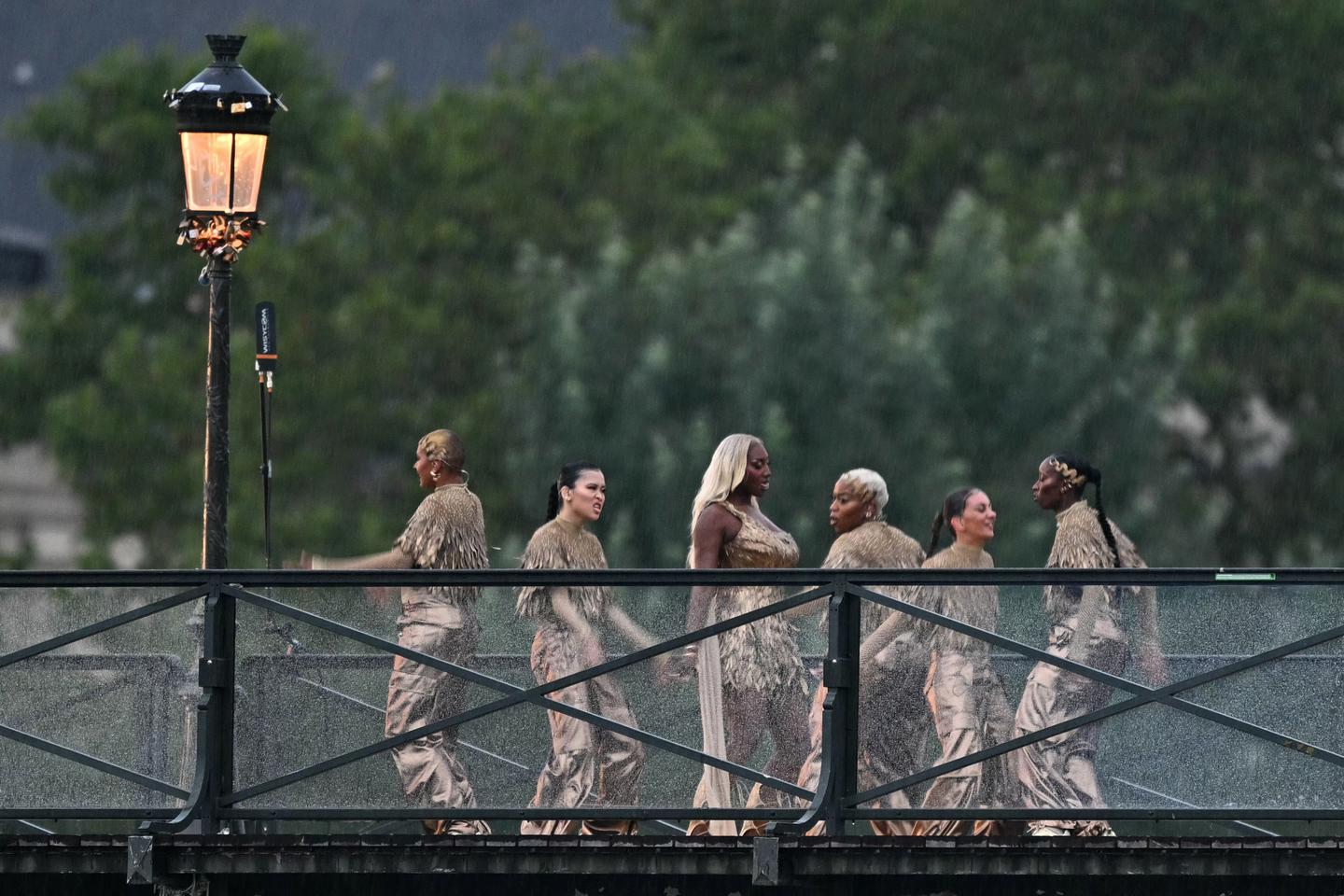

Controversy Surrounding Aya Nakamura and the Paris 2024 Olympics
On March 8, 2024, amid rising speculation about the prominent presence of Aya Nakamura at the opening ceremony of the 2024 Paris Olympics , a group of young nationalists, affiliated with the far-right movement Les Natifs , gathered on the Île Saint-Louis in Paris. They unveiled a banner hostile to the Franco-Malian singer, stating, *“Y a pas moyen Aya, ici c’est Paris, pas le marché de Bamako!”* This phrase references both a popular song by the artist, *Djadja*, and her hometown of Bamako, the capital of Mali.
The Rise of Les Natifs
Spawned from the now-defunct Génération identitaire , which was dissolved in 2021, Les Natifs have become known for their confrontational tactics, employing banners and posters aimed at opposing immigration and advocating for what they deem “ European civilization .” With a following of 10,000 on Instagram and 19,000 on X , their anti-immigration rhetoric has gained traction. Recently, they attracted attention for plastering images of Joan of Arc and Saint Genevieve over photographs of veiled women displayed in the Basilica of Saint-Denis in Seine-Saint-Denis.
Their anti-Aya Nakamura banner, seen nearly 4.5 million times on their X account, was accompanied by incendiary text condemning President Emmanuel Macron ‘s alleged intent to “replace French elegance with vulgarity.” They claimed that the aim was to “Africanize our popular songs and displace the native people in favor of extra-European immigration .” Such statements evoke sensitivities surrounding national identity, culture, and geopolitical dynamics.
Public Reaction and Cultural Identity
The backlash against Aya Nakamura speaks volumes about the cultural tensions simmering within France. Many supporters argue that her presence at the Olympics symbolizes pluralism and cultural amalgamation , portraying France as a nation that celebrates its diverse roots . Conversely, the critics claim that her music represents a departure from traditional French values, questioning whether individuals like Nakamura should be the face of French culture at a historically significant event.
Supporters of Nakamura argue that she is emblematic of modern France—where multiculturalism enriches the fabric of society. They see her rise as a testimony to hybrid identities and the need for inclusivity in a rapidly changing world.
The Intersection of Music and Politics
The intersection of music and politics has long been a contentious landscape. In the case of Nakamura, her ascendance in the French pop scene is not merely an issue of taste but also of national representation . As music increasingly becomes a channel for political dialogue, artists are positioned as symbols for broader cultural conversations. This role often requires them to navigate complex terrain, from fandom to public scrutiny.
Nakamura’s repertoire tackles themes reflecting both personal experiences and societal issues, resonating not just in France but across diverse communities. This phenomenon raises questions about who gets to represent a nation and the criteria involved in such selections.
The Broader Implications for France
The outcry against Aya Nakamura’s potential involvement in the Olympics mirrors broader societal débats regarding national identity , immigration , and the complex layers of French culture . The controversy touches on anxieties surrounding globalization and cultural integration. As France inches closer to the Olympics, the stakes for whom it chooses to represent are higher than ever.
With the Olympics set to unfold in July 2024, this moment serves as a reflective pause for France and its citizens. The events leading up to this grand celebration offer a microcosmic view of the larger sociopolitical landscape—one grappling with diversity , inclusion , and the evolving nature of national pride .
As the nation prepares to showcase its cultural heritage on a global stage, the aftermath of these polarizing discussions will undoubtedly influence the pervasive debates surrounding identity politics in France for years to come.
General News – 2