
Deadly Tribal Clash in Southern Iraq: A Land Dispute Turns Violent
At least six people have lost their lives in recent clashes between rival tribes in Maisan province, southeastern Iraq. This tragic event highlights the ongoing issues surrounding land disputes in the region, which often ignite fierce violence and have severe consequences for local communities.
The Incident
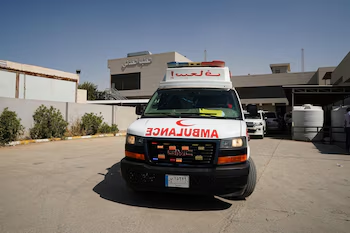
Reports indicate that the clashes erupted over a territorial disagreement concerning agricultural land. Medical sources cited by the Iraqi Shafaq news agency confirm that firearms were employed in the conflict, resulting in widespread casualties. In addition to the six confirmed deaths, seven individuals sustained injuries, and multiple victims are in critical condition. The unstable situation raises concerns that the death toll might rise as authorities assess the severity of injuries.
The Underlying Causes
Territorial disputes between tribes in southern Iraq are not new; they are rooted in historical, social, and economic factors. The region, rich in agricultural land, is a vital resource for many tribes. As competition for these resources intensifies, incidents like this one become more frequent.
The Role of Firearms
Iraq’s historical context plays a significant role in the prevalence of violence in tribal conflicts. Millions of firearms, both short and medium-range, are in circulation across Iraq, particularly in provinces such as Maisan, Basra, and Di Car. The ready availability of weapons escalates tensions and makes conflicts more deadly. Without proper regulation and control, these disputes often turn lethal.
Community Impact
The repercussions of such violent clashes extend beyond immediate casualties. Families are destabilized, lives are shattered, and overall community cohesion is threatened. The fear of further violence can lead to mass displacement, hampering overall development in the regions affected. Moreover, the ongoing cycle of violence reinforces a culture of conflict rather than resolution.
Moving Forward
For effective solutions, local and national authorities need to prioritize dialogue and conflict resolution strategies. Initiatives aimed at land dispute mediation could be vital in preventing future clashes. Community engagement and educational programs focused on peacebuilding can also play a crucial role in fostering understanding among rival tribes.
In conclusion, the recent violent clashes in Maisan province underscore the urgent need to address underlying issues related to land disputes and weapon proliferation in Iraq. Only through concerted efforts will the cycle of violence be broken, leading to a safer and more stable environment for all communities involved.