
A Taste of Home: Sushi in Space
Sushi and ramen are to Japan what the potato omelette with onion or paella is to Spain: a mark of cultural identity. Yet, their origins are more intricate than one might suspect. While ramen originated from Chinese cuisine, sushi first emerged as a preservation technique before evolving into a culinary icon. This evolution has reached such heights that even astronauts aboard the International Space Station (ISS) have attempted to prepare sushi with the limited resources available to them.
Interestingly, while the outcome may not be perfect, it encapsulates the essence of creativity and human spirit in the cosmos.
The Unique Challenges of Space Food
Space food must meet highly specific criteria. It’s primarily lyophilized and thermosealed. Before consumption, any food items that are not ready to eat must be rehydrated. Furthermore, all ingredients sent to the ISS must comply with strict safety and cleanliness guidelines. Conservation is paramount, and while the cuisine may not seem ideal, the real challenge lies with the astronauts who consume it.
When preparing meals in microgravity, something as simple as double-sided tape can become an essential tool. Numerous videos have showcased how astronauts secure ingredient containers and utensils, like honey jars and scissors, to surfaces within the station using this adhesive.
Sushi at the Space Station
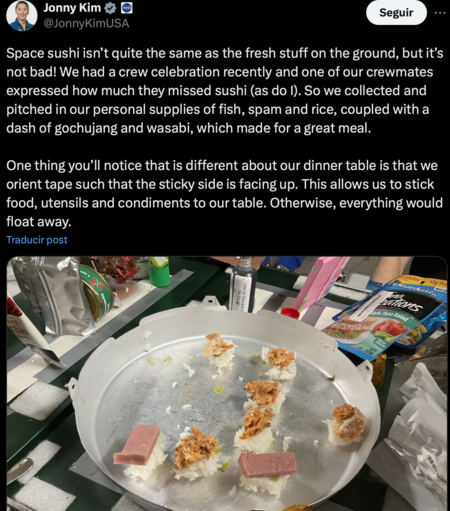
Occasionally, astronauts like Jonny Kim delight their crewmates by stepping outside the standard menu. A few weeks ago, Kim shared a photo that showcased his own sushi creation aboard the ISS. The sushi was crafted using precooked rice, fish, and spam, all seasoned with gochujang (a spicy paste made from rice and chili) and wasabi. The moisture in the ingredients helped hold everything together, while the previously mentioned tape ensured that the sushi tray stayed secured.
The Element of Nostalgia
While this sushi might not win any beauty contests, its purpose transcended mere aesthetics. It served as a way to bond the crew. In the isolation of space, astronauts often grapple with feelings of loneliness, and one crew member mentioned how much he missed sushi. This prompted the team to rummage through their personal supplies to create a culinary experience reminiscent of Earth. Although the outcome was simple—rice topped with various ingredients—the meal became a shared moment. As Kim reflected, it turned out to be “a great meal” that fostered camaraderie and alleviated a bit of homesickness.
The Quest for Nori Algae
A discussion on social media even suggested using nori algae to wrap the sushi. However, it was acknowledged that finding a dehydrated version suitable for space might be a challenge. Kim confirmed that while they did have nori, it was limited and had run out. The crew had to find a way to avoid having pieces of algae floating in their living space. They designed the system so that any crumbs or scales that might have escaped would be collected in air filters, which are cleaned weekly.
Not the First Time, and Likely Not the Last
While Kim’s sushi effort is a delightful gesture, it’s not the first time sushi has been prepared on the ISS. Japanese astronaut Soichi Noguchi once donned a chef’s hat and created a more traditional sushi dish using tuna, nori, and frozen scallops, all in the spirit of surprising his fellow crew members.
This culinary tradition serves to strengthen bonds among astronauts and make their time far from home a little more bearable. As we continue to reach for the stars, the human desire for culinary comfort is likely to keep bringing a taste of Earth into the great unknown.
In a world that often feels disconnected, these moments highlight the importance of food in bringing people together, even in the vastness of space. Whether through sushi or other shared dishes, the need for connection and belonging resides at the heart of human experience.