
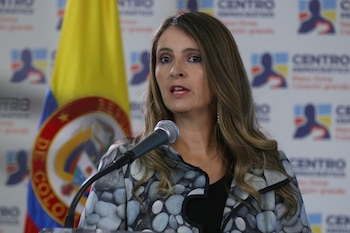
The Political Turmoil Surrounding Carlos Camargo’s Election in Colombia
The political atmosphere in Colombia has been marked by heightened tensions following the election of Carlos Camargo as the new magistrate of the Constitutional Court. This event has sparked strong criticism not only from the government but also from opposition figures regarding President Gustavo Petro’s administration. The government’s response to Camargo’s election, particularly the rejection of María Patricia Balanta—the candidate who was perceived as being aligned with Petro’s government—has created a whirlwind of controversy.
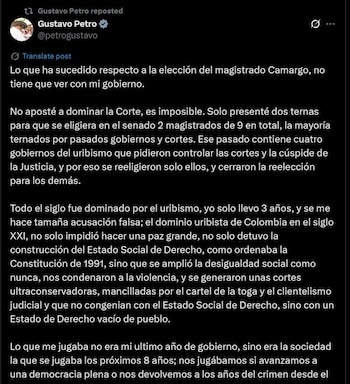
After the Senate’s decision to elect Camargo, President Petro took to social media to express his discontent. In a heated message, he said, “The woman and the black excluded, under the infundium that she was mine. Dirty liars. I have never met Mrs. Balanta… We simply incline ourselves to the most decent person. That he can do justice and guarantee the rights of the people, without penalty.” His discourse raised questions about the political sanctions imposed by the Senate and the implications for Colombian judicial independence.
Now you can follow us in Facebook and in our WhatsApp Channel
During a program titled The Debate from the week, Senator Paloma Valencia of the Democratic Center rebuked the administration for perceived irregularities in its handling of public office. Valencia’s accusations focused primarily on what she described as a lack of a coherent national project, urging that the government operates on improvised policies dictated by political interests rather than a strategic vision for the country.
Valencia’s sentiments were strong. She stated, “It is disgusting, I can’t find another word. Ask what Gustavo Petro is doing, because he shows his corruption. He has managed public office according to his political interests.” Her comments emphasize a broader concern within the Colombian political landscape regarding transparency and integrity in governance.
It’s noteworthy that Valencia also touched on the appointment system in the Executive branch, conveying a deep dissatisfaction with how public positions appear to be filled based on political favors rather than merit. She criticized the government for adopting an approach that treats public administration akin to distributing “bureaucratic quotas,” as she put it.
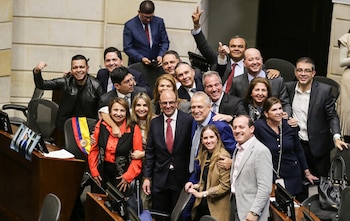
Following the Senate’s decision that favored Camargo over Balanta, the political discourse grew increasingly charged. Balanta, who had been supported by the government, did not secure the necessary votes, leading to heated discussions about ethical conduct within the political sphere.
President Petro, meanwhile, continued to voice his grievances through social media, describing the Senate’s decision as exclusive, voicing regret over Balanta’s candidacy, which he had previously endorsed.
Valencia remarked that the situation reflected a significant degradation of governance, highlighting a lack of a unified national vision and asserting that personal interests are often prioritized over the nation’s needs. The contrast in viewpoints underscores a volatile political environment.
Balanta herself faced a problematic narrative. She vehemently denied being aligned with Petro, claiming to have faced undue stigmatization based on her race and gender. She asserted her independency while emphasizing her struggle for recognition in a politically charged landscape.
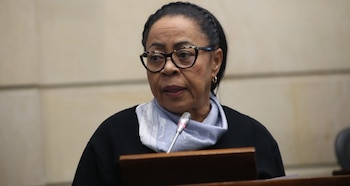
Amid these developments, María Patricia Balanta has publicly defended her stance, arguing that she distanced herself from the government and had not forged alliances with any political entity. Her statements illuminate the intersecting challenges of race, gender, and political identity that pervade Colombian politics.
The complexities surrounding this election highlight serious questions about transparency, accountability, and governance in Colombia. As political factions continue to clash, the implications of these events will likely resonate throughout the country’s evolving political landscape.
In conclusion, the political dynamics resulting from Carlos Camargo’s election as a magistrate of the Constitutional Court reflect a broader struggle for integrity and accountability in governance. As tensions between President Petro’s administration and political opposition intensify, the outcomes will undoubtedly shape the future political climate of Colombia.