
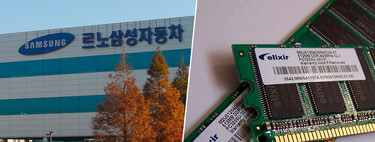
Samsung’s Bold Move: Mass Production of HBM4 Memory
Samsung is making headlines this February as it gears up to present the Galaxy S26. However, beyond their flagship smartphone, they are poised to unveil a game-changing initiative that could significantly impact both their revenue and the South Korean economy. Amid the ongoing crisis concerning RAM and SSD availability, Samsung is set to mass produce High Bandwidth Memory (HBM4).
Why HBM4 Matters for AI
Although Samsung has not officially confirmed it, reports from Reuters and local sources like Korea JoongAng Daily indicate that production of HBM4 chips will commence as early as next week. This positions Samsung as the first among the three dominant memory chip manufacturers—alongside SK Hynix and Micron—to produce these essential AI memory chips at scale.
Understanding HBM4 Technology
HBM4 memory is specially designed for high bandwidth and performance, crucial for Graphical Processing Units (GPUs). Although NVIDIA has traditionally used GDDR memory for its graphics cards, AMD explored the benefits of stacked HBM chips in its Vega GPUs. The high cost of HBM technology restricts its usage primarily to specialized applications rather than consumer products.
Producing HBM memory is notably more expensive than manufacturing standard DRAM chips. However, the advantages are compelling. HBM4 boasts double the bandwidth of its predecessor, HBM3, enabling faster data transmission and consuming up to 40% less energy. This efficiency makes it a prime candidate for AI applications, where performance and energy consumption are critical.
NVIDIA’s Role in the HBM4 Landscape
NVIDIA is expected to benefit immensely from Samsung’s new memory technology, especially as its chips are pivotal to the AI industry. Reports suggest that Samsung’s HBM4 memory will be utilized in NVIDIA’s Vera Rubin acceleration systems. Jensen Huang, NVIDIA’s CEO, has actively urged not just Samsung but the entire semiconductor industry to ramp up production of these essential components.
The Competitive Edge
According to sources from Korea JoongAng Daily, Samsung has the largest production capacity and the most extensive product line in the market. They have reestablished their technological edge by being the first to mass-produce the highest-performance HBM4 memory. In contrast, SK Hynix, which is expected to start mass production of its own version around March or April, has missed the opportunity to get ahead in this particular race. Samsung’s advantage lies in its independence from TSMC; it has its foundry and uses 4-nanometer photolithography for its HBM4 modules.
Future Outlook and Competition
Although SK Hynix is a leader in the previous generation with HBM3E memory, its delayed entry into the HBM4 market results from a strategic choice rather than a lack of capability. The high cost and heat generation of HBM chips also pose challenges, necessitating advanced cooling solutions. As Samsung and SK Hynix focus on HBM4 production, they must contend with new entrants like Intel, who, backed by SoftBank, could disrupt the market dynamics.
In summary, Samsung is on a trajectory to reestablish its manufacturing prowess by concentrating on high-performance memory aimed at the artificial intelligence sector. As prices persistently remain high for traditional DRAM and consumer SSDs, the focus shifts squarely towards creating robust hardware solutions for AI applications.
Images | Maxence Pira, Choi Kwang-mo