
Understanding the Phenomenon of Space Tornadoes
In a world where we rely heavily on technology to predict the weather, we often overlook the celestial aspects of our environment. Before, we looked at the sky to understand weather patterns, but now, with the advent of sophisticated apps and simulations, we can accurately forecast severe weather events like hurricanes days in advance. This technology potentially saves countless lives. However, what if I told you that there are even more dangerous weather events happening beyond our atmosphere? Enter the unusual realm of space tornadoes.
Space Tornadoes? Really? Contrary to what the name might suggest, space tornadoes are not swirling winds that carry cosmic debris. Instead, they are rotating vortexes of plasma and magnetic fields moving at astonishing speeds through the cosmos. A recent study reveals that these phenomena can spontaneously form in deep space, rather than solely originating from solar activities. Such revelations raise significant concerns about the potential for these structures to wreak havoc on Earth.
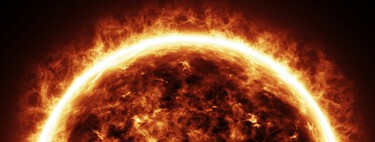
Understanding Space Weather is vital for comprehending how space tornadoes could impact our lives. When astronomers refer to space weather, they are not indicating meteor showers but rather solar phenomena driven by our Sun. Occasionally, the Sun ejects massive bursts of charged particles and magnetic fields known as Coronal Mass Ejections (CMEs).
CMEs can travel at speeds reaching up to 2,900 kilometers per second. When these bursts hit Earth, they interact with our natural magnetic shield, resulting in geomagnetic storms. While these storms can produce spectacular displays like the Northern and Southern Lights, they can also severely disrupt power grids and communications systems, overheating transformers and endangering satellites crucial for GPS and communication.
Phantom Storms are an intriguing area of study in this context. In 2023, scientists from the University of Michigan recorded geomagnetic storms on Earth that didn’t align with any known CMEs. These “phantom storms” led researchers to hypothesize that smaller space weather events could be forming between the Sun and Earth, complicating predictions and readiness.
One strongly suspected culprit is a structure known as “flux ropes”—twisted bundles of magnetic fields that act much like mini-tornadoes. While these structures had been observed before, their origins and potential danger remained a mystery.
The Challenge of Detection cannot be understated. Present space weather simulations focus primarily on major events like CMEs, often ignoring smaller phenomena like flux ropes. The researchers encountered a significant hurdle: detecting smaller vortices that lie below the resolution of current models. They likened it to trying to forecast a hurricane using a weather system that only tracks large-scale patterns.
To overcome this challenge, the team devised an innovative solution: they created a highly detailed simulation corridor focused on a specific solar flare event from May 2024. This ultra-high-resolution model, nearly 100 times finer than previous attempts, allowed them to observe the origins of these menacing tornadoes.
The Moment of Discovery arrived when the simulation depicted how these space tornadoes developed. The birth of these vortices occurred when a CME “crashed” into the slower solar wind, resulting in an intense “current sheet.” In this area, magnetic reconnection triggers the release of mesoscale vortices, similar to a hurricane generating tornadoes in its wake.
Significantly, this study confirmed that these flux ropes can generate substantial geomagnetic storms independently. Such storms, usually unnoticed, can exceed 30 nanoTeslas in strength—enough to pose a genuine threat to terrestrial systems.
The Dangerous Reality lies in our current abilities to detect them. While massive CMEs are obvious threats, the subtlety of space tornadoes can mean that they barely register on conventional monitoring systems, possibly leading to devastating geomagnetic storms catching us unprepared.
A Solution on the Horizon involves enhancing our monitoring capabilities. Current methods rely primarily on single-point satellites, such as the DSCOVR observatory. An innovative proposal suggests the deployment of a satellite constellation named SWIFT (Space Weather Investigation Frontier). This system would consist of four satellites in a tetrahedral formation, enabling precise measurements of these elusive vortices. By capturing data from multiple perspectives simultaneously, scientists could better understand their 3D structure and the potential risks they pose.
As we gaze toward the sky, we must remain vigilant about these hidden threats lurking in the universe. Understanding impending natural phenomena can only improve our preparedness and ability to minimize their impact. With advancements in technology and deeper insights into space weather, we can one day ensure a safer future.