
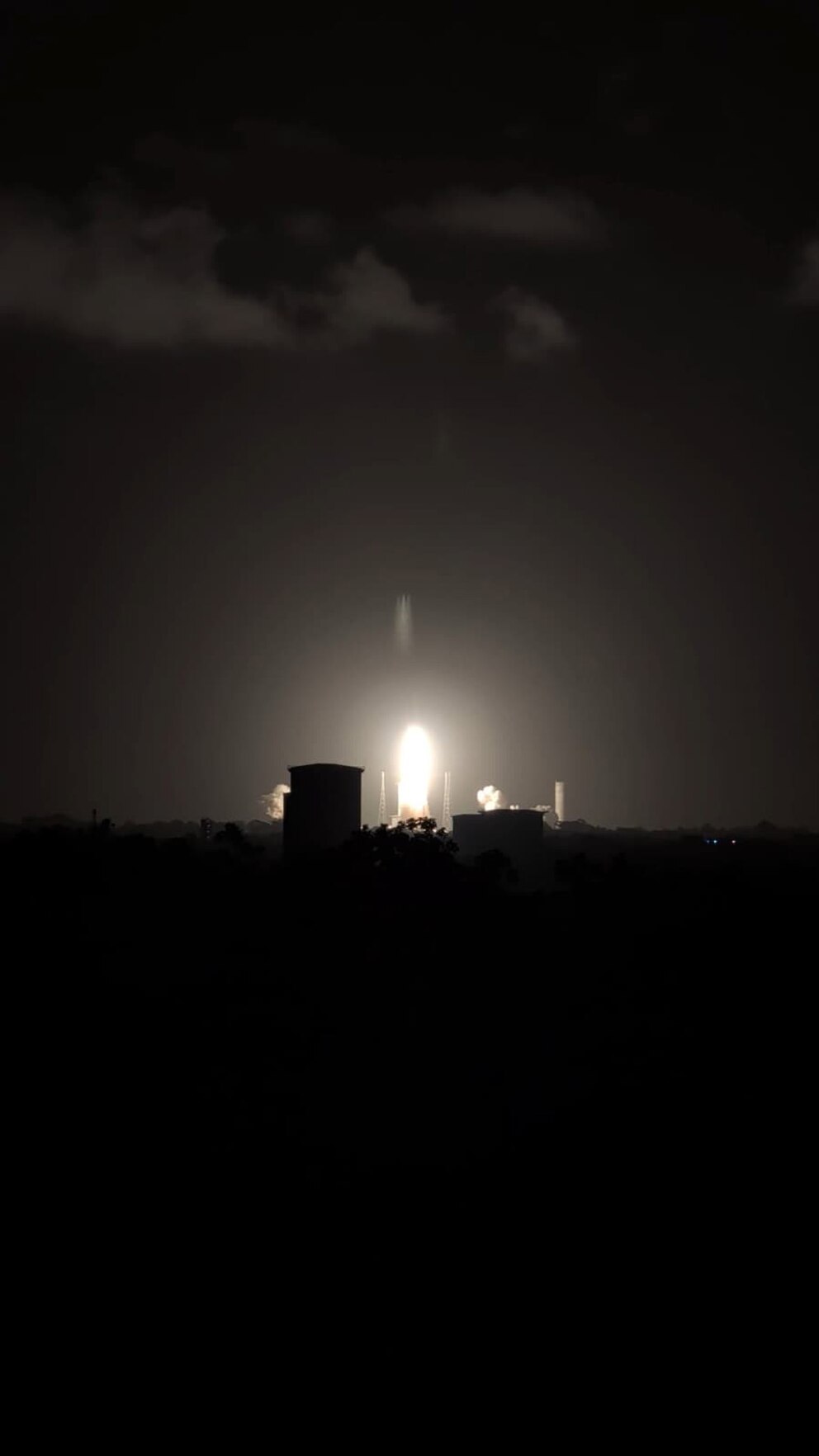
Ariane 6 Successfully Launches Two Galileo Satellites
Launch Overview
In a significant achievement for European space exploration, the Ariane 6 rocket successfully launched the SAT 33 and SAT 34 satellites into orbit at 2:01 AM local time from the European Spaceport in French Guiana. This orbital flight marked the rocket’s fifth mission and was particularly noteworthy as it was the first time Ariane 6 transported Galileo satellites. The deployment is part of a broader strategy to enhance the Galileo positioning system, essential for ensuring reliable navigation and synchronization services to over 5 billion devices globally.
Post-Launch Procedures
Shortly after reaching an altitude of 23,222 kilometers, the two satellites entered a crucial testing phase scheduled to last between three and four months. This intensive verification process aims to ensure that the new satellites comply with the European program’s technical and safety standards, thereby completing their integration into the Galileo system.
The satellites were released at 10:00 AM after a meticulous series of maneuvers involving the separation of side thrusters and the cowling, followed by decoupling of the central stage. The upper stage began with ignition performed by the Vinci engine, which controlled the orbiting path required for the payload.
Enhancing Galileo’s Capabilities
The addition of SAT 33 and SAT 34 is a strategic move to bolster the Galileo system’s capabilities. As the first satellite in the system is set to be deactivated in April 2025, these new instruments will provide a crucial backup, enhancing technical resilience and ensuring uninterrupted service for various sectors that depend on precise location data.
Galileo has been operational since 2016 and is notable for its geolocation precision of less than one meter. This accuracy has mandated that mobile phones sold in the European market be compatible with the system, setting a foundation for widespread use.
Broad Applications and Future Prospects
Galileo’s advanced capabilities extend beyond consumer navigation. In agriculture, its services enhance efficiency by guiding machinery and supervising crops, while the maritime and rail sectors benefit from improved safety protocols and risk reduction in transit logistics. Furthermore, financial institutions rely on Galileo’s precise time synchronization for critical operations, and emergency services utilize real-time location data for rapid response.
Looking ahead, the European Union Agency for the Space Program (EUSPA) will oversee the satellites’ integration process and their upcoming technical tests. These efforts align with EU objectives to maintain and expand critical positioning and timing services necessary for individual and institutional users alike.
Sustainable Space Practices
Ariane 6’s mission also exemplifies responsible space exploration through its post-launch protocols, which included directing the upper stage into a graveyard orbit. This maneuver minimizes space debris and ensures the sustainability of the operational environment for future missions.
As Europe furthers its ambitions in space, the ongoing enhancement of the Galileo system will incorporate innovations such as electric propulsion and next-generation atomic clocks. This momentum will solidify Europe’s position in the international satellite navigation landscape, ensuring both reliability and technological independence.
Conclusion
The successful launch of the SAT 33 and SAT 34 satellites by Ariane 6 is a pivotal step for the Galileo project, promising enhanced services and greater precision for various critical sectors. As the system evolves, it underscores Europe’s commitment to advancing its capabilities in space technology while promoting sustainable practices to protect the orbital environment.