
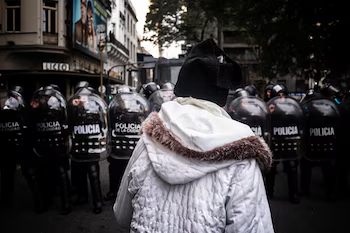
Overview of the Anti-Picketing Protocol Ruling
Federal Magistrate Martín Cormick has announced a significant judicial ruling declaring the Argentine government’s anti-picketing protocol null and void. This decision comes after a detailed evaluation indicating that individuals harmed by police actions under this protocol must lodge individual criminal complaints. Since its implementation in December 2023, the protocol has been a subject of intense public and legal scrutiny in Argentina.
Background of the Protocol
Initially introduced by Patricia Bullrich during her tenure as Minister of Security, the anti-picketing protocol aimed to regulate social protests, ensuring the continuity of public order and economic activity. Following Cormick’s ruling, the current administration, led by Javier Milei, voiced its intent to appeal the court’s decision.
The Ministry of Security emphasized that without this protocol, chaos would ensue, arguing that it has been instrumental in restoring social order and enabling free movement. They claim, “The streets once again belong to those who choose to work,” highlighting the protocol’s foundational legal and operational elements.
Legal and Social Implications
The annulment stems from a lawsuit filed by the Center for Legal and Social Studies (CELS), which argued that the protocol infringed on constitutional rights. CELS applauded the ruling, suggesting it sets limits on the Ministry of Security’s capacity to impose restrictions on the public’s right to protest.
Judge Cormick’s ruling pointed to substantial administrative flaws in the protocol that rendered its application unlawful. Further implications of this decision entail that individuals who feel their rights have been violated under the protocol must seek justice through criminal channels.
Government’s Reaction
In immediate response to the ruling, the Ministry of Security announced plans to contest the decision, reinforcing the argument that the protocol does not prohibit protests but rather organizes them. Alejandra Monteoliva, the current head of Security, stated that the ruling caters to “the old politics” and vowed to maintain control measures over public demonstrations.
Prominent figures, including Bullrich, echoed concerns, asserting that the withdrawal of the protocol could undermine the ability of law-abiding citizens to navigate public spaces safely and peacefully.
The Future of Public Protests in Argentina
The controversy surrounding the anti-picketing protocol has ignited national debate, underscoring the tension between governmental authority and civil rights. The administration’s appeal to higher authorities will not only determine the fate of the protocol but also set a precedent for the Ministry of Security’s jurisdiction over public demonstrations.
As discussions unfold, various social movements, political factions, and legal scholars continue to scrutinize the broader implications of the ruling on human rights and civic freedoms in Argentina. The outcome could reshape the landscape of social activism and the government’s approach to managing public dissent in the future.