
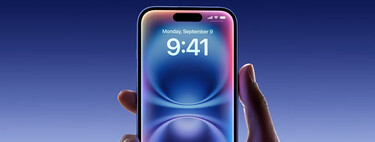
Apple’s Bold Move: The Transition to eSIM Technology
Apple is about to make the definitive leap towards eSIM technology across the globe, including in Spain. The Cupertino company has announced that its new iPhone Air , recently unveiled, will eliminate the physical SIM card slot, following in the footsteps of the United States, where iPhones have lacked a SIM tray since the launch of the iPhone 14 .
Goodbye to Physical SIM. While consumers in the United States have become accustomed to using iPhones without a SIM card slot for nearly three years, other markets have lagged behind in this transition. Recent reports indicated that Apple employees at European stores have undergone training specific to *iPhones* that are compatible only with eSIM technology. According to insiders, this training was expected to be completed before September 5, just days prior to the official launch of the new models.
Which Models Will Be Affected. In Spain, only the iPhone Air will come exclusively with eSIM technology. For the rest of the *iPhone family*, Apple has also developed eSIM-only versions for countries such as Bahrain, Canada, Guam, Japan, Kuwait, Mexico, Oman, Qatar, Saudi Arabia, the United Arab Emirates, the United States, and the U.S. Virgin Islands. This means that the iPhone 17 models will adopt eSIM technology solely in these regions, indicating that Europe might remain unchanged for now.
The iPhone Air, which replaces the iPhone Plus in Apple’s lineup, has a thickness of just 5.5 millimeters at its thinnest point, leaving insufficient space for a physical SIM card tray. The rest of the iPhone models will follow a similar eSIM strategy for the aforementioned countries. However, consumers are left wondering when this change will extend to other devices.
What Apple Advocates. Apple argues that eSIMs offer enhanced security compared to their physical counterparts, as they cannot be removed from a lost or stolen device. Furthermore, users can manage up to eight eSIMs simultaneously on a single device, alleviating the burden of carrying multiple physical cards while traveling. According to Apple, this is a logical step towards the complete digitalization of their products, moving towards a future with no physical ports.
The Challenge of the Operators in Spain. Major Spanish operators like Movistar, Vodafone, and Orange already support eSIM technology; however, adoption among some Mobile Virtual Network Operators (MVNOs) and prepaid services remains incomplete. Users opting for the iPhone Air should verify whether their current operators support eSIM technology. Nevertheless, it seems that the remaining operators will likely embrace compatibility in the near future.
What Comes Next. As outlined, users relying on physical SIM cards will need to plan their transition over the next few months if they intend to upgrade to the iPhone Air. Frequent travelers—especially those who switch providers often—will need to acquire eSIMs to ensure continued functionality with their devices. The advantage is that iPhones allow users to manage up to eight eSIMs concurrently, proving to be quite convenient for globetrotting individuals.
In conclusion, Apple’s shift towards eSIM technology marks a significant step in the evolution of mobile communications, heralding a more secure and efficient future. As operators adapt and consumers transition, the days of fumbling with physical SIM cards may soon be a distant memory. For users in Spain and beyond, this change invites exciting possibilities, encouraging a more seamless, modern mobile experience.
Cover image | Apple
More information | Apple
In Xataka | The United States does not accept a “no” by response for the 100% American iPhone. And Apple is starting to give in