
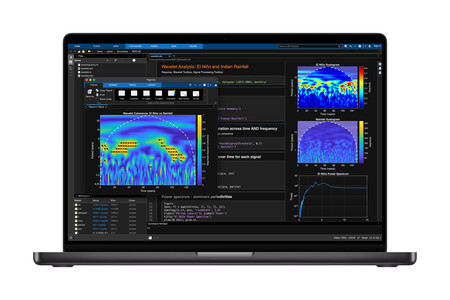
This week witnessed a tidal wave of Apple announcements, undoubtedly building on Tim Cook’s promise of a “great week.” Alongside the anticipated iPhone 17e and iPad Air, Apple also unveiled updates to the MacBook range, notably the new M5 Pro and M5 Max processors. This article delves into what makes these chips special and how they mark a significant architectural evolution in Apple’s silicon.
New M5 Chip Architecture
In typical Apple fashion, the initial unveiling featured the baseline M5 chip previously seen in devices like the 14-inch MacBook Pro and iPad Pro. Subsequently, the more powerful M5 Pro and M5 Max were introduced, but this year there’s an essential twist: Apple has adopted a new manufacturing architecture unprecedented in its Mac chips. This strategic decision is based on innovative internal configurations that enhance the chip’s capabilities.
Key Specifications of M5 Pro and M5 Max
| Feature | M5 Pro | M5 Max | M5 | M4 |
|---|---|---|---|---|
| Photolithography | 3nm (3rd gen) | 3nm (2nd gen) | 3nm (2nd gen) | 3nm |
| Architecture | Fusion | Fusion | Single Die | Single Die |
| CPU Cores | Up to 18 | 18 | Up to 10 | Up to 10 |
| GPU Cores | Up to 20 | Up to 40 | Up to 10 | Up to 10 |
| Maximum Unified Memory | 64GB | 128GB | 32GB | 32GB |
| Bandwidth | 307GB/s | 614GB/s | 153GB/s | 120GB/s |
Introducing Fusion Architecture
The game’s biggest highlight is the innovative Fusion architecture. Unlike traditional single-chip designs, Apple has engineered these SoCs by merging two separate chips using TSMC’s third-generation 3-nanometer node. This architecture earns its name from the ability to coordinate seamlessly with high bandwidth and minimal latency, essential for high-performance tasks.
Improved CPU Design
Both the M5 Pro and M5 Max chips feature an 18-core CPU configuration, with components optimized for executing varied workloads. The first part consists of six super cores, dubbed by Apple as “the fastest CPU cores in the world in single-thread performance.” These cores are complemented by 12 new performance cores designed for multi-threaded tasks, enhancing power efficiency without excessive energy consumption.
Performance Enhancements
Apple claims the new architecture leads to a performance leap of up to 30% for professional tasks compared to the previous generation M4 Pro and M4 Max. Additionally, multithreaded performance could rise up to 2.5 times when compared to the M1 Pro and M1 Max. Such performance improvements will be crucial for professionals handling demanding applications.
Unrivaled Graphics with M5 Pro and M5 Max
The M5 Pro guarantees GPU capabilities extending to 20 cores and 307GB/s bandwidth, supporting advanced ray tracing applications. The M5 Max doubles down, scaling to 40 GPU cores and a staggering 614GB/s bandwidth. Apple boasts a graphics performance boost of 20% for the Pro variant and up to 30% for the Max in ray-tracing scenarios.
Additional Features
Both chips include a 16-core Neural Engine for enhanced artificial intelligence processing. Connectivity-wise, they boast integrated Thunderbolt 5 controllers, marking a leap in data transfer speeds and overall performance.
Release Date and Availability
The M5 Pro and M5 Max will make their debut in the new MacBook Pro on March 11, with preorders starting tomorrow, March 4. As Apple solidifies itself at the forefront of computing technology, these chips will empower a diverse array of professional applications, ranging from 3D design to app development and beyond.