
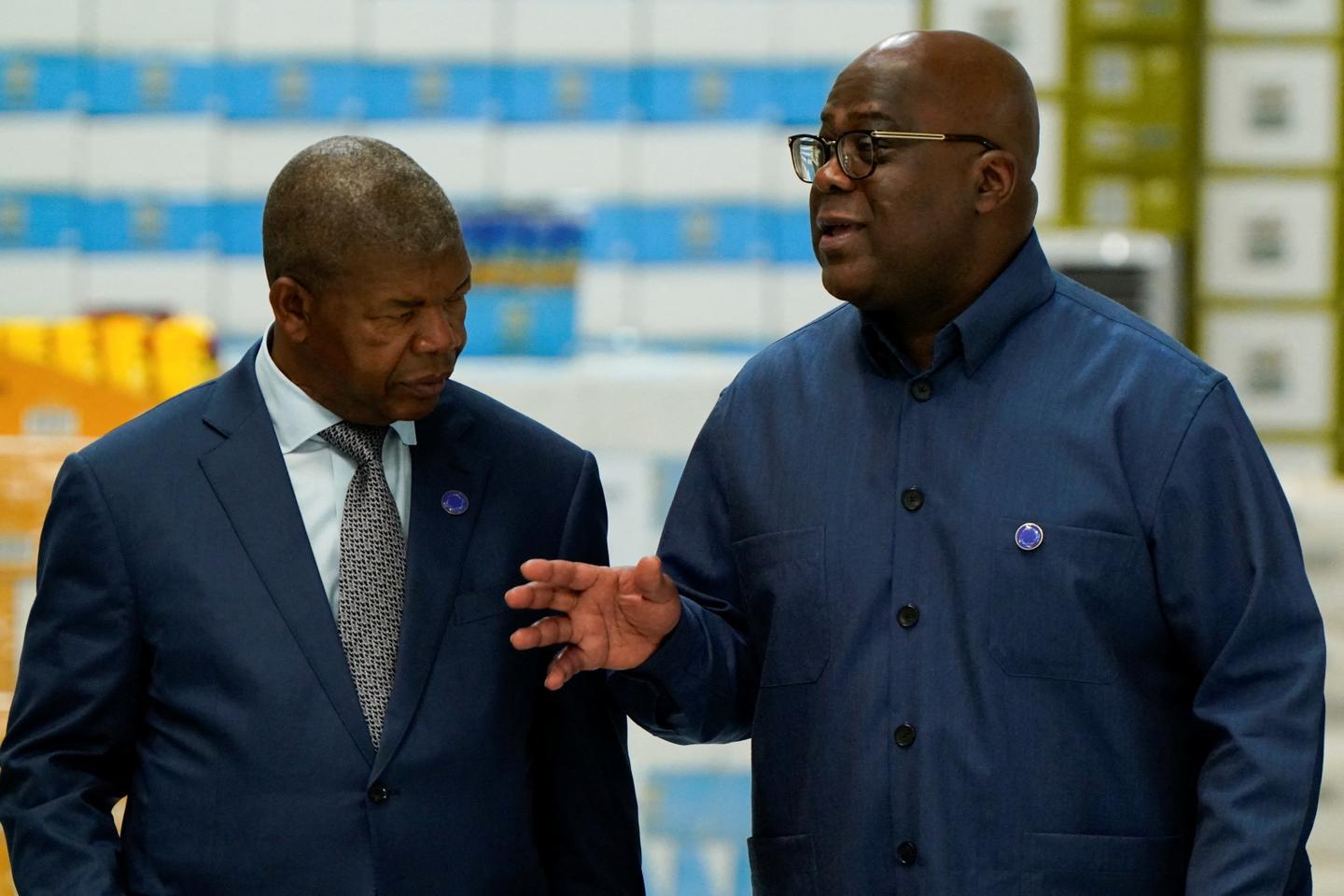
Angolan mediation announced, Tuesday, March 11 in the evening, next “Direct negotiations” Between the March 23 movement (M23) and Kinshasa, after a visit to Luanda of the Congolese President, Félix Tshisekedi, who hitherto refused to discuss with this armed group having made master of large portions of territories in the east of the Democratic Republic of Congo (DRC).
“The Angolan part, as a mediator in the conflict which affects the east of the DRC, will make contact with the M23 so that the delegations of the DRC and the M23 can carry out direct negotiations which will be held in Luanda in the coming days in order to negotiate a definitive peace”announces the Angolan Presidency in a press release. This text was published at the end of a meeting in Luanda between the Angolan president, Joao Lourenço, designated mediator of the African Union (AU) in this conflict, and his Congolese counterpart.
“We take note” of the “Initiatives” announced by the Angolan Presidency and “Let us wait to see the implementation of this approach of Angolan mediation”simply reacted, on social network X, the spokesperson for President Tshisekedi, Tina Salama, without mentioning possible direct negotiations with the M23.
The M23, supported by some 4,000 Rwandan soldiers, according to UN experts, resumed arms in 2021 in the east of the DRC and has since taken control of large territory portions in the provinces of North Kivu and South Kivu, borders of Rwanda. He seized Goma’s late January, then in mid-February from Bukavu, the chief towns of the two provinces. On several occasions, Rwanda has denounced the refusal of the Tshisekedi president of dialogue with the armed group, which the Congolese head of state describes as “Terrorist group”.
Fear of a regional escalation
In December, a summit announced in Luanda between Félix Tshisekedi and his Rwandan counterpart, Paul Kagame, to discuss a peace agreement, was canceled at the last minute in the face of Kinshasa’s refusal to accept direct talks with the M23, claimed by Kigali. In February, the armed group had repeated its ” commitment “ resolve “The conflict in the east of the DRC through a direct dialogue approaching the deep causes of the conflict in order to establish lasting peace”. At the beginning of March, the DRC put prices for several million dollars the head of the leaders of the M23.
No diplomatic effort has so far led to ending hostilities. In early February, the Development Community of Southern Africa (SADC) and the Eastern African Community (EAC) had called for a “Immediate cease-fire” In the East Congolese, notably in charge of former President Kenyan Uhuru Kenyatta to achieve it, without result to date.
“More than 7,000 people” have died in the offensive conducted since the start of the year by the M23, according to Kinshasa-a figure that the France-Presse (AFP) agency was unable to check. The DRC accuses its Rwandan neighbor of wanting to exploit the rich mining resources of North Kivu and South Kivu. For his part, Kigali puts forward security concerns along its border with the DRC, mainly the active presence of the democratic forces of Liberation of Rwanda (FDLR, founded by former Hutu officials of the Tutsi genocide in 1994), armed movement which he accuses of wanting to destabilize his regime.
The growing proximity of fighting with Burundi, militarily engaged alongside the DRC troops, raises fears of a regional escalation. Ugandan troops also deployed in eastern DRC, on the other side of their border.
Stay informed
Follow us on Whatsapp
Receive the essentials of African news on WhatsApp with the chain of the “Africa World”
Join
In recent weeks, Joseph Kabila, predecessor of Félix Tshisekedi between 2001 and 2019, came out of his discretion to publicly attack the latter. DRC disorders cannot only be attributed to advances in M23 or tensions between Kinshasa and Kigali, he said in the South African newspaper Sunday Times. Since the coming to power of Mr. Tshisekedi, the situation in the DRC has deteriorated to the point of being “Close to implosion”he said.