
The New Era of Hypersonic Propulsion: China’s Contra-Rotary Ramjet Engine
Engine development has long dictated the capabilities of aircraft and missiles, especially when it comes to achieving hypersonic speeds. A groundbreaking advancement has emerged from China, spearheaded by researchers at the Chinese Academy of Sciences (CAS). Their focus is on maintaining a stable propulsion system capable of operating continuously from takeoff to speeds surpassing Mach 6. This innovative approach aims to eliminate the need for switching between propulsion systems mid-flight, a challenge that has limited performance in the past.
What is the Contra-Rotary Ramjet Engine?
This ambitious objective is being realized through the development of the “contra-rotary ramjet engine.” Unlike traditional systems that typically combine two propulsion technologies—turbine engines for subsonic and low supersonic speeds and ramjets for higher velocities—this new engine design promises seamless operation across a wider speed range. Xu Jianzhong, who leads the team, claims the prototype has undergone experimental verification after over three decades of research.
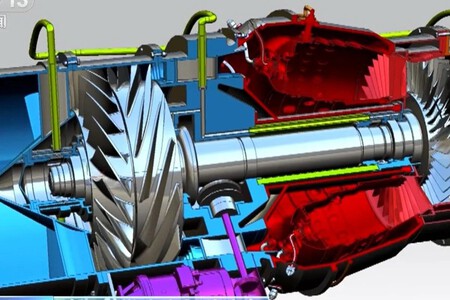
This engine is designed to be air-breathing, meaning it uses atmospheric oxygen for combustion rather than carrying an oxidizer onboard. The key innovation lies in its compressor design, which utilizes two sets of blades that rotate in opposite directions. This arrangement not only reduces centrifugal forces on the components but also enhances rotational efficiency.
Implications for High-Speed Flight
The traditional two-engine system has its benefits, but it comes with complications. When one engine is inactive, the system incurs unnecessary weight, and switching between engines can introduce instability during critical phases of flight. The Chinese team’s contra-rotary engine design addresses these issues, utilizing shock waves to compress airflow rather than attempting to minimize them. This results in a more compact engine that weighs less, thereby allowing for greater fuel capacity, payload, or range in hypersonic aircraft and missiles.
Moreover, using a single propulsion system simplifies the integration process for reusable aircraft. It reduces the risks associated with mid-flight mode changes, potentially allowing for more agile maneuvers. These advantages, however, remain theoretical until validated through extensive real-world flight tests.
The Journey to Prototype Development
The path to this innovative prototype has not been swift. Xu Jianzhong began exploring hypersonic propulsion in the mid-1990s, culminating in the development of the counter-rotating compressor concept by 2000. Institutional support arrived in 2009, enabling the team to create experimental platforms. They then dedicated nearly a decade to resolving various technical challenges, particularly in blade cascade design, before reaching this significant milestone.
The Future of Hypersonic Technology
If successfully integrated into operational systems, the contra-rotary ramjet engine could revolutionize the design of hypersonic aircraft and missiles. The reduction in engine weight would directly influence these vehicles’ performance metrics, improving their overall effectiveness in defense applications.
While the recent announcements are promising, the prototype’s development is still in its infancy. Upcoming challenges include adapting the engine for real aircraft and verifying its performance in field tests, moving beyond theoretical frameworks into practical applications.
The future of hypersonic propulsion is indeed bright with advancements like the contra-rotary ramjet engine, promising to break existing barriers in aviation and missile technology. As researchers continue to refine this technology, the implications for national defense strategies could be substantial.