
Horror Movies: Hollywood’s Unexpected Hero
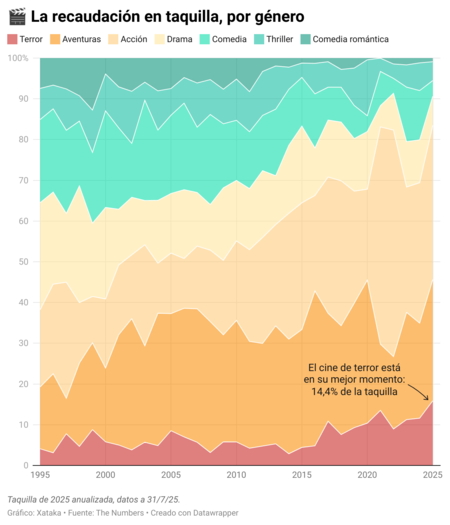
In the ever-evolving landscape of Hollywood, horror movies have emerged as a surprising champion. This year, they claimed a whopping 14.4% of the American box office , marking a historical high and a significant increase from last year’s 9.8% . As audiences seek thrilling experiences, the genre has cemented its status as a pivotal player in the cinematic world.
One shining example of this trend is Zach Cregger’s latest film, ‘Weapons’ , which has debuted with $42.5 million at the box office and boasts an impressive 100% approval rating on Rotten Tomatoes . As horror films increasingly dominate the box office, the industry is left to ponder: what has led to this surge in popularity?
The Perfect Conditions for Horror
The rise of the streaming era has cultivated an environment perfectly suited for horror films. Several factors contribute to this phenomenon:
- Cost-Effective Productions : Horror movies typically operate with budgets ranging from $5 to $30 million , drastically lower than the $200 million budget of a blockbuster.
- Viral Appeal : The innate suspense and thrill often lead to intense word-of-mouth promotion, making these films viral sensations.
- Intimate Viewing Experience : Audiences can enjoy horror films at home, free from judgment as they react to jump scares and eerie atmosphere.
This equation presents a simple but effective business model: lower investment costs paired with high returns.
The Changing Landscape of Horror
Historically, the best-performing years for the horror genre often featured sequels like ‘Halloween’ and ‘A Quiet Place’ . However, 2023 has shifted the narrative towards original stories and fresh frights. Already, six horror films have surpassed $50 million in worldwide earnings, and a staggering 29 horror films are scheduled for release in 2025.
The average production budget remains remarkably lower than traditional blockbusters, making horror movies an attractive financial proposition.
The Risk of Saturation
Despite the genre’s success, there are looming concerns about saturation in the market. Reports from Variety have highlighted the possibility of a “Horror Glut,” where viewers may tire of consistent releases and lose interest. The challenge lies in maintaining the freshness of the genre without overexposure, as audiences seek novel thrills rather than routine scares.
Horror’s Historical Significance
Horror films have historically served as a cultural refuge during turbulent times. From the classic monsters of Universal that emerged during the Great Depression to the impactful films like ‘The Exorcist’ and ‘The Texas Chainsaw Massacre’ during the political upheaval of the 1970s, the genre keeps resurfacing in times of crisis. Additionally, the pandemic witnessed a remarkable rebound in horror films catering to an audience seeking escapism from reality.
The Future of Fear: Enter AI
As the industry grapples with the challenges of a digital landscape and advances in technology, the potential for generative AI could signify the next evolution in horror. Imagine special effects created at a reasonable cost or scripts harnessed from algorithms that tap into our deepest fears. Horror , acknowledged as one of the most honest reflections of the human experience, could embrace AI as a tool to enhance storytelling without compromising authenticity.
Conclusion
Fear has always sold. With the current landscape favoring low-budget productions and high returns, horror films are not just carving out a niche; they are reshaping the industry. As Hollywood continues to change, one thing is clear: horror’s reign is not just a fleeting moment but a robust chapter in the annals of cinema.