
The year 1957 marked a pivotal moment in human history . As the Soviet Union launched Sputnik 1 , initiating the space race amid the Cold War , the United States proposed a contrasting race—one that delved deep into the Earth’s crust . This parallel pursuit underscores two of the most ambitious scientific challenges of the time: unraveling the mysteries of space and the depths of our own planet.
The objective? To gain an understanding of our planet. The consequence? An intense drilling frenzy, spearheaded by the Soviets, which eventually led to a resurgence of deep-earth drilling projects globally, most notably from China .
The Inverted Space Race
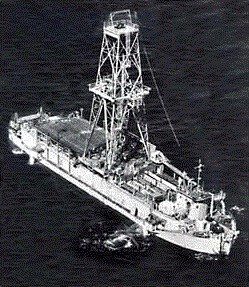
The Mohole Project was the first initiative aimed at deep drilling. Proposed by geophysicist Walter Munk , the goal was to reach the Mohorovičić discontinuity , the boundary between the Earth’s crust and mantle. The aim was to obtain direct samples from this layer to study its composition. What made this endeavor comparable to space exploration was the challenge posed by the need to excavate from oceanic depths rather than land.
Drilling through the Earth’s crust is no simple task, especially from the land , where the mantle lies about 30 kilometers deep. Thus, the project’s advocates decided to start their endeavors underwater. In 1961 , the drilling rig CUSS I began operations off the coast of Guadalupe, Mexico , reaching 183 meters below the seafloor. Through this method, they saved about 3,600 meters they would not have to excavate.
Despite promising beginnings, the project ultimately faltered not due to a lack of feasibility—valuable samples were collected and innovative deep-drilling techniques were tested—but because the U.S. Congress diverted funding elsewhere during the Cold War. In 1966 , the Mohole Project was officially canceled, but its legacy laid the groundwork for subsequent programs like the Deep Sea Drilling Project and the Integrated Ocean Drilling Program , which continued to explore not just the oceanic depths but also significant land drilling initiatives such as Bertha Rogers in Oklahoma, which reached over 9,500 meters.
The Soviet Commitment
In contrast, when the Soviet Union engaged in the scientific race, it did so with serious intent. Concurrent with their burgeoning nuclear arms program, the USSR initiated a deep scientific drilling project in 1962 , aimed at understanding the lithosphere rather than extracting resources.
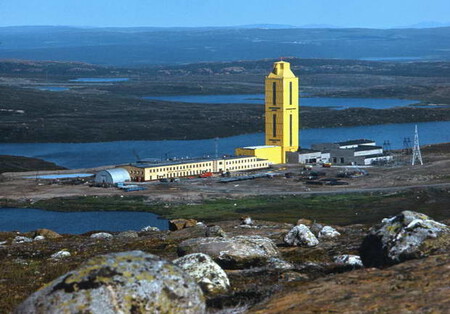
The area of the Kola well before it became dilapidated.
The Soviet initiative aimed to investigate the Mohorovičić discontinuity as well, but they drilled in the Murmansk Oblast of northeastern Russia. By 1970 , they commenced drilling the Kola Superdeep Borehole , also known as the SG-3 Project . They achieved remarkable depth quickly, surpassing the Bertha Rogers well by 1979 , and by 1989 , they reached their maximum depth of 12,262 meters . To put this into perspective, this depth exceeds the Mariana Trench , and one could hypothetically fit one and a half Mount Everests within it, although the diameter was only a few centimeters.
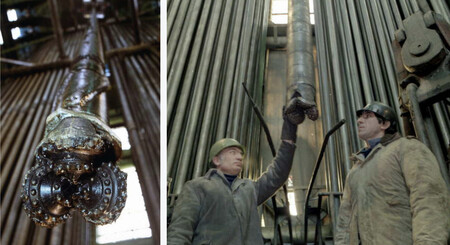
The drilling head used to reach the depths.
The main goals included analyzing the Earth’s composition, gaining direct rock samples to understand the crust’s structure, and better studying seismic and volcanic activity. Additionally, scientists sought to analyze paleoclimatic records , providing insights into extreme temperature episodes through billions of years of Earth’s history while investigating the limits of microbial life under extreme conditions.

Samples obtained at Kola. 12 kilometers yield many samples.
Furthermore, should they discover oil or gas within these deep layers, it would enhance the understanding of natural disaster predictions like earthquakes and volcanic eruptions. Over two decades, researchers achieved significant milestones, yielding substantial knowledge and samples.
- They failed to verify the Conrad discontinuity , which meant they did not find expected transitions from granite to basalt within the continental crust.
- They discovered water trapped in fractured rocks at kilometers of depth, an unexpected finding.
- They also stumbled upon fossils of marine organisms dating back 2 billion years .
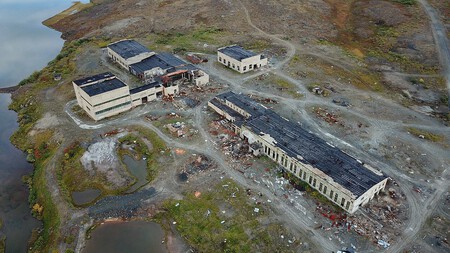
The area in 2020 after years of neglect.
However, the most revealing aspect that ultimately led to the project’s collapse was the extreme conditions encountered at such depths. Scientists expected high pressure, but temperatures soared to 180ºC instead of the anticipated 100ºC, complicating excavation due to “rivers” of hydrogen and mud. By 1992 , the technology was deemed inadequate to proceed further. The collapse of the Soviet Union also shifted priority funding, which led to halting the excavation. After years of inactivity, the Kola superdeep borehole was closed in 2005 .
China’s New Horizons
While the Soviet program could be regarded as a success due to obtaining rocks aged over 2.7 billion years , the state-owned company GNPP Nedra acquired a geological laboratory at over 8,500 meters depth through Project SG-5 . Nonetheless, by 2008 , financial constraints led to a complete cessation.
More recently, as a fresh space race unfolded involving Russia , the U.S. , China , and India , the Asian giant reignited the deep drilling concept. China is now excavating dozens of ultra-deep wells, primarily aimed at resource extraction, including oil and gas.
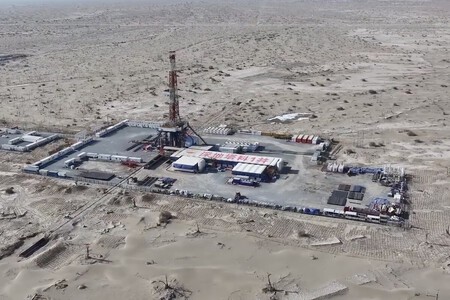
Shendi Take-1
In 2023 , the Sinopec corporation launched the Project Deep Earth 1-Yuejin 3-3XC , a well over 9,400 meters deep to extract oil. Meanwhile, the China National Petroleum Corporation (CNPC) is drilling another well, known as Shendi Take-1 , which aims to exceed the 12-kilometer mark. Although it may not reach the Kola depth, the approach focuses more on energy resources before scientific exploration.
While extracting oil, Shendi Take-1 is designed to study the inner layers of the planet. Even though this depth will not reach the Soviet record, China is laying down the technological groundwork for future endeavors to surpass it.
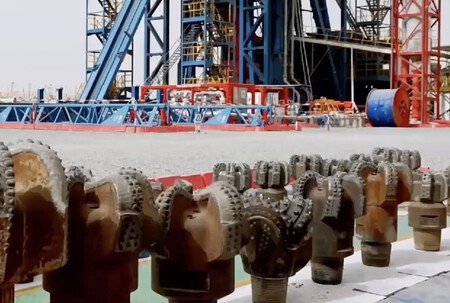
The heads used in Shendi Take-1.
In January 2025 , China tasked the Chinese Academy of Geological Sciences with a research program aimed at reaching depths of 15,000 meters . This initiative focuses on finding solutions for drilling mud at temperatures over 400ºC , alongside utilizing robotics for automated processes and developing equipment resilient enough to withstand both high heat and pressure.
The Marine Race
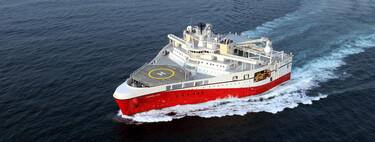
While on land the race intensifies, the same holds true for marine drilling. In November 2024 , China launched the Meng Xiang , a drilling vessel equipped with a hydraulic system that can reach 11,000 meters from the sea surface down to the seabed. It surpasses the U.S.’s JOIDES Resolution and Japan’s Chikyu , which are also engaged in maritime drilling.
This vessel has the capability to install tubes for resource extraction and participates in the Chinese program, aiming for 30 deep-sea drillings between 2025 and 2035 , inviting international proposals and fostering scientific collaboration through shared data and samples.
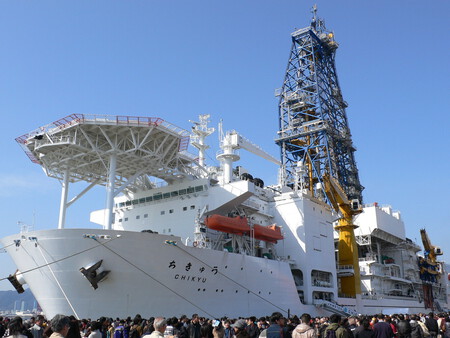
Chikyu
As the Cold War evolves into a new arena of global competition, Europe too collaborates, joining forces with Japan in the International Ocean Drilling Program (IODP), entering a new phase of scientific exploration that aims to understand the interconnected systems of the Earth, tackle climate change, study geological hazards, deepen the understanding of the deep biosphere, and explore sustainable geological and energy resources.
In conclusion, while the focus on interplanetary exploration like lunar missions captures global attention, a significant journey into Earth’s deeper realms continues. With advanced technology such as microwave drilling and improved environmental safeguards, nations are actively investing in deep drilling initiatives that blend scientific curiosity with the search for sustainable energy resources. Even amid this progress, financial constraints present challenges; executing such ambitious projects requires substantial investments in both technology and time, alongside rigorous environmental assessments ensuring minimal disruption to ecosystems.