
Adrián Rubalcava Clarifies AI Image Controversy at CDMX Metro
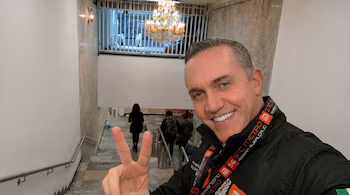
The director of the Metro Collective Transportation System, Adrián Rubalcava, recently became a trending topic on social media after posting an image that many believe is artificially generated. This image was shared as part of his supervision of the Hidalgo Station on Line 2 of the Mexico City Metro and ignited a mix of humor and criticism online.
The Controversial Post
On May 26, Rubalcava posted a photograph showcasing the newly installed chandeliers at Hidalgo Station. Accompanying his image, he humorously remarked that the aesthetics inspired him to “speak French,” suggesting the station’s lavish look resembled European palaces. The post quickly gained traction, leading users to respond with memes comparing the station to extravagant French settings.
User Backlash and Accusations
However, the photograph did not go unnoticed for its oddities. Social media users pointed out visual inconsistencies within the image, particularly around the Metro logo and text on Rubalcava’s jacket, leading many to accuse him of distributing an AI-generated image. Criticism surged across different platforms, accusing him of diverting attention from ongoing issues within the transit system.
Responses from Rubalcava
Despite the outpouring of critique, Rubalcava limited comments on his official account but later responded by sharing additional images of the station, this time featuring commuters. He expressed an ironic tone in his follow-up, humorously stating that inquiries about whether he had actually visited the station had reached him “on behalf of his boss.”
The Greater Context of Renovations
This controversy arises during a rapid renovation phase of the Metro, ahead of the 2026 Soccer World Cup, which will include several matches in Mexico City. Upgrades at the Hidalgo Station include luxurious features such as ornamental luminaires, marble-like coatings, and LED lighting, part of a broader initiative to attract international tourists.
Public Sentiment
The major public outcry stems from a perceived prioritization of aesthetic improvements over essential operational upgrades. Users argue that the funds spent on visual enhancements could be better allocated toward addressing persistent issues like delays, leaks, and system saturation.
Government Assurance and Budgeting
The Mexico City Government has committed 1,500 million pesos for World Cup-related projects, with a significant portion aimed at comprehensive Metro maintenance and station remodeling. Authorities assert that these aesthetic improvements are intended to enhance the urban landscape for tourists while also enhancing the Metro’s operational capabilities.
Conclusion
The unveiling of new features at Hidalgo Station has sparked a debate about the balance between visual appeal and functional reliability. As remodeling efforts continue, many are eager to see if the enhancements will indeed serve to improve the quality of life for everyday commuters instead of merely beautifying the space for the global audience expected during the upcoming World Cup.