
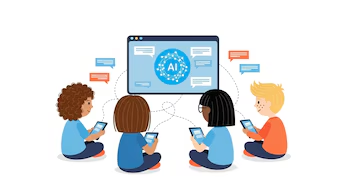
The Shift Towards AI in Everyday Problems
The new generations increasingly resort to artificial intelligence for solving school doubts, addressing health concerns, and navigating personal problems, effectively displacing adults as the first source of consultation.
This trend is confirmed by a report from Common Sense Media, as highlighted by the Los Angeles Times, illustrating how technology is redefining trust relationships and learning habits among children and teenagers in the USA.
Statistics from the Report
The Common Sense Media study, which collected responses from 1,204 children and adolescents aged 9 to 17, revealed that 90% of participants use or interact with AI in their daily lives.
Among these, one in four turn to these AI tools daily. The report also revealed that 25% of respondents prefer seeking help from AI for their homework rather than consulting teachers, school counselors, or parents.
AI Beyond Academics
This inclination extends beyond academic challenges; children also consult AI for information about health, personal goals, or other significant decisions. The implications of these practices impact not only educational settings but also the broader realm of young people’s well-being and personal development.
The Digital Divide: Understanding Vs. Dependence
While AI provides utility, the report emphasizes a growing dependency among frequent users, exacerbated by limited discussions on digital safety. A respondent noted, “You can use AI to complete all your schoolwork disguised as if done manually.”
Emotional Well-being and AI Use
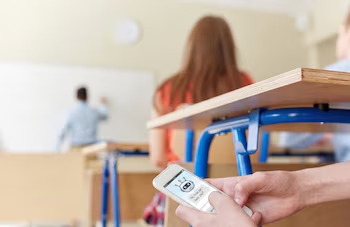
The investigation also highlights a correlation between the frequency of AI use and emotional well-being. Approximately 20% of children using AI find it challenging to take a break from it for a month; this figure jumps to 42% among daily users.
Moreover, one in ten feels that AI understands their feelings better than most people. This percentage climbs to 19% among those who rely on AI daily.

The Social Implications of AI Interaction
Interestingly, many adolescents report finding chatbots as a safe space for social interaction, especially those facing challenges in making friends. The document from Common Sense Media notes that preteens and teens use these tools for creating, learning, and socializing.
However, the report underscores a concerning trend: increased use of AI correlates with feelings of loneliness and reduced happiness. This raises questions about whether lonely adolescents are turning to AI for support or if their dependence on AI is hindering their healthy development of coping skills.

Concerns About AI Safety and Misinformation
Notably, despite the prevalent use of AI tools, almost half of the surveyed young users have never talked about AI safety with their parents or teachers. Furthermore, only one-third accurately understand that AI can struggle to distinguish between true and false information.
The study highlighted some alarming situations: one in six kids using AI received inappropriate content from a chatbot, and most did not disclose these incidents to trusted adults, underscoring significant gaps in supervision and support.

The Need for Enhanced AI Literacy
The Common Sense Media report contends that the rules of AI usage are still evolving while technology adoption accelerates. Many young respondents perceive themselves as more knowledgeable about digital environments than their parents. One voice from the survey encapsulates this view: “It’s tough for adults to discern which videos or reels are real or AI-generated. I often have to explain to my mother that something is fake.”
This research underscores the pressing need for improved digital education and AI literacy, both at school and at home, enabling children and adolescents to navigate these tools responsibly and critically.