
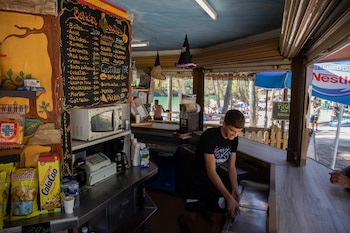
One in three self-employed individuals claims they will not take a break this summer, while 25% are certain they won’t take a single day off throughout 2025 , according to data from the National Federation of Associations of Autonomous Workers ( ATA ). This trend raises concerns about the work-life balance among freelancers, who often juggle multiple responsibilities and commitments.
Interestingly, 43.7% of respondents have mentioned plans for vacations this summer, with 11.4% opting for vacations at a later time and 13.1% still undecided on their dates. A small 6.2% remain uncertain if they will take any holidays at all. This level of indecision points to a broader issue affecting overworked individuals in today’s fast-paced economy.
When we look at the numbers from 2024 , we see a slight improvement; 68.1% of self-employed workers took vacations that year compared to 66.2% in 2023 . However, indecision has notably increased among those considering their options, reflecting a growing trend of uncertainty in sector performance as many continue to express they “do not know” or are yet to decide on their plans.
Survey results reveal that 12% of respondents have not taken any vacation for over three years, while 4.5% have gone two years or more without time off. This means that a staggering 23.2% of self-employed workers have not engaged in any form of vacation for more than a full year.
When asked about the possibility of resting at any point throughout the year, 62.7% confirmed that they do take some time off, while 11.6% admitted they never do. The economic reasons behind not taking summer vacations are significant for 90% of respondents, who cite financial constraints and the demands of managing their business as barriers.
Specifically, 50.4% attribute their inability to take vacations during summer to financial reasons, and 37.5% point to the management aspects of their business. Interestingly, only 8.6% of the self-employed consider summer their peak activity season, which discourages them from even considering time off during this period.
For those indicating uncertainty about their summer plans, 62.6% explained that their decisions rely heavily on how their business performs in the upcoming months. Among those opting for other times of the year about 46.8% stated that summer presents the busiest time for their operations, while 28.6% expressed a sense of obligation to stay engaged in work during that period.
Conversely, one in ten self-employed individuals expressed a preference for vacations during different times of the year, often citing the flexibility that comes with being your own boss. These seasonal trends reflect a significant burden on self-employed individuals who face frequent dilemmas between work obligations and personal well-being.
Data shows that 44.6% of those in hospitality take vacations at different times of the year, while 43.2% in construction and 30.2% in agriculture align similarly. Conversely, only 25.4% of those in hospitality and 10.2% of those in tourism sectors are on par with this trend, indicating that these sectors experience unique challenges that influence their vacation patterns.
Observations also highlight a gender disparity; nearly 47.9% of self-employed women are likely to take summer vacations compared to 40.7% of men. Urban dwellers also seem to favor vacations uniquely, with 51.5% likely to take summer off, echoing the vibrant demands of urban life.
Exploring regionally, only 42% of self-employed individuals in coastal areas considered summer vacations, compared to 46% in inland regions. Notably, 28.3% of coastal freelancers report no vacation plans in summer, contributing to concerning statistics where almost half of these individuals will forgo breaks this summer across Spain.
Among those self-employed who won’t rest, 26.7% operate without employees, contrasting with 23.5% who have workers. Over 45% of survey participants managing a business have employees, yet those without often report missing vacations due to personal financial constraints as well.
In summary, the summer vacation landscape for self-employed individuals remains complex and challenging. The statistics illustrate a consistent struggle between work commitments and personal wellness, urging a conversation on the need for better support systems for the self-employed community. A healthy work-life balance is not just beneficial for individuals but is vital for long-term productivity and emotional well-being in the entrepreneurial workforce.