
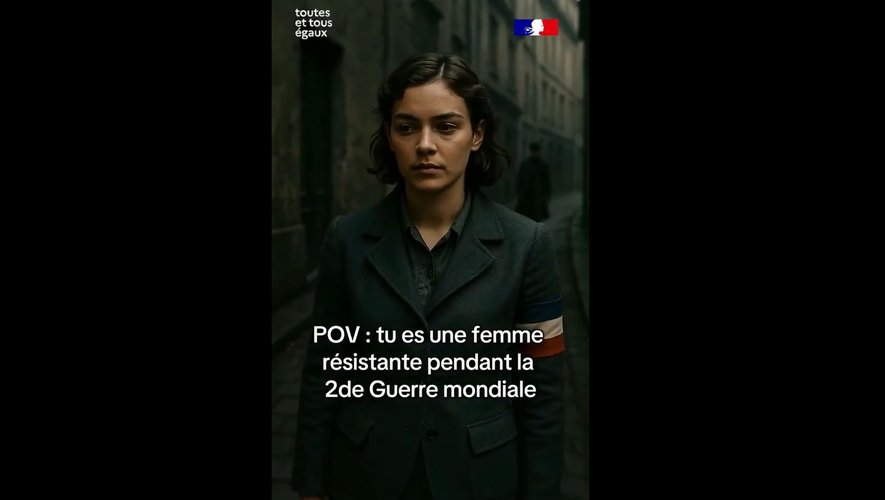
On May 27, the World Resistance Day, the government information service published a video on Instagram and TikTok showcasing the life of a resistance fighter during World War II. However, this video, which contained several historical inaccuracies, had to be removed from social media.
A few dozen seconds of video that didn’t last a full day on the internet. The Government Information Service (SIG) thought they were doing a good job by publishing a short film dedicated to National Resistance Day on May 27. To create this video, shared on Instagram and TikTok, the government chose to utilize artificial intelligence (AI) . The problem? This short video excerpt contained a series of historical errors .
The government has removed its publications.
But the video has been saved.
Here it is.
In its publication, the SIG aimed to reveal a glimpse into the daily life of a woman involved in the Resistance during World War II. She is depicted dropping a clandestine newspaper into a mailbox before being captured by German armed forces. A final image shows her celebrating the liberation of Paris in 1944. Cited by our colleagues from Le Monde, the SIG stated that they intended to draw inspiration from the testimony of resistance fighter Madeleine Riffaud .
At Least One Historical Error
The release of this video, however, sparked a wave of criticism since it contained at least one glaring historical error. In the final shot, showing several members of the Resistance celebrating the liberation of Paris, a soldier wearing a German helmet is visible, also smiling widely.
“Did you notice that the soldier celebrating the liberation wears a German helmet? Seriously, if you’re going to use AI, do it correctly,” lamented a social media user on Instagram, before the publication was promptly removed by its creators.
Numerous internet users have also expressed their outrage over the use of artificial intelligence, rather than soliciting artists or videographers. “Teams face the daily challenge of adapting content and narrative forms to the new habits of audiences, especially on social media,” commented Michaël Nathan , director of the SIG, to our colleagues. The organization is considering republishing the video once the necessary corrections have been made.
This incident highlights the importance of historical accuracy, especially when depicting significant events like World War II. The integration of technology in storytelling is advancing, yet it must be handled with caution. Audiences are increasingly discerning, and there is a growing demand for authenticity in the narratives presented. While AI can facilitate the creation of engaging content, it must not come at the cost of factual integrity. As societies move forward, a balance between technology and cultural sensitivity will be crucial in ensuring that the lessons of history are both preserved and respected. Ensuring an accurate and respectful portrayal of historical figures and events is fundamental to honoring their legacies and educating future generations.
General News – 2