
The Rise of Robotic Labor in Agriculture
The threat of robots replacing human jobs is no longer a sci-fi narrative; it has become a tangible reality for various sectors, particularly in agriculture. As countries like Spain find themselves increasingly reliant on agricultural production, technology is stepping in to fill critical labor shortages. It’s not uncommon to see automated machines in large warehouses, and now, we’re witnessing similar transformations in the fields. Innovative robotic systems are being employed to support seasonal laborers in an industry where human hands are becoming scarce.
A recent event, the XXX IRTA Fruit Days, showcased novel agricultural technologies. One of the notable entries was from Moreno Intec del Pla, which introduced a sophisticated harvesting robot developed over four years. This revolutionary machine combines various technologies to enhance efficiency in fruit picking.
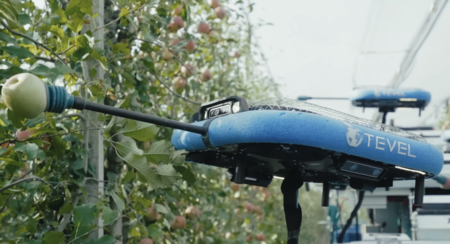
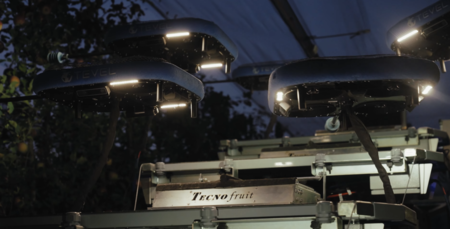
The centerpiece of their presentation featured a sizable container that houses fruit tanks, a diesel engine, and wheels. What sets it apart are the eight drones attached to its top, each equipped with arms to pick fruits—starting with apples. The standout benefits of this system are its tireless nature and integrated lighting , allowing it to operate day and night.
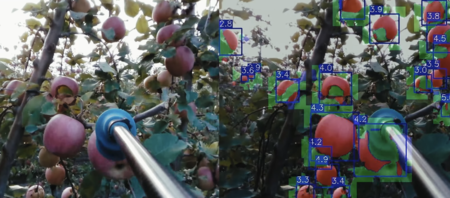
Operational Efficiency. Each drone is outfitted with cameras for specimen identification, and an AI system determines if the fruit meets the farmer’s specifications. Farmers can configure the system to either select all fruits or to focus on specific sizes and colors. While the machine can be controlled remotely—allowing one operator to manage up to five harvesters—the primary operation remains autonomous.
Besides harvesting, these robots can also remove smaller fruits, showing potential for more than just efficient picking. Presently powered by a diesel engine for long operational hours, plans for electric versions are already underway, aiming for a greener future.
Economic Implications. Lluís Asín, head of the IRTA Fruit Growing program, highlighted the significant impact such technology could have on agricultural competitiveness. He pointed out that 30% to 40% of a plantation’s costs can come from the harvest alone, making projects like this critical for improving profitability.
Yet, the introduction of such robots stirs a contentious debate regarding the displacement of human labor. Sergio Moreno, technical director at Tallers Moreno, emphasized this machine’s role in replacing human activity. While he acknowledges the acute labor shortage in agriculture, he admits that robots have yet to achieve the same levels of productivity seen with manual labor.
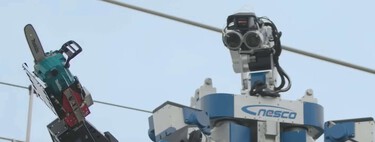
Global Perspectives. As the push for automation continues, it is supported by companies like Kubota Corporation , a Japanese agricultural machinery manufacturer, which is currently developing and marketing autonomous drones for fruit and vegetable harvesting. This shift is vital, particularly as nations grapple with low birth rates and labor shortages in agriculture. In Japan, for instance, the birth rate crisis has elevated the importance of automation in rural sectors.
Automated systems not only promise to lower labor costs by around 30% but also facilitate modifications to tree heights to increase yield. Many experts argue that the return on investment for these systems can be seen within a mere three weeks, showcasing their potential economic viability.
Globally, the development of autonomous harvesting technologies is also taking root in countries like the United States, Italy, and Chile. Many are making strides toward integrating drones in their harvesting processes, each adjusting to their unique agricultural landscapes.
Future of Agricultural Labor. While some celebrate the efficiencies these technologies bring, others voice concerns about job losses. The looming threat is that many seasonal jobs could be absorbed by automation. Opponents argue that access to cutting-edge machinery will favor larger producers, leaving smaller farms at a disadvantage. Proponents of robotic labor contend that with evolving job roles, there will be new opportunities for individuals trained to manage these machines.
As we stand on the brink of a new age in agriculture marked by AI and robotics , it’s essential to consider both the opportunities and challenges posed by these advancements in technology. While the promise of efficiency, reduced labor costs, and enhanced productivity is enticing, the impact on human labor and the need for equitable access remain pressing concerns. Only time will tell how agriculture will adapt to this growing trend of automation.