
When discussing future
climatic disasters, we often think of rising sea levels, wildfires, or the collapse of biodiversity. However, there exists a more subtle and insidious danger—one that may be closer than we imagine: pathogenic fungi . A new study raises alarms about the threat these often-overlooked microorganisms could pose in a world that is becoming increasingly warm and humid.
An Underestimated Fungal World
Today, it’s estimated that there are several million species of fungi on Earth, of which only about 10% have been identified. Among these, some are edible, others are essential for the decomposition of organic matter, and a darker fraction consists of pathogenic species . These pathogens can cause severe infections in humans and devastate entire crops. Despite their potential impact, they remain largely ignored in discussions regarding the effects of global warming.
A team of researchers from the University of Manchester aims to correct this oversight with a prospective study published on the ResearchSquare platform. Their findings indicate that global warming could foster the proliferation of toxic fungi at alarming levels.
Fungi That Love Heat
The mechanism is straightforward: as temperatures rise, certain fungi become more competitive due to their increased heat tolerance. This includes Aspergillus flavus , known for producing dangerous mycotoxins harmful to both humans and animals, as well as causing decay in various agricultural goods.
According to the study, if our reliance on fossil fuels continues without transitioning to renewable sources, the proliferation of A. flavus could increase by 16% in Europe within the next 15 years , potentially exposing an additional one million people to health risks.
However, the worst is yet to come with Aspergillus fumigatus . Often classified as “low-pathogenic,” this fungus could see its presence explode by 77.5% , endangering nine million people in Europe, especially vulnerable groups such as the immunocompromised, hospitalized patients, or the elderly.
A Difficult Threat to Control
What makes these fungi particularly dangerous is their mode of transmission: the air we breathe. Invisible and ubiquitous , their spores can float freely and be inhaled without our awareness. In hot and humid climates, their spread becomes increasingly difficult to contain. Unlike bacteria, fungal infections are usually harder to treat due to a limited arsenal of antifungals and increasing resistance.
According to Norman van Rhijn , the lead author of the study, the problem is clear: “Pathogenic fungi are still too under-researched compared to viruses or bacteria. Yet, their impact could be massive as the climate evolves.”
Credit: iStock
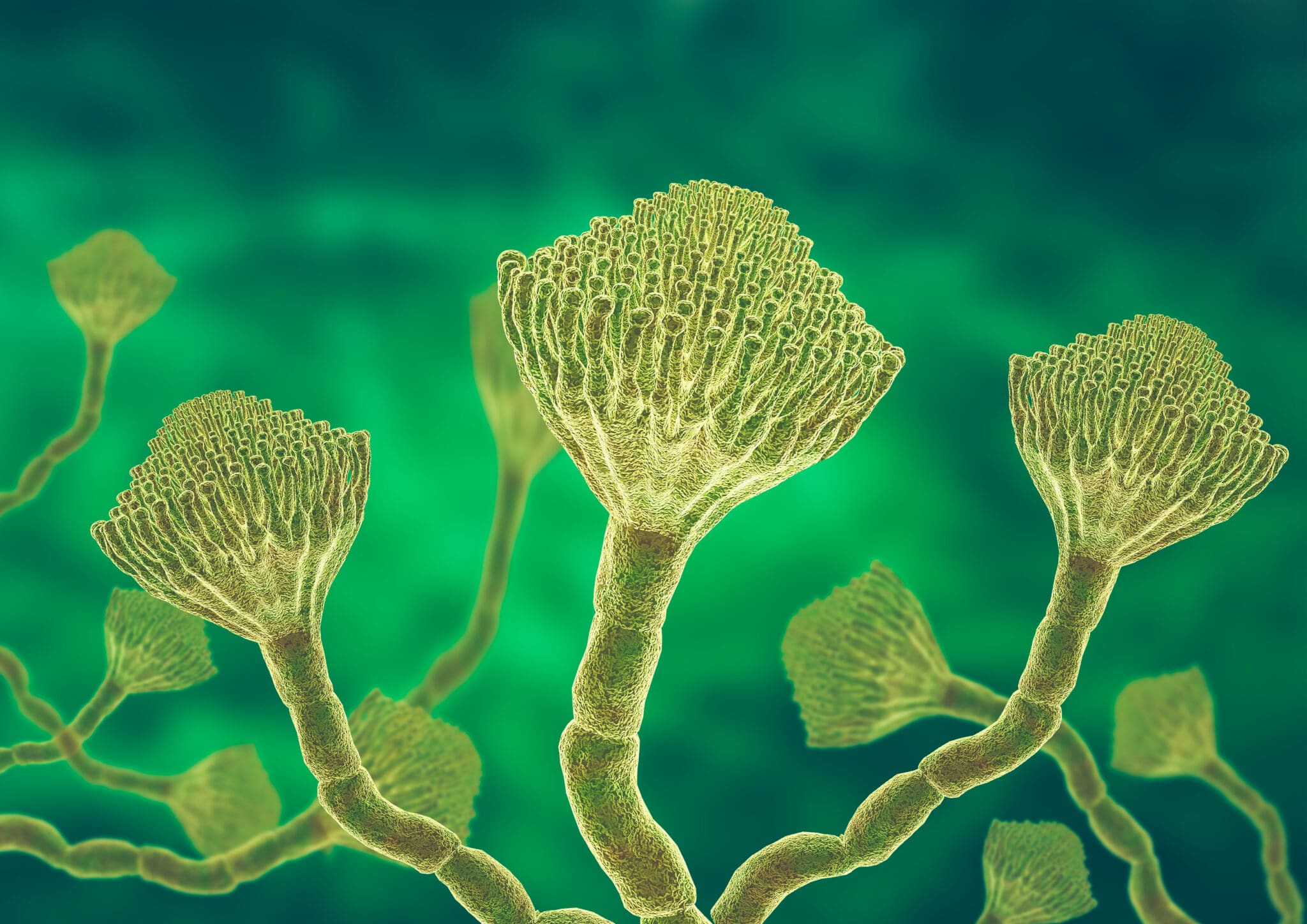
Colony of Aspergillus fungi. Credits: Artur Plawgo/iStock
The Double Ecological Blow
The issue extends beyond pathogenic fungi. Some beneficial fungi , which perform key ecological functions like decomposing organic matter or forming symbiotic relationships with plants, are also at risk of disappearing from the globe’s hottest zones. For instance, Africa could lose species crucial to its ecological functionality.
Consequently, we face a double threat : on one side, dangerous fungi proliferating; on the other, indispensable fungi declining. This fungal imbalance could have cascading effects on agriculture, biodiversity, and—ultimately— human health .
A Race Against Time
The study does not aim to be alarmist but rather preventative. It calls for a broader awareness regarding the role of fungi in ecosystems and public health. It also underscores the urgency of reducing greenhouse gas emissions to help limit the spread of these invisible pathogens .
If these projections hold true, the coming decades could witness the rise of novel fungal diseases that are difficult to diagnose and even harder to treat.