

Switzerland has increasingly become a preferred destination for Spaniards seeking new opportunities abroad. The country is renowned for its high quality of life and attractive salaries . As per the latest records from the National Statistics Institute (INE), more than 136,000 Spaniards currently reside in Switzerland . This migration is largely driven by the high youth unemployment rate in Spain, prompting many young individuals to consider a future overseas.
The scarcity of job opportunities in Spain has led thousands to seek experience, economic independence, and a different reality. The key motivator for many remains financial: while the average annual salary in Spain hovers around €27,000 , in Switzerland, it is approximately CHF 105,000 —equivalent to around €8,700 per month .
One notable example is David Castillo (@dcastip) , who moved to Switzerland nearly two years ago. The Seville native works as a Healthcare Auxiliary Technician (TCAE) , a position that can command up to CHF 5,500 (approximately €5,800 ) monthly, according to Castillo—a significantly higher salary than what he earned in Spain.
However, the high wages come with equally high costs. Adjusting to the Swiss healthcare system has taken Castillo by surprise. Accustomed to Spain’s public health system, he was shocked by the prices he encountered for medications. “I just got back from the pharmacy and was charged €35 for a box of paracetamol ,” he explains in a TikTok video.
Castillo’s experience underscores the stark difference in healthcare costs: he paid CHF 35 for a pack of 100 paracetamol tablets , a striking contrast to Spanish pharmacies, where prices are substantially lower. This price is 20 times the maximum regulated price for the same medication in Spain. In addition, Castillo had to visit a doctor, which cost him “ over 200 euros for the consultation ,” he adds.
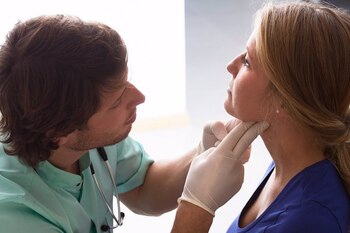
Switzerland’s healthcare system is characterized by a mixed structure where public and private sectors intertwine under strict regulations. Everyone is mandated to purchase a basic health insurance plan , regardless of age or health status. Depending on the insurance selected, various levels of medical coverage apply. The basic insurance necessitates a monthly premium alongside a required annual deductible of CHF 300 (approximately $312 ). Additionally, patients may select higher deductibles, up to CHF 2,500 (about $2,600 ), which lowers monthly premiums but requires them to initially cover their first CHF 2,500 in medical expenses each year.
For Castillo, his higher deductible insurance means he only starts receiving coverage after spending CHF 2,000 . “Everyone is taken aback when they hear about these costs,” he remarks, “but honestly, after spending €35 on paracetamol, I am content because the quality of life here enables such expenses.”
In essence, while the Swiss landscape offers opportunities and higher salaries, it also presents challenges, particularly in adapting to a high-cost living, especially regarding healthcare.
General News – 2