
The Controversial Study of the Shroud of Turin: Authenticity Under Scrutiny
The Shroud of Turin , often referred to as the Holy Shroud or ‘Santa Sábana,’ has captivated the minds and hearts of Christians and historians alike. This linen cloth, measuring 4.4 by 1.1 meters , is believed by some to be the burial shroud of Jesus Christ , while others dismiss it as a medieval forgery . With the recent publication of a poignant new study, the debate over the shroud’s authenticity has reignited, drawing even more attention to this enigmatic artifact.
The researcher behind the latest study, Cicero Moraes , is a Brazilian expert in three-dimensional reconstruction . In his recent findings, released in the journal Archaeometry , Moraes utilizes cutting-edge digital simulation technology to analyze the image formed on the Shroud of Turin. This study aims to determine whether the shroud could realistically have covered a human body during burial.
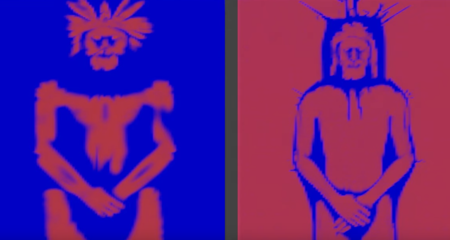
Moraes employed open-source software alongside 3D modeling to scrutinize how fabric reacts when wrapped around different shapes. His conclusion? The image on the shroud corresponds more accurately to a solid form, akin to a bas-relief sculpture , rather than the complex contours of a human body. According to Moraes, if the shroud had indeed covered a human figure, the distortion of the image and the presence of folds would have been considerably more pronounced. Instead, the shroud depicts a remarkably flat representation, suggesting it was not draped over a living person.
The following video illustrates Moraes’ simulation:
Moraes asserts that the image can only be explained if the shroud was placed on a flat model, such as a stone or wooden sculpture . He posits that had it been draped over a living body, the imperfections and distortions in the fabric would be far more noticeable. Instead, what we see resembles a “photocopy” of a statue, asserting that it mirrors a two-dimensional projection rather than a three-dimensional human form.
Historical Context . This is not the first study to question the authenticity of the Shroud of Turin. A notable carbon-14 dating examination conducted in 1988 by laboratories in Oxford , Zurich , and Arizona concluded that the fabric could only have originated between 1260 and 1390 AD . This dating contradicts claims of its connection to the time of Jesus. Moreover, earlier references to the shroud date back to Godofredo de Charny , who was one of the first to showcase it publicly. Importantly, early Christian writings do not mention the cloth, leading many to suspect its provenance.

<span>Moraes' study illustrates how the shroud's silhouette would appear if covering a body (left) compared to the perfect representation on the shroud (right).</span>While defenders of the shroud’s authenticity argue against the 1988 findings, claiming contamination of samples could have skewed results, others point to recent analyses showing bloodstains consistent with torture and crucifixion , reinforcing claims of its historical significance.
Critics of Moraes’ digital simulation study emphasize that it primarily relies on theoretical modeling and lacks direct historical evidence. The International Center for Syndonology , which is responsible for studying the shroud, has criticized the work, stating that it does not address important variables, such as the fabric’s elasticity . Therefore, while 3D modeling is visually stimulating, it cannot conclusively authenticate or disprove the shroud’s historical context.
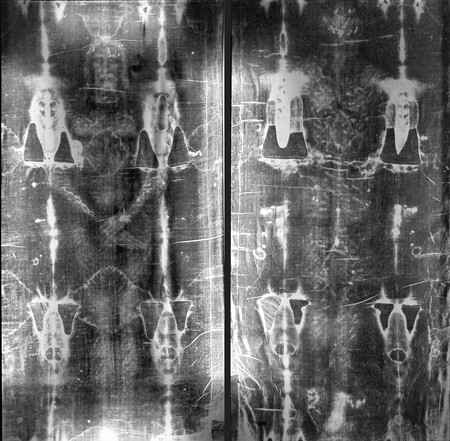
<span>The Shroud of Turin, shrouded in mystery.</span>Given the timing of Moraes’ findings, as the 2025 Jubilee celebrations approach, the study’s implications could heavily impact discussions surrounding the shroud, sidelining its physical display in favor of digital representations . Furthermore, while the Vatican has historically promoted interdisciplinary studies of the shroud, it remains neutral and noncommittal regarding definitive conclusions. This openness to debate is essential for ongoing inquiry while allowing for diverse perspectives on its historical validity.
The question remains—Is the Shroud of Turin a fabricated medieval artwork, or could it still potentially be an original relic? Moraes’ simulations lean heavily toward the former hypothesis. However, the truth remains elusive, with scholars continuing to affirm that the foundations of faith should not solely rest on artifacts, but rather on spiritual beliefs rooted in tradition and scripture.