
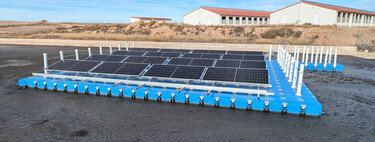
The Benefits of Agrivoltaics for Dairy Cows
Implementing solar installations on rural land offers significant advantages for both humans and animals. Recent research from the University of Minnesota has spotlighted the benefits of agrivoltaics, particularly for dairy cows—large and heat-sensitive animals. This innovative concept involves placing solar panels above pastures to provide shade for cows while generating clean electricity.
Study Overview
In a pioneering study presented at the AgriVoltaics2021 conference, researchers explored how ground-mounted solar systems influence dairy cow welfare. The results are critical given that prior research had not addressed this scenario. The study, conducted on a farm in Morris, Minnesota, where around 275 cows are milked twice daily, demonstrated the potential of agrivoltaics to enhance animal health during heat waves.
Research Methodology
In the summer of 2018, a 30-kilowatt solar system was installed, with panels strategically positioned 8 to 10 feet off the ground. Over the following summer, researchers monitored two groups of 24 cows—half with access to the shaded area under the panels and half without any protection from the sun. Advanced technology, like the CowManager ear sensors and SmaXtec boluses, was utilized to collect data on the cows’ activities, body temperature, and hydration levels.
Key Findings: What Changed and What Didn’t
Surprisingly, key production metrics—such as milk yield, body weight, and lactation condition—did not show significant differences between shaded and unshaded cows. The authors concluded that the cows spent less than a sixth of their grazing days under the solar panels, which limited the potential for observable benefits. However, the shaded cows experienced notably lower breathing rates and maintained cooler body temperatures, evidencing reduced heat stress.
On the downside, the shaded cows exhibited dirtier bellies and legs. This was attributed to their resting habits under the panels, where they also defecated, leading to increased dirtiness in that area.
Energy Production and Environmental Impact
The 30-kilowatt solar installation didn’t just benefit the cows; it generated substantial energy too. In 2019, it produced 35,535 MWh, equivalent to offsetting 37,238 kg of CO₂ emissions, comparable to planting approximately 2,066 trees. This dual benefit elevates the argument for agrivoltaics as a strategy for sustainable farming.
Conclusions and Future Directions
The findings suggest that agrivoltaics could be an effective solution for mitigating heat stress in grass-fed dairy cows, thereby enhancing animal welfare while also yielding clean energy. The research team plans to build upon this foundational work by exploring additional solar structures that can optimise land use, offering both shade and winter protection for livestock.
As the study emphasizes, while agrivoltaics poses some challenges, the potential benefits for animal health and environmental sustainability make it a compelling prospect for the future of dairy farming.