
The Cultural Protest: Piñatas as Symbols Amidst Immigration Raids
The recent operations executed by the Immigration and Customs Enforcement (ICE) , driven by directives from the federal government, have sparked a wave of cultural responses across the United States. These massive deportation efforts have triggered a multitude of reactions ranging from street protests to uniquely crafted cultural expressions in various cities.
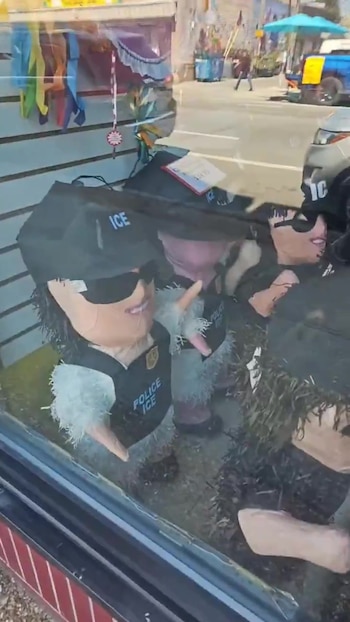
One notable instance occurred in Little Village, Chicago , where a local sweet shop named “Dulcelandia” gained widespread attention for creating piñatas fashioned after an ICE agent. Specializing in party supplies and traditional sweets , Dulcelandia’s display included piñatas depicting a male figure in a black uniform , complete with dark glasses, a cap, a bulletproof vest, and an ICE insignia. This display quickly became a focal point of public interest and social media buzz.
The video, recorded from outside the store, went viral on social media platforms, captivating audiences who expressed keen interest in purchasing these piñatas. Many aimed to use them during marches or protests , highlighting both their symbolic significance and the ingenuity behind their creation.
The design of the piñata is meticulously crafted, encompassing all visual elements that characterize an ICE agent during operations: the uniform, the hat with an insignia, sunglasses, and the bulletproof vest . These figures lined up next to traditional children’s piñatas created a stark visual contrast that caught the eye of passersby. It wasn’t merely an artistic endeavor; it was a profound commentary on the current political climate.
On social media, users identified this initiative as a direct form of expression from a community that has deeply felt the repercussions of immigration policies. The piñata, a beloved icon tied to Latino celebrations , takes on new meaning as a tool for protest. Some users expressed their intent to bring these piñatas to public demonstrations, not solely as symbols but as participatory elements of activism.
Dulcelandia, located in Little Village , is known for its substantial Latino population and its status as a hub for Mexican cultural activity . The video capturing passing pedestrians gazing at the piñatas spread across platforms like X (formerly Twitter), Facebook, and Instagram.
Responses in the comments section highlighted a spectrum of emotions: from excitement about buying a piñata to astonishment at the cultural twist on the object. Several users made inquiries about pricing and availability, while others brainstormed ways to customize these piñatas for protests. This viral phenomenon not only spotlighted the store but also placed it at the heart of a larger discussion surrounding civil responses to ICE raids.
The piñatas represent only one dimension within the growing social response to ICE operations. Raids have surged in various regions across the country, structured around a federal strategy prioritizing the arrest and deportation of undocumented migrants . This approach has confronted significant backlash, drawing the participation of organizations, citizens, and public figures.
Thousands, including migrants and U.S. citizens, have demonstrated against ICE actions. In the streets, speeches and signs resonate with critiques of the tactics employed by immigration authorities. In this environment, the emergence of piñatas coincides with an overarching narrative that encompasses physical, virtual, and cultural protests .
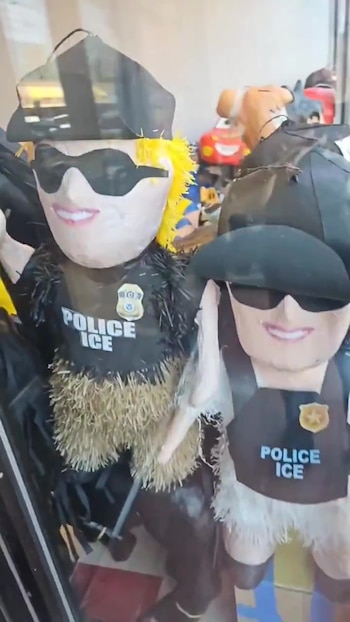
Utilizing a piñata as a form of protest is not an isolated phenomenon; it highlights how popular culture acts as a vehicle for expressing collective positions, especially during politically tense times. In this scenario, the piñata goes beyond its role as a festive object to become a visual representation of dissent . Its form, colors, and intended purpose gain nuanced interpretations amid the immigration debate.
Many social media users have underscored the cleverness of this initiative, emphasizing that it reappropriates a deeply-rooted symbol in the Latinx community and transforms it into a direct visual response. This action has been perceived online as a cultural assertion against federal policies significantly impacting migrant communities.