
Humanitarian Aid Delays in Gaza
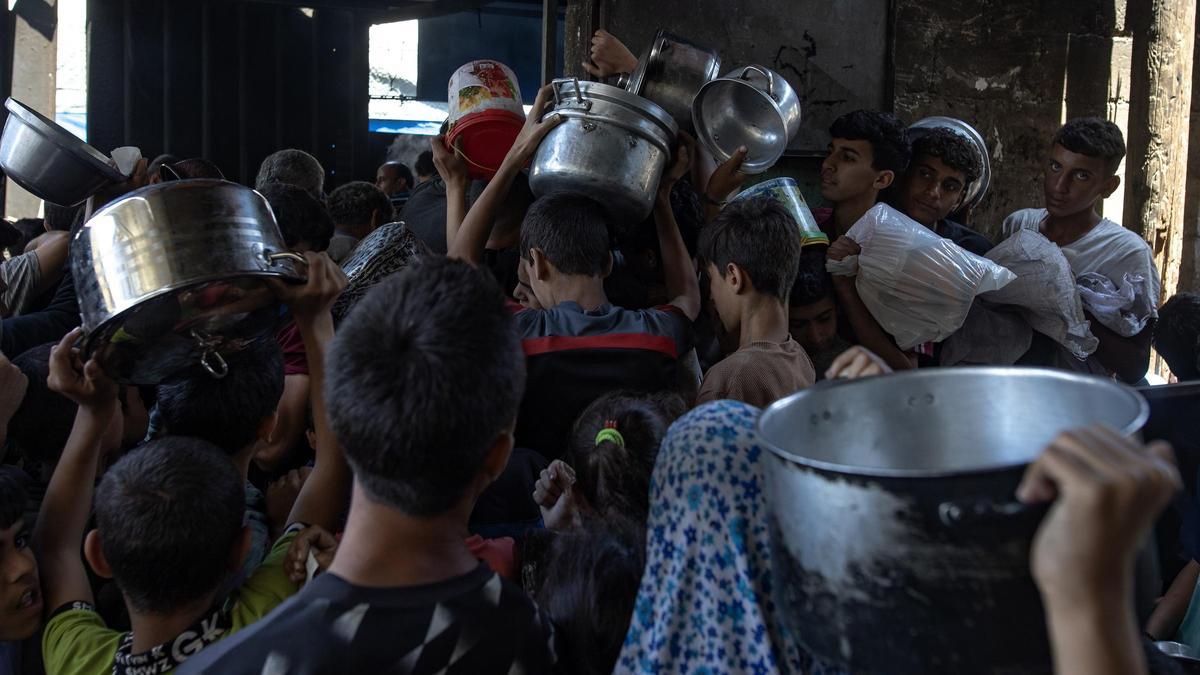
Two days after the much-anticipated **humanitarian aid** crossed the sealed borders of **Gaza** for the first time in 11 weeks, residents of the enclave are still waiting for much-needed supplies. **Israel** has begun to allow the entry of dozens of humanitarian trucks into the territory after nearly 80 days of a lethal blockade. However, the supplies have yet to reach the **Palestinians** who desperately need them amid a large-scale Israeli operation. At least one hundred trucks have entered Gaza, despite protests from **far-right activists** at the border checkpoints trying to block their access. Meanwhile, Israeli attacks have killed at least **82 Palestinians** on Wednesday alone.
UN Raises Alarm Over Aid Distribution Issues
“To clarify, although more supplies have reached the Gaza Strip, we have not been able to ensure the delivery of these supplies to our warehouses and distribution points,” stated **Stephane Dujarric**, spokesperson for the United Nations Secretary-General, this Wednesday morning. According to the UN, the new Israeli security process for delivering aid to distribution vessels is “long, complex, complicated, and dangerous.” Proof of this is that, during the first 48 hours of humanitarian aid being in the enclave after nearly three months of blockade, it has not made it to a population facing severe hunger risks.
Israeli Government’s Mixed Signals
So far, around one hundred trucks with humanitarian aid have entered a territory that, even before this brutal conflict, needed at least **500 trucks daily to survive**. These vehicles have received **military authorization** to access the Palestinian side of the border; however, they have yet to enter the enclave due to the complexity of distribution routes. It is not the first time that, despite being inside the Gaza Strip, Israeli authorities have systematically obstructed aid or even attacked trucks that had previously been authorized to operate.
Many critics assert that **Tel Aviv** is delaying the entry of aid trucks until the **Gaza Humanitarian Foundation**, an organization backed by **Israel** for distribution, begins its operation in Gaza, expected to commence by the end of this month. Others argue that the Israeli government is deeply divided over the issue of aid distribution. Prime Minister **Binyamin Netanyahu** stated in a video posted on social media that he had authorized “minimal humanitarian aid, just food and medicine” because Israel was close to “reaching the red line,” and international support was beginning to wane amid reports of widespread hunger in Gaza.
The Role of Activist Blockades
“Our **closest allies in the world**—senators I know who are firm supporters of Israel—have warned us that they cannot support us if images of mass hunger emerge,” Netanyahu declared openly. “We must prevent famine, both for practical and diplomatic reasons; without international backing, we will be unable to complete our mission of victory,” he added. Furthermore, the Prime Minister announced the establishment “within the next few days of first-aid distribution points.” “Ultimately, our goal is to create a **zone under Israeli military control** where civilians can receive aid, with **Hamas** receiving nothing,” he stated, without revealing many further details.
At the same time, several activists from **Tsav 9**, a **U.S.-sanctioned** group linked to military reservists and **Jewish settlers** in occupied **West Bank**, have attempted to boycott the entry of trucks at the Kerem Shalom crossing on the Gaza border. Other leftist groups, like the coalition of Jews and Arabs called **Standing Together**, announced their presence at these crossings to ensure the access of humanitarian convoys. Meanwhile, Israeli attacks have not ceased. In the last 24 hours, about **82 people** have died and **262 have been injured**, while the Israeli military targeted hospital generators to render them non-operational, according to medical authorities in the enclave.
The Humanitarian Crisis Deepens
As the situation continues to exacerbate, the failure to deliver adequate supplies amidst ongoing military actions has left Gaza in a precarious position. Many families are on the brink of starvation, and the humanitarian organizations on the ground face numerous challenges in navigating the bureaucratic hurdles imposed by Israeli authorities.
The international community watches closely, as the humanitarian crisis unfolds further. Reports suggest that time is of the essence; residents of Gaza cannot wait any longer for these critical resources. The ongoing conflict and humanitarian issues have ignited fierce debates globally, highlighting the urgent need for a viable solution that addresses the plight of civilians while also considering the political complexities involved.
While humanitarian corridors have been opened sporadically, the effectiveness of these measures remains questionable due to the prevailing security situation and restrictions on movement. Many are calling for a reevaluation of the aid distribution model to ensure that it reaches those in need effectively and efficiently.
As the situation in Gaza develops, it is crucial for all stakeholders, including international bodies and governments, to push for a more transparent and effective humanitarian approach that bridges political divides and prioritizes human life over territorial disputes.