
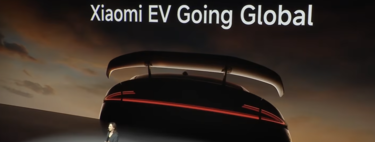
We are in Munich to attend the presentation of Xiaomi . There are spotlights illuminating the Xiaomi 15t Pro , and at the entrance of the auditorium, the pair of Ultra captures all eyes. However, something intriguing catches my attention: at the door, there is a huge Trojan horse which sets the tone for this event. Remember this detail.
During the presentation, the brand highlights its specifications:
- Collaboration with Leica .
- Periscopic telephoto .
- 3,200 brightness nits .
“Interesting, but secondary,” I think to myself.
The most significant announcement Xiaomi is making here isn’t measured in pixels or focal lengths, but in the cubic meters of conquered domestic space .
Xiaomi has just entered the European appliance market . They are not just offering air fryers and whippers; think bigger— refrigerators, washing machines, air conditioners . This move marks a major leap for the company.
Once known for selling devices like regulators for 150 euros and competing on price, they five months ago stunned the audience with their ultra-exposed event in Shanghai , competing directly with Porsche . Now, they are executing a maneuver reminiscent of Huawei’s trajectory following U.S. sanctions: the construction of a self-sufficient and vertically integrated technological universe .
While Huawei was forced into creating its HarmonyOS in response to external pressures, Xiaomi operates from a position of calculated ambition . We have watched this theme developing in their presentations over the years, showcasing what can best be described as oversized pride:
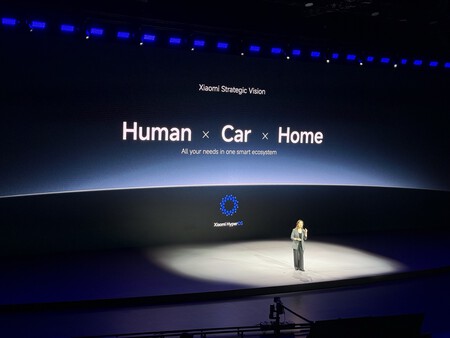
The photo is from the Munich event featuring the 15T, but this mantra has been part of all Xiaomi presentations. Image: Xataka.
This sense of oversized ambition indicates that ‘Human X Car x Home’ has somewhat faltered in the last two areas. In 2024, they will resolve the second component, and now they have just completed the third.
They announced the Mijia Refrigerator Cross Door 502L . More than just a refrigerator, it serves as a 502-liter data terminal installed right in your kitchen—a realm previously unexplored by the brand.
This is significant because Xiaomi clearly understands human behavior and technological inertia . When you install a Xiaomi fridge that efficiently communicates with your washing machine, which is synced with your robot vacuum and your television, you have crossed a psychological and economic threshold that is hard to retreat from.
The cost of this transition is not calculated just in monetary terms but in the complete disintegration of your domestic ecosystem . It parallels what Apple has achieved with its devices, wearables, and services but applied to ‘HUMAN X CAR X HOME’ .
Just like with the best ecosystems, each device serves as a node that reinforces the overall architecture . The smartphone, epitomized in the Xiaomi 15t Pro, is merely the epicenter; intelligence extends throughout the rest of the house, capturing and processing the flow of data emanating from daily life. Every interaction with the fridge, every washing cycle, every thermostat adjustment, feeds a learning, predictive system that may eventually anticipate needs.
Comparisons with Huawei are unavoidable. Both firms have displayed adaptability and transformation:
- Huawei built its strength in response to external threats.
- Xiaomi is executing its planned territorial expansion .
This entry into Europe with the range of “AIOT appliances” signifies more than just a push for market share; they aim to fundamentally alter the nature of the connected home.
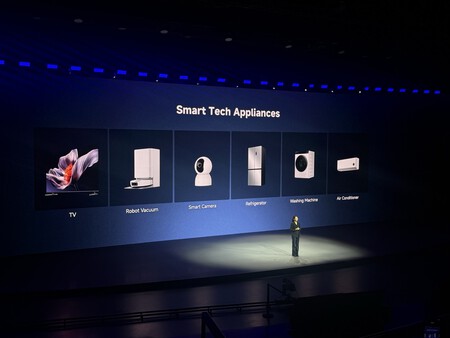
Image: Xataka.
Europe has a fragmented appliance market dominated by legacy brands like Bosch and Siemens , local players like Balay , and contemporary challengers like Hisense and Samsung who focus more on technology.
This presents a unique opportunity, especially if the European consumer —typically conservative when choosing large appliances—begins to value connectivity and energy efficiency above brand loyalty (Xiaomi proudly showcases A +++ certificates in their air conditioners).
If anyone believes that European consumers will continue to cling to trusted brands (especially local ones), just a look back at BQ in 2018 is necessary. Their attachment to this notion only contributed to their downfall when Xiaomi arrived on the scene.
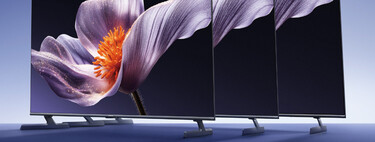
Furthermore, Xiaomi’s greatest danger lies in its execution speed . In just three years, they transitioned from having no automotive division to producing the SU7 , a vehicle that competes with and often surpasses industry giants. They are now applying that same speed to the home sector.
- A vacuum robot boasting 20,000 pa suction power.
- An AI washing machine that adjusts cycles based on fabric type.
- A refrigerator with customizable temperature zones.
The future points toward a landscape where the distinction between intelligent devices and traditional appliances will simply fade away.
However, there lies a more disturbing dimension in this conquest: the concentration of technological power in the hands of a few companies, predominantly Chinese and American. This raises pressing questions regarding privacy, digital sovereignty, and technological dependence.
When your fridge, washing machine, car, and phone all belong to a single company, that organization gains a level of control over your daily life that would have been unimaginable a generation ago. The data emanating from these devices generates power.
At this technological crossroads stands Europe . Lacking its own tech giants capable of competing in today’s integrated landscape, it faces a binary choice between American ecosystems (like Google, Apple, Amazon) and Chinese entities (such as Xiaomi, Huawei, and possibly BYD with their home automation aspirations). Each choice carries implications beyond mere consumer preference; it suggests an implicit geopolitical alignment. Modern technology is far more complex than it was a decade ago.
Hence, this presentation in Munich is bound to leave a lasting impression. It is not just about launching new products, as is customary for contemporary announcements; it signifies a turning point in how Chinese technology penetrates the intimate spaces of Western life . While electronics traditionally came from Japan, the United States, South Korea, or Germany, China has now entered that arena.
As we consider the comparative metrics between the 15T Pro and its competitors, it becomes increasingly clear that these benchmarks pale in significance to what we have experienced at this presentation. In fact, information about mobile technology has become less pivotal, as this is a narrative that is already established and lacking in innovation.
What truly matters is in the appliances section. Xiaomi recognizes that the route to technological domination does not lie in the smartphone wars but in becoming the invisible operating system of everyday life .
The Trojan horse at the event is more than just a coincidence; it symbolizes what Xiaomi aims to achieve—an embodiment of technological integration that pervades everyday living. It represents a Wi-Fi-enabled device linked to hyper-ecosystems, ready for installation in the previously untouched realms of connected devices, fully synchronized with our mobile phones and seamlessly integrated into our routines.
In Xataka | Xiaomi continues with its incursion into Spanish appliances: the refrigerator and washing machine will be the next milestones.
Outstanding image | Xataka