
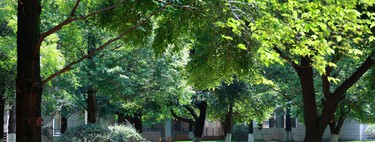
The Japanese Acacia: A Floral Feature of Spanish Cities
If you’ve strolled through Spanish cities this summer, you may have noticed the dense carpet of small creamy white flowers lining the streets. This delightful floral display is courtesy of the Japanese acacia, scientifically known as Styphnolobium japonicum, a tree that has found its place in urban environments across Spain.
Why Is It a Popular City Tree?
Urban planners in cities like Zaragoza, Barcelona, and Murcia choose to plant the Japanese acacia for its remarkable adaptability to city life. This tree is renowned for its resilience, particularly in coping with urban pollution. It can thrive in the challenging conditions of heat islands, drought, and compacted soils, making it a favored choice for tree-lined avenues.
Beyond its resilience, the Japanese acacia also provides ample shade during the hottest months of the year. This characteristic not only enhances the comfort of pedestrians but also contributes to more pleasant urban environments, thereby improving the quality of life in densely populated areas.
Maintenance Challenges
However, the Japanese acacia is not without its downsides. While its vibrant blooms are beautiful, the falling flowers and fleshy fruits can create a mess in pedestrian areas. This littering requires regular maintenance and cleaning to keep the environment tidy, which can be a burden for city councils.
A Late Blooming Wonder
Unlike many urban trees that flower in spring, the Japanese acacia waits until summer, typically from June to August, to display its small, papilionaceous flowers. These blossoms attract various pollinators, including bees, fulfilling a crucial ecological role in urban ecosystems where nectar sources are often scarce. Additionally, its unique fruits, resembling a pearl necklace, can remain on the branches long after the flowers have fallen, adding ornamental value well into winter.
Understanding Its Identity
There is often confusion surrounding the Japanese acacia’s name. Despite its common moniker, it is not an actual acacia. The term “japonicum” might suggest a Japanese origin, but this tree is native to central and southern China. Following its introduction to Europe and East Asia, it gained popularity, largely due to its numerous beneficial traits.
Medicinal Properties and Caution
In the realm of ethnobotany, various parts of the Japanese acacia have been credited with medicinal properties. Certain compounds show anti-inflammatory, antioxidant, and antibacterial qualities, indicating potential health benefits. However, caution is essential as some parts, particularly the raw fruit, can be toxic. Management and use should be left to qualified professionals, particularly in the pharmaceutical industry, rather than home remedies.
In conclusion, while the Japanese acacia graces our urban settings with its exquisite flowers and resilience, it also poses certain challenges that require consideration. As cities evolve and green initiatives grow, understanding the role of such trees will remain vital to fostering biodiversity and enhancing urban life.
Images | Bianka Becsi