
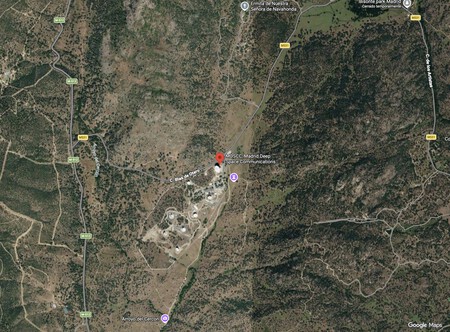
The advance of the fire through the southwest of Madrid has intensified concern in Robledo de Chavela, a municipality significantly affected by the emergency. Within this area lies a critical facility, part of the NASA Deep Space Network, responsible for maintaining communications with spacecraft operating at vast distances from our planet. The ongoing efforts to safeguard these facilities highlight their importance, which may not always be apparent to the public. The operations conducted here play an essential role in sustaining international space exploration infrastructure.
According to Francisco Martín, the Government delegate in Madrid, the situation at the complex is dire. He stated that the installation “is in a critical situation” and that emergency crews are working relentlessly to protect it. The fire has reached a peak intensity, rendering it beyond the capacity of local firefighting teams to control. Approximately 90 workers have been evacuated from the complex, and currently, no personnel remain on-site, leaving unanswered questions about potential damage resulting from the flames.
One of NASA’s Vital Links to Deep Space in Immediate Danger
Xataka has reached out to both the Jet Propulsion Laboratory (JPL) and the Ministry of the Interior. A NASA spokesperson confirmed, “the fire has passed through the MDSCC,” referring to the Madrid Deep Space Communications Complex. Assessments of any damage will take place once safe access to the site is possible. Until then, NASA has relocated mission support operations to Goldstone, California, in order to maintain meaningful communications with ongoing space missions.
The Madrid Deep Space Communications Complex (MDSCC) is critical to NASA’s operations. Located in Robledo de Chavela and affiliated with the National Institute of Aerospace Technology, it hosts six large satellite dishes, including one as large as 70 meters in diameter. These dishes are integral to the Deep Space Network, which serves as the backbone for communications with spacecraft exploring the Solar System.
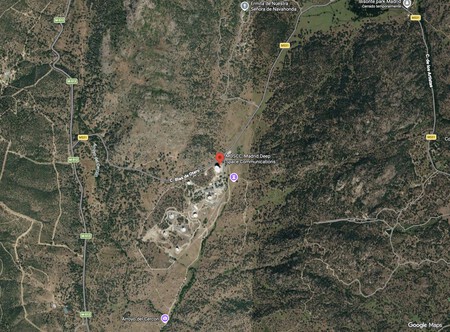
The Robledo de Chavela space communications complex is located about 65 kilometers west of the center of Madrid
This facility serves as one of three critical components ensuring global coverage for NASA’s network of deep space communications, including counterparts in Goldstone, California, and Canberra, Australia. These strategically placed complexes are designed to counterbalance Earth’s rotation, enabling continuous contact with spacecraft. When a mission falls below the horizon of Robledo de Chavela, the other facilities can take over, allowing for seamless communication, monitoring, and data transmission between Earth and distant exploratory missions.
The extensive capabilities of the Deep Space Network accommodate more than 40 active missions at any given time. A specialized team manages the distribution of signal time among the three sites, depending on visibility and mission objectives. This setup helps ensure that critical data regarding the universe’s mysteries can be collected and shared effectively. NASA describes these antennas as an “indispensable link” for their endeavors beyond the confines of our planet.

An illustrative event occurred recently when controllers for the New Horizons spacecraft confirmed its successful awakening after over 321 days in hibernation. Positioned 9.5 billion kilometers from Earth, its signals took approximately 8 hours and 52 minutes to reach home, confirming the complex’s vital role in interstellar communications.
As of now, there is no official confirmation regarding any damage. However, the potential for damage remains inescapable. Authorities responsible for the complex will be unable to assess the situation until it’s safe for them to return. NASA has a tool, DSN Now, which can provide real-time data on the active antennas and their associated missions.
Images | NASA | Screenshot