
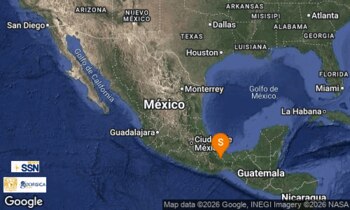
Earthquake Update: 4.3 Magnitude Tremor Recorded in Chiapas, July 22
On July 22, 2026, Mexico experienced a significant seismic event with a 4.3 magnitude earthquake registered in Chiapas. The region remains crucial in understanding seismic activities due to its geological characteristics.
Overview of the Earthquake
The National Seismological Service (SSN) reported that the earthquake struck at 12:13:05 PM, approximately 120 kilometers southwest of Ciudad Hidalgo, Chiapas. The event’s coordinates were latitude 14.28 and longitude -93.19, occurring at a depth of 15 kilometers. This earthquake is one of the notable seismic activities in the region on the same day.
Additional Earthquake Reports
In addition to the Chiapas tremor, other earthquakes were recorded on July 22:
- A 4.0 magnitude earthquake occurred 49 kilometers south of Juan Rodríguez Clara, Veracruz at 1:26 PM with a depth of 101 kilometers.
- A magnitude 4.2 earthquake was reported off the coast of Chiapas earlier that day at 7:23 AM, located 121 kilometers southwest of Huixtla.
The morning of July 22 revealed a series of events, with multiple minor earthquakes ranging from magnitude 2.2 to 4.8. The strongest tremor was a 4.8 magnitude quake, located 155 kilometers southwest of Ciudad Hidalgo.
Aftershock Activity
A startling statistic emerged: as of 8 AM on July 22, 727 aftershocks were recorded following a previous major earthquake (magnitude 7.4) that occurred on July 17 in Ciudad Hidalgo. Among these aftershocks, the most intense was noted to reach magnitude 6.5. This pattern indicates a particularly active seismic period for the region.
Seismicity Patterns in Chiapas
The recurrence of these seismic events highlights the geological instability of the area. The southern region of Mexico, particularly Chiapas, Guerrero, and Oaxaca, frequently experiences seismic activity. The typical depth of recent earthquakes has been between 5 and 16 kilometers, suggesting that many of these movements are shallow—often leading to more noticeable tremors on the surface.
Public Safety and Preparedness
Fortunately, local authorities have not reported any injuries or significant damage associated with these seismic events. However, it’s essential for communities in earthquake-prone areas to remain vigilant and prepared for potential aftershocks and future earthquakes. Residents are reminded to have emergency plans in place and stay informed through local services.
Conclusion
The recent 4.3 magnitude earthquake in Chiapas is part of a larger pattern of seismic activity currently affecting the region. As the National Seismological Service continues to monitor these events, the community’s safety remains a priority. Ongoing education about earthquake preparedness will be crucial for minimizing risks associated with future seismic events.
Staying informed and prepared is the best approach in a region known for its geological activity. Keep an eye on further reports to stay updated on this ongoing situation.