
The Rise of Wall-Climbing Robots: A Revolution in Industrial Safety
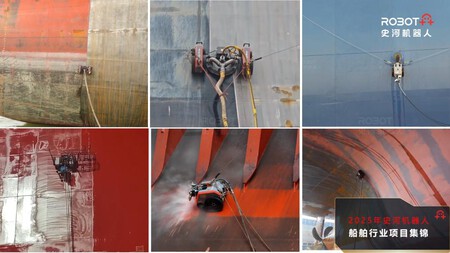
Recently, a video showcasing a robot climbing the curved surface of a metal tank went viral, revealing a groundbreaking technology that could forever change how hazardous jobs are performed. This robot, developed by the Chinese company Shihe Robotics (known internationally as RobotPlusPlus), is designed to polish and remove rust without a human needing to be suspended from ropes. Such innovations aim to address the dangers faced by workers performing tasks at heights.
What Are Wall-Climbing Robots?
Wall-climbing robots can adhere to vertical and curved surfaces, such as metal, concrete, and glass, enabling them to perform a range of tasks including:
- Welding
- Cleaning
- Painting
- Inspection
- Rust Removal
The fundamental goal of these robots is to replace human operators who traditionally work from harnesses or scaffolding, an environment fraught with risk from falls or equipment failure.
Impact of Shihe Robotics
Founded in 2015 by Xu Huayang, a graduate of Tsinghua University, Shihe Robotics has gained substantial traction in the robotics sector. Their flagship product was a robot specifically engineered to efficiently remove rust from ship hulls—an intricate and dangerous job. According to reports, this robot can achieve productivity levels five to six times greater than manual labor, marking a significant milestone in improving workplace safety.
Funding and Investor Interest
Shihe Robotics has successfully completed several investment rounds, including a recent Series C round worth several hundred million yuan. These investments from companies like Baidu and Qianggang Capital highlight the strong market interest in robotics, particularly in addressing safety concerns associated with working at heights.
Real-World Applications
The applications for wall-climbing robots are extensive. They are already making their mark in various sectors, including:
- Ship Maintenance
- Spray Painting of Chemical Tanks
- Inspection of Thermal Power Plant Boilers
- Maintenance of Wind Towers
- Cleaning of Solar Panels
- Building Facade Inspections
This diverse range of uses suggests a market worth approximately 60 billion yuan annually in China alone.
How Do They Stick?
Wall-climbing robots utilize various technologies to adhere to surfaces:
- Permanent Magnets: Used for metallic surfaces like ship hulls.
- Vacuum Suction: Effective on glass and other non-magnetic materials.
- Gecko-Inspired Technology: Employs microfiber pads to adhere using molecular forces, leaving no residue.
These techniques ensure reliable performance in various environments, making these robots indispensable for high-altitude work.
Competitors and Global Context
Beyond Shihe Robotics, other companies like AKA Robotics are also innovating in this space. Their WallHiker robots utilize a dual system of cables and permanent magnets to enhance safety when working on wind towers. Additionally, the American company Gecko Robotics has entered the market, providing climbing robots for military applications, showcasing that the interest in such technologies is not limited to China.
Future Prospects
Despite the progress made, industry experts note that the wall-climbing robot sector is still in its infancy. Market conditions are evolving, and more applications are anticipated as technology advances. As we look ahead, it’s clear that wall-climbing robots hold the promise of transforming industrial safety and efficiency, making a significant impact on how hazardous tasks are performed in the future.